
Pomeranian Eating Poop: Causes, Fixes & Vet-Approved Tips

Lateef Bhatti
Author
A Pomeranian eating poop is more common than one would think and is concerning behaviour – also known as coprophagia – and is likely due to a lack of nutrition or to being bored, anxious, or even sick. With nutrition, stool-deterring products, and other health and behaviour concern efforts, the habit can be broken. With the Pomeranian’s abundance of pleasure, appropriate training and a vet’s insight are essential to avoid unwanted behaviour.
Overview
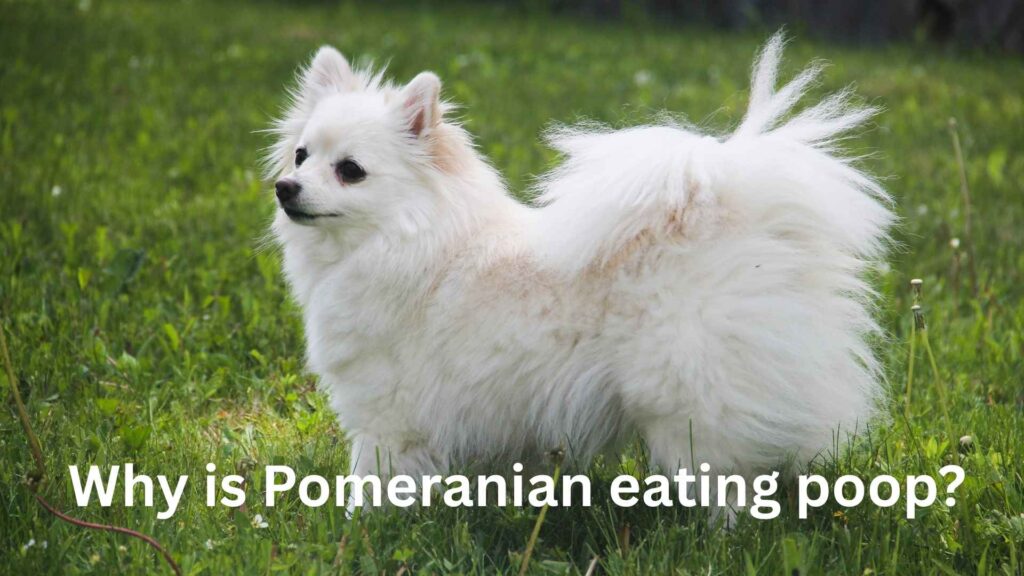
Do you sometimes wonder why is your Pomeranian eating poop and think about how shocking and embarrassing it is? You are not the only one. The behavior, which is termed as coprophagia, is relatively common, especially in smaller and more curious puppies. Although it may seem disgusting at first glance, it is accepted in the veterinary community that there are some legitimate explanations for the dietary deficiencies and stress-related behaviors.
Table of Contents
ToggleThis article outlines the reasons for why Pomeranians engage in this habit, the associated health complications, and how to curb the behavior. By the end of this article, you will understood the underlying factors and armed with knowledge to assist your pet in breaking the unfortunate behavior.
Why is My Pomeranian Eating Poop?
The actions of Pomeranian eating poop may seem puzzling. There are equally reasonable explanations, some of which are instinctual while others are potential health or behavior your dog might be exhibiting. For example puppies are more curious in nature and will attempt to explore their environment using their mouths. This curiosity for some can form a habit.
Another contributor is diet. Inadequate and low-quality dog foods can cause a stool which smells like undigested food. In this case, dogs will, indeed, attempt to re-consume it. Stress, boredom, and separation anxiety, especially in young puppies, also can result in coprophagia, especially when left in solitude for extended periods of time. The first part to resolving the issue and safeguarding the health of your pet is to understand the context of the behaviors above.
What are fillers in dog food?
Fillers in dog food are any unnecessary ingredients purposely put in the food to make the dog food bulkier while offering little to no nutritional benefit. Things like corn, cornmeal, and other more unappetizing by-products are usually what dog food fillers are composed of. A Pomeranian may seem to be satiated by these fillers, but in reality, their body lacks the requisite vitamins and minerals vital for proper functioning.
In the extreme case of a Pomeranian’s diet being extremely short and lacking in any nutritional value, they could be more prone to possess a tendency to scavenge for food of a very strange nature, like their own feces. Observing the case of a border collie, however, one will see that switching to a diet consisting of either high-quality dog food or even homemade dog food for Pomeranians can significantly lessen the burden of these issues and promote well-being.
Read about the dog food: Best food for pomeranian puppy
Another Reason for Puppies That Eat Their Poop
Another common reason a Pomeranian puppy engages in coprophagy is nutritional deficiency. Dogs in this case are described as hungry eaters. They seek food in pieces or piles or in stools due to a lack of macro- and micronutrients. In this case, and with protein, instinct pushes them to search somewhere else. Even victims of their own feces or of other canines. This extends to coprophagy, as it is lacking in their nutritional supply.
The scope and deficiency of nutrients, and protein in this case, are directly attributed to underestimating the quality of the food, anthropomorphism, and the sudden alteration in pace schedule. In this case, growth is rapid, spanning, and unbalanced; uncontrolled and unmeasured; and fed by some unsought how. This primitive trait, under the guidance of some functioning deficiency of protein or macro- and micronutrients, stands to be resolved unethically.
The Third Reason A Pomeranian Eats Poop
For some Pomeranians, curiosity or boredom may drive them to eat poop. A good example of a dog that goes into a neophilic frenzy is a puppy. Unsupervised puppies eagerly and blindly feast to their heart’s content. If one of these puppies stumbles upon stool, goes uncorrected, and repeats the behavior, their curiosity and imagination regarding pooh is endless.
This is very much a form of boredom. The habit of coprophagia is a negative behavioral pattern brought about by the absence (or lack of the right type) of mental exercise. The other, more benign, contributing factors, such as relocating to a new residence, engaging in a new routine, or a lack of mental stimulation, can also cause a Pomeranian to resort to coprophagia. Puzzles, chew toys, daily walks, and solid, engaging games will increase stimulation and help the puppy’s development, especially to keep distraction and sniffing on the floor reduced to preserve and make processing feces apparent.
The Fourth Reason a Pomeranian Will Eat Its Poop
In some cases, a Pomeranian might eat its poop in order to get some attention. If your reaction was to get mad, your puppy might have interpreted that reaction to mean that this action yields a strong reaction. To a dog who craves attention, even negative attention can seem rewarding.
Another reason could be to escape possible punishment. If your Pomeranian has previously been reprimanded for defecating in the house, it may “erase the evidence” by consuming the feces. This action is done out of fear, not out of any mischievous intentions.
In the end, some dogs perform the action repeatedly simply because it has been ingrained in their minds as a routine. Without some context or redirection, such behaviors are likely to be adopted. The complete opposite can be done by teaching and rewarding them positively while ensuring an uncluttered surrounding.
Always See Possibly Significant Medical Conditions.
Most of the time, a Pomeranian engaging in coprophagia does not do so just because of some wild imagination; there could be some secondary health issues. When it comes to sudden unexpected behavior, there is always a chance of a physical problem; therefore, training and diet are not the main considerations at the start. Visiting the vet will reduce the chance of a great deal of discomfort to the pup while also dealing with the core problem.
Nutritional deficiencies and digestive enzymes do pose some challenges, and as such, a Pomeranian might resort to eating excrement in a bid to get the required nutrients. In addition, the presence of parasites, such as intestinal worms, could trigger the desire to consume feces because of the inability to effectively assimilate nutrients. Other problems, such as some forms of thyroid and pancreas problems, are also a possibility, and these can alter behavior and metabolism in a manner that may lead to coprophagia.
The following is a feasible list of medical issues to investigate concerning the patient.
- Difficulties with digesting food.
- Absence of proper nutrition due to self-imposed starvation or the inability to absorb nutrients.
- Parasites or intestinal worms.
- Inability to secrete pancreatic enzymes.
- Dysfunction of the thyroid or other endocrine glands.
- Diabetes mellitus or other endocrine imbalances.
- Infection or inflammation of the digestive tract.
- Adverse effects of other drug treatments.
Pomeranian Eating Poop: How to Stop It.

The behavior of a Pomeranian eating poop can be curbed through diligence and sustained oversight. With regard to supervision, it helps to contain the dog’s feces, so there are no epidemiological chances to reinforce the behavior. Again, it is a matter of time. Attend when the animal is being potty trained, and walk him away when he is trying to consume excreta as well as praise him.
The type of food ingested can also have an impact. Pomeranians require food comprising a balanced, adequate, and digestible nutrient composition with “no fillers.” Plenty of fiber, coupled with self-determined stops, helps to restrain the dog from coprophagia.
Lastly, boredom, separation, and anxiety, as well as various other emotional sources, should be attended to. Physical and mental activity, in addition to plenty of proper building blocks, can help plenty. It is vital to keep the dog’s environment safe and free from abuse, as this will help to reinforce the treatment in lowering the risks of behavioral issues while also enhancing its general well-being and happiness.
Make His Poop Taste Bad
Some approaches to modify stool-eating behavior for Pomeranians involve making the poop less desirable. Unappealing food is the cornerstone during practicing a decreased frequency for the behavior. Such alterations are performed by adding dosage forms of preparations for stool away peting. Regular monitoring comes with a reward-based strategy for the dog to ignore the poop.
Certain appetite suppressants that are allowed contain puppies in the diet with food additives. The well-known ones are stuffed animals for puppies, which contain stuffing, deterrent supplements, gastrointestinal-friendly pineapples, or plain or pumpkin seed butter infused for mouths. None of these dental scalp herbs for puppies do any harm upon Bento box pondering, but over a period of time do discourage the habitual nature in the best manner.
As with all other things in life, do remember to use only one flavor additive at a time and speak with your veterinarians in advance regarding these bottom bracket surgical procedures. Over the prolonged course of delivery of these sorts of towels upon a pile, the puppy would have developed a habit of Continental breakfasts, which is no longer pleasurable.
The Products Below Can Help Stop Your Puppy from Eating Their Feces
In assistance with the veterinarian’s recommendation, the following are some of the more used and proven methods to prevent the Pomeranian from eating poop.
✨ Stool eating Deterrence Supplements – For-Bid and NaturVet Coprophagia Deterrent are examples of specialized doses (chews or powders) designed to make feces unpalatable.
🍍 Pineapple Chunks Less than 2 ounces of fresh pineapple is benign and alters the feces flavor.
🎃 Canned Pumpkin – The texture and taste of poop are altered, rendering it unappealing, along with the added fiber.
💊 Digestive Enzyme Supplements – Reduces the appetite for stool by improving the absorption of nutrients.
🥩 Meat Tenderizer (Unseasoned) – Consult the veterinarian for the small amount that can be sprinkled on the food to make feces bitter.
🚿 Scramblers or Scooper Pooper – The temptation is removed immediately, along with the convenience of keeping the yard clean.
Final Thoughts On Pomeranian Eating Poop
You may feel frustrated or even embarrassed when you discover your beloved dog has taken to voraciously eating excrement. Although this is common behavior noticed in dogs, it can be corrected over time with patience and consistent reinforcement of positive strategies. Knowing the reasons behind this behavior, and whether it is nutritional, behavioral, or even medical, can help you formulate a strategy to address it.
You can gradually modify this behavior and make the excrement less appealing by changing your Pomeranian’s diet, supervising them during potty time, and incorporating positive and reactive reinforcement when deemed necessary. Mental stimulation, exercise, and affection are crucial in lessening the chances of stress- and boredom-driven triggers.
If the behavior continues or if other signs such as vomiting, weight loss, or appetite changes become apparent, seek the advice of your veterinarian. Your pet can learn to break the habit while remaining happy, energized, and healthy with the right approach.
FAQs
Chronic fecal consumption, also known as coprophagia, significantly increases the chances of contracting disorders such as intestinal parasites, bacterial infections (including Salmonella), chronic gastrointestinal disturbances, nutrient deficiency, and the possibility of veterinary health problems that remain unnoticed, including the ingestion of toxins or medications concealed in feces.
While in some instances, eating feces isn’t “toxic” in this setting, it is important to note that the consequences do remain dire. Dogs can become ill from the dangerous parasites, intensive bacteria, or dangerous grime (such as chemicals or medications), and so, it must be regarded as a clear risk to their health, and veterinary intervention is necessary.
Primarily, yes. Coprophagia, which is the medical term for excessive fondness for stools, can be a result of boredom, stress, or unsuccessful house training. However, it is also important to consider that it may stem from eating disorders or delve deeper into health issues, which is an area that should be thoroughly examined.
At times, yes. Poor nutrition, like eating low-quality food, can leave the dog with a reduced appetite; thus, it is motivated to consume excrement, and so diet should be assessed along with veterinary examination in the case of the behavior of chronic stool eating.
Yes. Separation anxiety, household changes, or fear can trigger coprophagia, with anxiety often self-soothing or seeking attention, and dealing with the anxiety often reduces the behavior.
You may also like
Build the Perfect Care Routine for Your Pomeranian
Select your Pom’s age, coat type, and activity level to instantly get a custom care checklist — it’s fast, free, and made with love!
Give your Pom the daily care they truly deserve.