
The Ultimate Guide to Pomeranian Colors: Expert Genetic & Grooming Insights

Lateef Bhatti
Author
Expert Guide | Updated May 21, 2026 | 12 minutes Read
Pomeranians are compact in stature, yet they virtually shout their individuality through their vivid coats. Anyone who has been near one will attest to their visual impact, yet many are surprised to learn that the breed boasts over twenty distinct hues and patterns. From lustrous black and fiery red to the elusive lavender, Pomeranian colors represent a genetic spectrum that rivals a master artist’s palette.
Table of Contents
ToggleWhether you are a first-time owner or a seasoned breeder, understanding these shades is the key to mastering their care and heritage. In the 2026 pet landscape, “color-breeding” has become a sophisticated science. Navigating the sea of “exotic” labels requires a sharp eye and a deep understanding of what lies beneath the fluff.
How Many Coat Colors Do Pomeranians Have?
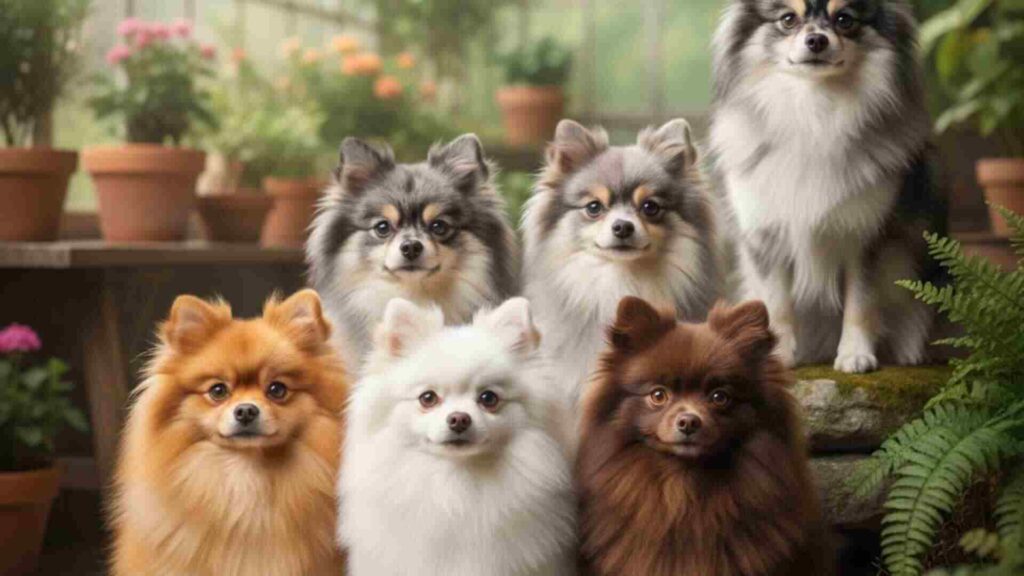
The honest answer is more complicated than most breeders admit. Expert evaluations report a systematic minimum of 25 official color designations for the Pomeranian. This includes 18 standard colors recognized by the American Kennel Club (AKC) and a variety of rare patterns like merle, brindle, and parti-color.
While most people picture a “puffball of orange,” the reality is far more diverse. The AKC is remarkably inclusive with Pomeranian colors, allowing for a massive variety of expressions. Behind the aesthetic is a genetic underbelly that dictates not only grooming needs but also potential health predispositions that every responsible owner must understand.
I have spent years studying these coats across hundreds of dogs, and I still find new combinations that stop me cold. The breed’s color depth is genuinely staggering.
Why Does My Pomeranian’s Color Look Different Every Month?
Pomeranians go through a dramatic “puppy uglies” phase between 4 and 6 months of age. They shed their soft puppy fur to reveal their adult double coat. During this transition, a puppy that looked dark brown at 8 weeks might emerge as a bright orange sable at 8 months. This “clearing” process is one of the most exciting and sometimes stressful parts of owning the breed. If you bought a “black” puppy and it is turning gray, you likely have a Blue, not a fault. Understanding this early prevents panic and misunderstandings between buyers and breeders.
The Genetics Behind Pomeranian Colors

Pomeranian coloration is modulated by specific allelic combinations, primarily the Extension (E) and Agouti (A) loci. These genes act as the instruction manual for the dog’s melanocytes, telling them whether to produce black pigment (eumelanin) or red and yellow pigment (phaeomelanin).
If you have ever wondered why two orange Poms can suddenly produce a “Blue and Tan” puppy, the answer lies in recessive genes. Many Pomeranians carry what geneticists call “cryptic” genes. A dog can look solid orange on the outside while carrying the “at” gene for tan points or the “d” gene for dilution, completely invisible until two carriers are paired together.
This is not trivia. It has real financial and health implications. A reputable breeder offering DNA-tested parents in 2026 is offering you something genuinely valuable, not just a marketing line.
What Determines the “Wolf Sable” Pattern?
The Wolf Sable is a masterpiece of the Agouti gene (Aw). Unlike other sables, it lacks any red or orange pigment. The coat consists of a gray undercoat with silver guard hairs tipped in black. This is a “primitive” color pattern that connects directly back to the breed’s Spitz ancestors, the Nordic working dogs that originally gave the Pomeranian its structural blueprint. When you look at a true Wolf Sable, you are looking at a living genetic artifact of breed history.
Understanding Sable vs. Solid: What Most Owners Get Wrong
Here is the distinction that confuses even experienced owners. A sable Pom has guard hairs with dark tips over a lighter base color. A solid Pom has uniform color from root to tip on every guard hair. The difference looks subtle in photos but is immediately obvious in person when you part the fur. An Orange Sable with heavy black tipping looks dramatically darker than a Clear Orange. Neither is more valuable by default. But many sellers mislabel Clear Oranges as “Reds” and heavily-tipped Orange Sables as something rarer, which inflates prices dishonestly.
Full Chart of Pomeranian Colors and Shades
This table breaks down the core phenotypes recognized by global breed clubs. Understanding where your dog fits on this chart helps in predicting grooming needs and sunlight sensitivity.

The "Information Gain" Gems: Rare Facts
These are the details that most color guides skip entirely, and they are the ones that matter most in practice.
Hidden Gem 1: The Beaver vs. Chocolate Distinction
Many owners mistake a light chocolate for a “Beaver.” Genetically, a Beaver is a dilute chocolate, not just a lighter shade. The easiest way to tell the difference has nothing to do with the fur. It is the skin. A true Beaver Pomeranian must have a beige-to-pinkish nose leather and hazel or amber eyes. If the nose is dark brown, you have a light chocolate Pom, not a Beaver. Sellers often confuse these two, sometimes innocently and sometimes not, because Beavers command a higher price point in many markets.
Hidden Gem 2: The “Ghost” Merle
Some Pomeranians carry the Merle gene but show no characteristic patches whatsoever. These are called Cryptic Merles, and they are genuinely dangerous in a breeding context. If an owner unknowingly breeds a Cryptic Merle to another Merle, they risk producing Double Merle puppies who suffer from severe sensory deficits. This is why DNA testing is not optional in 2026. It is non-negotiable for any responsible breeding program, full stop.
Hidden Gem 3: The “Tan Points” Secret
Black and Tan, Blue and Tan, and Chocolate and Tan Poms all share the “at” gene for tan points. These tan markings appear in specific locations: above each eye, on the cheeks, inside the ears, on the chest, on the legs, and beneath the tail. If the tan points are not in all the standard locations, the dog may not be a true “and Tan” genetically. A dog missing points in some areas may carry a modifier gene that suppresses their expression.
Detailed Breakdown of Solid Pomeranian Colors
The Warm Spectrum: Orange, Red, and Cream
These are the pillars of the breed, and they are far more variable than their simple names suggest.
Orange Pomeranians are the most recognizable of all Pomeranian colors, but they vary wildly from dog to dog. Some are “Clear Oranges,” meaning they have no black hairs anywhere on the coat. Others are “Orange Sables,” featuring black-tipped guard hairs that give the coat depth, movement, and a richer visual texture. The sabling can be light, medium, or heavy, creating what looks like three or four entirely different colors all under the same name.
I have met owners furious that their “Orange” puppy looked nothing like the parent. The reason is almost always sabling expression, which can change dramatically as the puppy coat clears. A heavily sabled pup can clear to a bright, clean orange by 18 months. This is normal and not a breeder deception, provided the breeder disclosed it.
Red Pomeranians are rarer and deeper than orange, resembling a dark mahogany or a rusty autumn leaf. Interestingly, red Poms often have a slightly coarser texture to their guard hairs, which helps the coat stand off the body in that iconic ball shape. True reds have no black tipping and maintain their deep color year-round without significant fading.
Cream Pomeranians range from pale yellow to nearly white. They are often confused with whites by new owners, but the distinction lies in undertone. Cream has a warm, buttery quality. White is cool and bright. Creams are high maintenance because any environmental staining shows immediately on the light coat.
A true Black Pomeranian should be jet black from root to tip on every guard hair, with a matching black undercoat and no “rusting” or white hairs anywhere on the body. In the sun, these dogs act as heat sinks, absorbing significantly more thermal energy than lighter-coated dogs. This requires careful monitoring during summer walks. I recommend keeping black Poms indoors during peak heat hours from 11am to 3pm in warmer climates.
Blue Pomeranians are not actually blue in any traditional sense. They are a deep, rich slate gray. This color is produced by the “d” dilution gene acting on black pigment, spreading the eumelanin granules unevenly within each hair shaft, which creates that smoky, muted appearance. These dogs often have striking blue-gray skin pigmentation and nose leather to match. A Blue Pom’s color is most vibrant in low, natural light, where the slate tones come alive.
Chocolate Pomeranians display a rich brown coat with matching brown nose leather and brown eye rims. Unlike Black Poms, true chocolates carry the “bb” recessive genotype, making them harder to produce predictably. Their paw pads are also brown, which is one of the most reliable ways to confirm the color genetically in person.
The Owner’s Perspective: Living with the "Rainbow"
Living with a Pom is a sensory experience, and color shapes that experience in surprisingly practical ways.
If you own a Black Pomeranian, you will quickly learn they are essentially invisible in photographs. Taking a genuinely good picture of a black dog requires indirect natural light, a slightly overexposed camera setting, and a light-colored background. Every black Pom owner eventually becomes an amateur photographer out of necessity.
If you choose a Parti-color, prepare for the optical illusion effect. The broken patches of color make it genuinely difficult to read the dog’s body shape, which often makes Partis look even bouncier and more energetic during a walk than they actually are. They are also absolute magnets for attention from strangers, which is either a delight or an inconvenience depending on your personality.
Cream and White Poms are stunning in the way a white carpet is stunning. You will spend a meaningful amount of time managing staining, especially around the face, feet, and rear. This is not a reason to avoid them, but it is a reality to budget for, both in time and in grooming product costs.
Does Coat Color Affect the “Pom-sonality”?
There is no peer-reviewed scientific evidence that color dictates temperament in Pomeranians. However, many experienced breeders I have spoken with over the years swear that Black Poms tend to be more focused and intense, while Chocolate Poms trend toward a more relaxed, laid-back energy. Whether this reflects a genuine genetic correlation or simple selection bias in breeding lines is an open question worth asking your breeder.
What is universal across every Pomeranian color is the “Pom Bark,” that sharp, alert series of yip-yaps that informs you, your neighbors, and anyone within a half-mile radius that the mail carrier has arrived. Color does nothing to dampen that particular trait.
Color-Linked Health Concerns: A Veterinary View

Certain Pomeranian colors, specifically Merles and Dilutes (Blue and Lavender), carry meaningfully higher risks for specific genetic conditions. As a responsible owner, health must always rank above aesthetics in your decision hierarchy.
What Is Color Dilution Alopecia (CDA)?
Color Dilution Alopecia is a hereditary skin disease caused by the same dilution gene that creates Blue and Lavender coats. It causes patches of hair loss and potentially flaky, itchy skin that can develop gradually over the dog’s first two years of life. It is most commonly seen in Blue and Lavender Pomeranians. Importantly, CDA does not affect lifespan, but it does mean your dog may need protective clothing during cold weather to compensate for reduced coat coverage. A quality veterinary dermatologist is a worthwhile investment for dilute-colored Poms, especially if you notice patchy thinning after 12 months of age.
The “Double Merle” Danger
Breeding two Merle Pomeranians together is widely considered unethical by virtually every reputable kennel club and breed organization globally. The resulting Double Merle puppies, those that inherit the Merle gene from both parents, frequently suffer from serious developmental conditions including Microphthalmia (abnormally small or malformed eyes), Congenital Deafness due to a lack of pigment cells in the inner ear, and extreme Skin Sensitivity that makes them highly susceptible to sun damage and skin cancers.
Safety Note: Always request documented genetic testing before bringing any Merle-colored puppy home. Specifically, ask for OFA certification for hips and patellas, CERF testing for eyes, and panel DNA testing confirming the dog is not a Double Merle. A seller who pushes back on these requests is a seller you should walk away from immediately.
Lavender and the Rare Color Health Premium
Lavender, also called Isabella, is a double-dilute chocolate, meaning the dog carries both the dilution gene (dd) and the chocolate gene (bb). This makes Lavender Poms among the rarest Pomeranian colors in existence and among the most genetically fragile. They carry CDA risk from the dilution gene and can have immune system sensitivities that require more vigilant veterinary monitoring than standard-colored Poms.
Grooming Protocols by Coat Color
Your grooming routine must adapt to the specific pigment of your dog. A “one size fits all” approach inevitably leads to stained whites, bleached-out blacks, or accelerated fading in dilute coats.
Checklist: The Pro-Level Grooming Kit
Every Pom owner regardless of color needs a Slicker Brush for deep undercoat penetration and a Metal Greyhound Comb (the Chris Christensen brand, approximately $28-32 in 2026) to find hidden mats in the friction zones around armpits and behind the ears.
Beyond the basics, your kit should be color-specific. For Cream and White Poms, use an enzyme-based Whitening Shampoo, not a bleach-based one. Bleach-based formulas can weaken the hair shaft over time and cause a yellowish rebound effect with repeated use. Bio-Groom Super White and Chris Christensen White Ice are two products with consistent real-world results across many owners I have spoken with.
For Black and Chocolate coats, a UV-Protectant Spray applied before outdoor walks is essential to prevent “sun-rusting,” the fading and browning that occurs when UV rays break down eumelanin in the guard hairs. Artero Venus Coat Spray is a professional-grade option that has shown good results for dark-coated Poms specifically.
For light-colored Poms, Cornstarch or a grooming powder applied to the “pants” (rear leg feathering) and “bib” (chest) keeps these high-contact areas dry and stain-resistant between baths.
Managing Tear Stains on White and Cream Poms
Light-colored Pomeranians suffer disproportionately from “red yeast” staining under the eyes, that familiar reddish-brown discoloration that can make even a well-groomed dog look unkempt. This is most commonly caused by minerals in tap water, low-quality grain fillers in kibble, and excess porphyrins in the dog’s tears.
The single most effective intervention, backed by consistent anecdotal evidence across hundreds of Pom owners, is switching from tap water to filtered water served in a stainless-steel bowl. Many owners report a significant reduction in staining within 30 days of making this one change alone, with no other adjustments. Plastic bowls harbor bacteria that worsen staining and should be avoided entirely with light-colored dogs.
Grooming the Rare Colors: Extra Considerations
Merle Poms require SPF-rated protective sprays on any pink or lightly-pigmented skin patches that are exposed to sun, particularly on the nose, around the eyes, and on the belly. These areas lack the melanin protection that solid-colored dogs have and can develop sunburn and long-term skin damage with repeated UV exposure.
Parti-color Poms require contrast-aware grooming, meaning you need separate products for the white sections and the colored sections. Using a whitening shampoo on a Parti’s entire body can cause the colored patches to fade or develop an ashy tone. Section the bath accordingly.
The "Hidden" Costs of Rare Colors
In the current market, “Rare” very reliably translates to “Expensive,” but the premium does not stop at the purchase price, and most buyers do not realize this until they are already deeply invested.
A Lavender Pomeranian (Isabella) or a Wolf Sable can command prices two to three times higher than a standard orange. In the US market as of mid-2026, standard oranges from health-tested lines run roughly $1,500 to $2,500. Wolf Sables from proven lines often start at $4,000 and climb significantly from there. Lavenders and Merles from reputable breeders with full genetic testing can reach $5,000 to $8,000 or more.
Rare Pomeranian colors often come from smaller gene pools by necessity. This “genetic bottleneck” effect can lead to a higher frequency of structural issues like luxating patellas (knee problems) and tracheal collapse appearing in breeding lines focused on rare colors over overall soundness. When buying a rare color, you are paying for the expertise of a breeder who has managed to produce that color without sacrificing structural integrity. That expertise is genuinely valuable, but only when it is real. Ask for health certifications before you ask for price.
Why Are Wolf Sables So Highly Prized?
The Wolf Sable is visually stunning, resembling a tiny wild wolf in a way that captivates people who have no particular interest in dogs. But the price is driven by genetics, not just aesthetics. Because the Aw allele is recessive and easily overwritten by dominant orange genes, producing a true Wolf Sable with correct, vibrant coloring and correct structure requires generations of careful, disciplined selective breeding. They are the crown jewels for many breed enthusiasts precisely because they represent the successful outcome of a very long-game breeding strategy.
Seasonal Transitions: The "Coat Blow"
Twice a year, your Pomeranian will experience a “coat blow,” a dramatic shedding event where the undercoat releases almost entirely. For owners of Sable Pomeranians, this is a genuinely fascinating window into their dog’s genetics.
As the old undercoat falls away, the base color becomes temporarily more visible without the guard hair overlay. An Orange Sable might look startlingly redder during the shed as the black-tipped guard hairs thin out, revealing the fiery undercoat beneath. Owners frequently contact breeders in a panic during their first coat blow, convinced something is wrong. Nothing is wrong. The coat will return to its normal appearance within 6 to 12 weeks as the new guard hairs grow in.
For owners of Solid Black Poms, the shed is far more obvious in a domestic sense. You will find “tumbleweeds” of gray undercoat distributed across your furniture, floors, and clothing with remarkable efficiency. Regular de-shedding sessions using a high-velocity dryer (the K9 III model at approximately $160-180 in 2026 is the professional standard) during coat blow transitions are not optional. They are mandatory to prevent dead hair from matting against the skin and creating the hot, damp environment where skin infections develop.
History and Evolution of the Pomeranian Palette

The Pomeranian was not always the rainbow breed we know today. The breed’s color history is a direct reflection of human preferences across different eras, and understanding it adds genuine depth to how you view your dog’s coat.
Originally, most Poms were white or cream and weighed upwards of 30 pounds. These were working Spitz-type dogs, used in Arctic and subarctic regions for sledding and herding. It was not until Queen Victoria fell deeply in love with the breed in 1888, after acquiring a small orange Pom named Marco during a visit to Florence, Italy, that the orange colorway began its dominance. Victoria’s enthusiasm for breeding them smaller and in the orange shade she personally preferred essentially redirected the entire breed’s trajectory.
By the early 20th century, the orange Pomeranian had become the breed standard image in the public mind. White and cream dogs fell in popularity. Black Poms were considered working-class dogs in some circles. The aristocratic orange Pom was the aspirational choice.
Today, the breed has expanded dramatically into “exotic” territory. The introduction of the Merle gene is a relatively recent development in the breed’s history, with many traditionalist breeders still considering it a controversial outside influence. Whether you prefer the “Victorian White” or the “Modern Merle,” the breed’s spirited, bold essence remains completely unchanged regardless of the coat it wears.
Conclusion: Selecting the Right "Hue" for You
Although pigment contributes enormously to the individual identity of the Pomeranian, your priorities must always begin with soundness of structure, stability of temperament, and confirmed health testing. An “exotic” color is never a substitute for a stable, happy dog with clear eyes, solid knees, and a heart that will carry you through 14 years of joyful companionship.
If you are a lower-maintenance owner who wants an easy grooming experience, a Classic Orange Sable or Cream is your best practical choice. Their genetics are robust, their coats are forgiving, and their breeders have the widest selection to offer. If you are a grooming enthusiast who loves a project, a White or Black Pom will let you showcase your skills and invest in your kit. And if you want a genuine conversation-starter that stops people dead on the sidewalk, the Wolf Sable or Blue and Tan offer a unique aesthetic that stands out in any crowd.
Regardless of the outer shade, what endures is always the same: an iridescent halo of fluff, an ego proportionally larger than their stature, and an effortless ability to fill any room with presence and warmth. My prediction for the next five years is that genetic testing will become standard practice among buyers, not just breeders, which will dramatically improve health outcomes across all rare Pomeranian colors as the market rewards transparency.
People also ask:
The rarest color is widely considered to be Lavender (Isabella). This silvery-lilac shade requires the dog to inherit two sets of recessive dilution genes from both parents, making it a statistical anomaly in most litters.
Historically, the “natural” or original colors of the Pomeranian’s ancestors (the German Spitz) were primarily white, black, and cream. The bright orange we see today became popular in the late 19th century.
Not necessarily. While the Merle gene can cause blue eyes or “heterochromia” (two different colored eyes), many Merle Poms have standard brown or amber eyes. Blue eyes in non-merle Poms are considered a fault in show rings.
This is usually “sun-bleaching” or “rusting.” High levels of UV exposure can oxidize the pigment in the hair. It can also be a sign of a nutritional deficiency (specifically tyrosine), so consult your vet if the color change is sudden.
No. “Teacup” is a marketing term, not a breed or a color. Pomeranians of any color can be bred to be smaller than the standard, but this often comes with significant health risks. A standard Pom should weigh between 3-7 pounds.
Yes, but they are difficult to find. A true white Pomeranian must have no lemon or cream shading, especially on the ears. They must also have dark black pigment on their nose and eye rims to be considered a “true” white.
You may also like




Build the Perfect Care Routine for Your Pomeranian
Select your Pom’s age, coat type, and activity level to instantly get a custom care checklist — it’s fast, free, and made with love!
Give your Pom the daily care they truly deserve.