
Full Grown Yorkie Pomeranian Mix: Complete Guide to the Adorable Yorkie Pom

Lateef Bhatti
Author
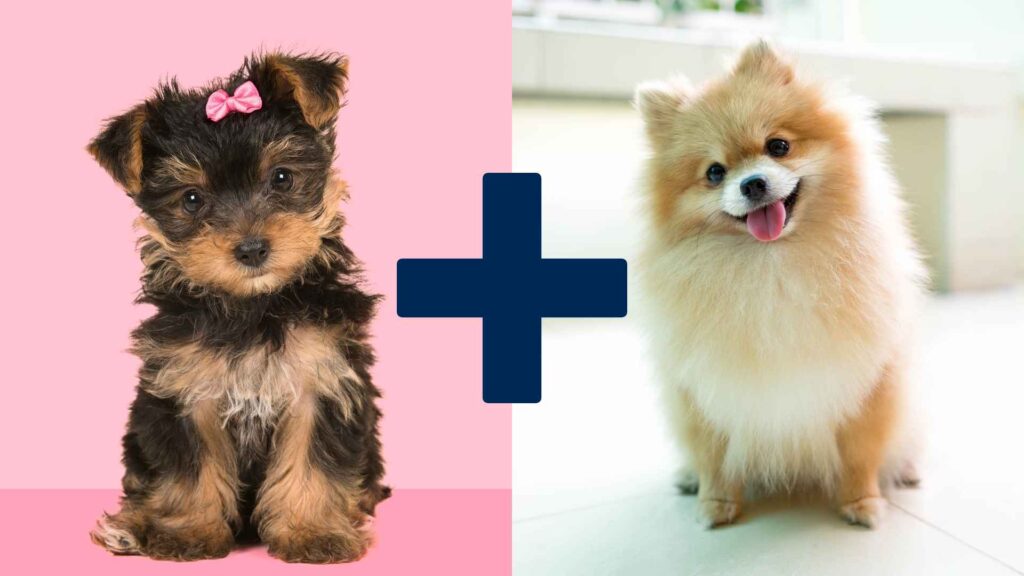
The full grown Yorkie Pomeranian mix, affectionately known as the Yoranian or Yorkie Pom, is a masterclass in “big dog” personality packed into a tiny, five-pound frame. This designer hybrid blends the spirited tenacity of the Yorkshire Terrier with the fluffy, regal alertness of the Pomeranian. Whether you are navigating a high-rise apartment or a suburban home, understanding the nuances of this crossbreed is essential for a long-term, harmonious life together.
What is a Yorkie Pomeranian Mix?
A Yoranian is a first-generation (F1) hybrid resulting from the breeding of a purebred Yorkshire Terrier and a purebred Pomeranian. While they lack AKC recognition, they are celebrated by the International Designer Canine Registry (IDCR). These dogs aren’t just pets; they are “shadows” that follow you from room to room, demanding your undivided attention with a flick of their silky tails.
Table of Contents
ToggleIs a full grown Yorkie Pomeranian mix right for apartment living?
Yes, the Yoranian is an exceptional choice for apartment dwellers due to its compact size and modest indoor exercise needs. However, their tendency to bark at hallway noises requires consistent “quiet” training to keep neighbors happy.
Quick Facts about Full Grown Yorkie Pomeranian Mix
Appearance: How Big Does a Full Grown Yorkie Pomeranian Mix Get?
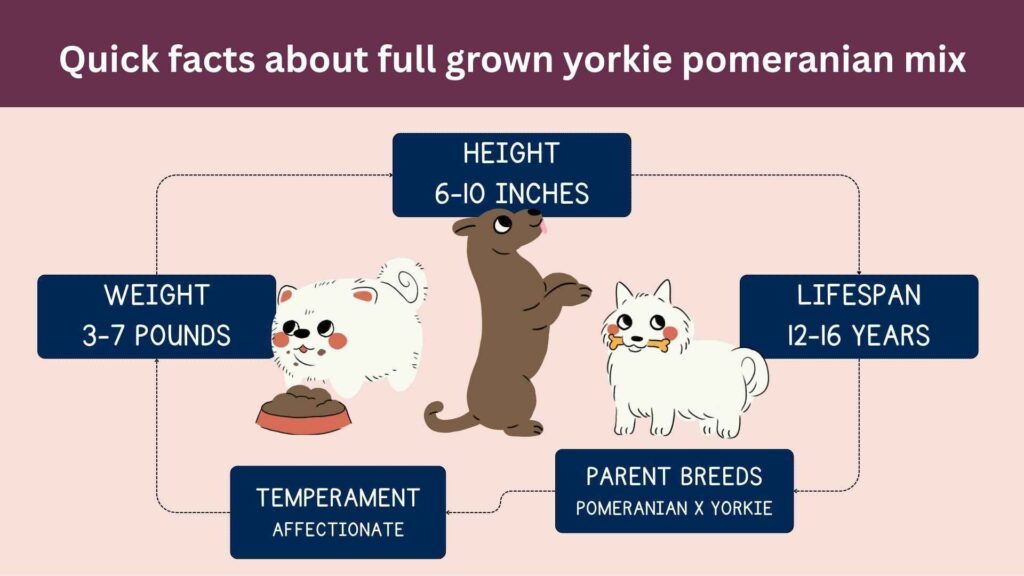
Predicting the exact look of a hybrid can be tricky, but Yoranians generally fall into a predictable range. Most owners find that their full grown Yorkie Pomeranian mix reaches its final skeletal size by 8 to 10 months, though they may “fill out” slightly in weight until their first birthday.
- Weight: 3 to 7 pounds.
- Height: 6 to 10 inches at the shoulder.
- Coat Variety: You may see the “Teddy Bear” look (thick and fluffy like a Pom) or a “Silky” coat (long and hair-like like a Yorkie).
Comparison: Yoranian vs. Parent Breeds

Personality: Does the Yoranian Have "Small Dog Syndrome"?
The full grown Yorkie Pomeranian mix often forgets its size. We see this manifest in “zoomies” and a fearless attitude toward much larger dogs. This confidence is charming but requires a watchful eye to ensure they don’t accidentally provoke a larger animal.
What is the typical temperament of a Yorkie Pom?
Yoranians are fiercely loyal, highly intelligent, and occasionally stubborn. They thrive on human companionship and are known to be “velcro dogs” that may struggle with separation anxiety if left alone for more than 4–5 hours.
The Owner’s Perspective: Living with a Yoranian means never going to the bathroom alone. You’ll notice a specific “huff” they make when they’re annoyed—a short puff of air through the nose—and a high-pitched “woo-woo” sound when you reach for the leash. They don’t just bark; they communicate through a complex vocabulary of whines and chirps.
The "Hidden Gems": Nuances Most Articles Miss
- The “Spitz” Memory: Because Pomeranians descend from Arctic sled dogs, some Yoranians possess a surprising love for cold weather. Don’t be surprised if your dog tries to “dig” into blankets to create a den or prefers laying on a cool tile floor over a plush bed.
- Color Shifting: It is a fascinating fact that many Yoranians change color as they age. A puppy born almost black may transition into a shimmering silver or “blue” and tan by age two, thanks to the Yorkie’s dominant graying gene.
- Service Potential: Unlike many toy breeds, Yoranians are increasingly used as Medical Alert dogs for hearing impairment. Their bond with their owner is so intense that they are naturally attuned to physiological shifts or household sounds that an owner might miss.
Training and Socialization: Overcoming the "Stubborn" Streak
Are Yorkie Pomeranian mixes easy to housebreak?
These mixes can be notoriously difficult to potty train due to their small bladders and independent streaks. Consistency, crate training, and high-value treats are the only effective methods for success.
- Early Socialization: Introduce them to vacuum cleaners, umbrellas, and various people before 12 weeks to prevent “fear barking.”
- The Bark Factor: Yorkies are terriers (watchdogs) and Poms are alert dogs. You will hear about every mail delivery. Training a “Speak” and “Quiet” command early is non-negotiable for sanity.
Health and Genetics: A Science-Based Approach
While crossbreeding can offer “hybrid vigor,” Yoranians are susceptible to specific conditions inherent to toy breeds. As they age, the full grown Yorkie Pomeranian mix requires proactive care to avoid chronic pain.
What are the most common health issues in a Yoranian?
The primary concerns for a full grown Yorkie Pomeranian mix include patellar luxation (loose kneecaps), tracheal collapse, and dental overcrowding. Regular veterinary checkups and early screenings are vital for a long life.
Key Health Screenings to Discuss with Your Vet:
- Orthopedic Foundation for Animals (OFA): To assess the alignment of the knees and hips.
- CERF/CAER: Annual eye exams are crucial as both parent breeds are prone to cataracts and Progressive Retinal Atrophy (PRA).
- Heart Evaluations: Mitral valve disease is a risk in smaller hybrids as they enter their senior years.
- Safety Warning: Always use a harness, never a collar. Their delicate windpipes (tracheas) can collapse under the pressure of a standard neck leash, leading to a permanent, honking cough.
Disclaimer: Consult with a veterinarian for a personalized health plan.
Grooming: Managing the "Lion's Mane"
Maintaining the aesthetic of a full grown Yorkie Pomeranian mix is a significant time commitment. Whether they have the Yorkie’s hair or the Pom’s fur, mats are the primary enemy.
How often should you groom a Yorkie Pom?
You should brush a Yoranian at least 4–5 times a week to prevent matting, especially behind the ears and under the armpits. Professional grooming is typically required every 6–8 weeks for a “Sanitary Cut” and nail trimming.
Your Yoranian Grooming Kit Checklist:
- Slicker Brush: For removing loose fur from the Pomeranian-style undercoat.
- Metal Greyhound Comb: Essential for detangling silky hair near the skin.
- Enzymatic Toothpaste: Toy breeds accumulate tartar at lightning speed; daily brushing prevents systemic organ issues.
- Tear Stain Remover: To keep the area around their large eyes clean and infection-free.
Nutrition: Fueling a High-Metabolism Toy Breed
A single pound of weight gain on a 5-pound dog is equivalent to a human gaining 30 pounds. Obesity is the leading cause of joint failure in the full grown Yorkie Pomeranian mix.
What should I feed my Yorkie Pomeranian mix?
Feed a high-quality, small-breed kibble specifically formulated for high metabolisms. Divide the daily calorie intake into 3 small meals to prevent hypoglycemia (sudden drops in blood sugar), which is a common and dangerous issue in tiny puppies.
Advanced Behavioral Insights: The Guardian of the Hallway
Why does my Yorkie Pom act like a guard dog?
The Yoranian inherits a double dose of “alert” DNA. The Yorkshire Terrier was bred to hunt vermin and protect property, while the Pomeranian was an attentive companion that alerted owners to intruders. In a modern setting, this manifests as a dog that “patrols” the front door or window.
To manage this, you must acknowledge the alert. Often, once you look at what they are barking at and say “thank you,” the dog feels their job is done. If you ignore them, they may bark louder, thinking you haven’t grasped the “danger” of the Amazon delivery driver.
Exercise: Quality Over Quantity
You don’t need to run a marathon with a Yoranian. In fact, their short legs mean a 20-minute brisk walk is equivalent to a 5-mile hike for a human.
- Indoor Play: Hide-and-seek or fetching a plush toy down a hallway is excellent exercise.
- Mental Stimulation: Use “snuffle mats” to engage their nose. A tired brain leads to a quiet dog.
Agility: Believe it or not, many Yoranians excel at “mini-agility” courses because they are agile and eager to please.
The Senior Years: Caring for an Aging Yoranian
As your full grown Yorkie Pomeranian mix crosses the age of 10, their needs will shift. While they may remain puppy-like in spirit, their bodies require adjustments.
- Joint Support: Adding Glucosamine and Chondroitin to their diet can help manage the wear and tear on those tiny joints.
- Vision Care: Be mindful of cloudy eyes (cataracts). If their vision fades, avoid moving furniture in your home to help them navigate by memory.
- Warmth: Senior Yoranians lose the ability to regulate body temperature efficiently. A soft sweater during winter months isn’t just a fashion statement—it’s a health necessity.
Conclusion: The Final Word on the Yoranian
The full grown Yorkie Pomeranian mix is more than just a designer dog—it is a spirited, loyal, and deeply affectionate life partner. They require a specific type of owner: one who doesn’t mind a bit of barking, enjoys the ritual of daily brushing, and has plenty of room on their lap.
If you provide the structure they need and the affection they crave, the Yoranian will reward you with a decade and a half of laughter and unparalleled loyalty. They are small in stature, but their impact on a home is immeasurable.
FAQs
When fully grown, a Yorkie Pomeranian mix will normally weigh somewhere between 3 to 7 pounds and will stand approximately 6 to 10 inches tall. However, actual size will come down to the dominant parent’s genetics.
Depending on the breeder or owner’s preference, this particular hybrid is most either referred to Yorkie Pom or Yoranian (ascribed also to Yorkie Pomeranian mix).
Vibrant, loving, and extremely smart, these little beasts can be rather impressive. These dogs are fiercely loyal, often develop a “Small Dog Syndrome” mindset, and tend to be very people friendly, most of the time. However, this only happens with regular exercise, training and of course socialization.
Aside from the mixed patterned colors like wolf black and orange, tan and cream, they also possess a gold hue. Some puppies possess the silky Yorkie hair, whilst others possess the Pomeranian’s fluffy, fox-like coat.
Both these parent breeds are known to be vocal, so yes they do tend to bark more than other breeds. However, they can be trained and stimulated mentally so that they can uniquely minimize this behavior.
You may also like
Build the Perfect Care Routine for Your Pomeranian
Select your Pom’s age, coat type, and activity level to instantly get a custom care checklist — it’s fast, free, and made with love!
Give your Pom the daily care they truly deserve.