
🐾Understanding and Treating Liver Shunt in Puppy Pomeranians - Portosystemic Shunt (PSS)

Lateef Bhatti
Author
A Liver Shunt in Puppy Pomeranians is a congenital condition where an abnormal blood vessel bypasses the liver, preventing the organ from filtering toxins like ammonia. This toxic buildup leads to neurological signs (hepatic encephalopathy), stunted growth, and gastrointestinal issues, often appearing when the puppy is young. Diagnosis relies on blood tests (high bile acids, low BUN) and advanced imaging; Surgical Correction is the preferred treatment, offering the best prognosis for a normal, healthy life.
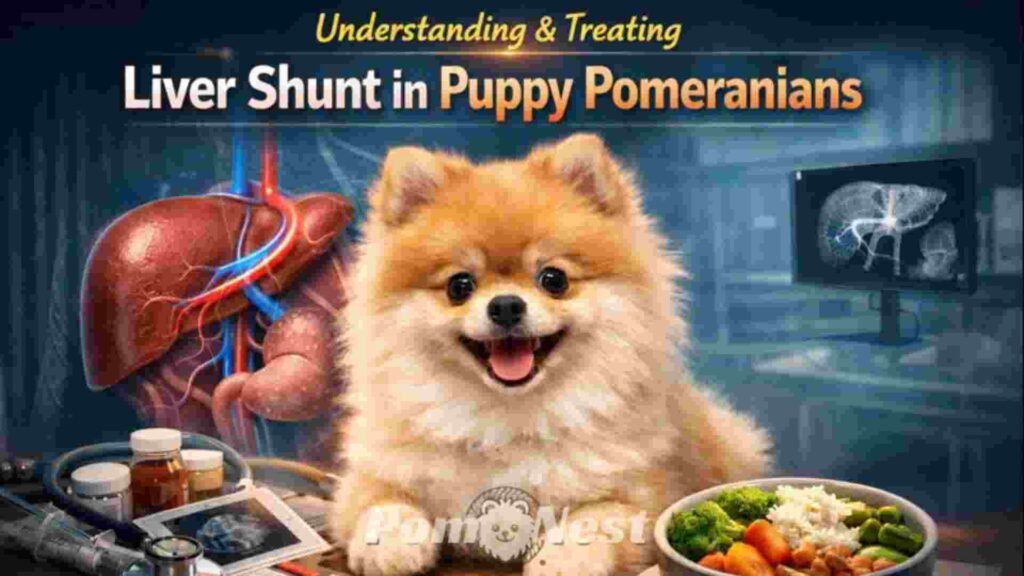
Getting a new Pomeranian puppy is one of life’s great joys! You look forward to years of playful antics and fluffy cuddles. However, when a serious health diagnosis like a Portosystemic Shunt (PSS) threatens that future, it can feel overwhelming. A PSS, commonly known as a Liver Shunt in Puppy Pomeranians, is a serious congenital condition where blood bypasses the liver instead of flowing through it for proper filtration. We’re going to walk you through everything you need to know about this condition, from the subtle signs to the life-saving treatment options, so you can make informed decisions for your cherished pet.
Table of Contents
Toggle🐶 What are the main signs and symptoms of a Liver Shunt in Puppy Pomeranians?
The signs of a Liver Shunt in Puppy Pomeranians can be highly variable and confusing, ranging from subtle signs of poor health to acute, life-threatening crises. Essentially, the symptoms occur because blood from the intestines, full of absorbed nutrients and Toxins, is routed directly into the systemic circulation instead of being properly detoxified by the Liver. This means the puppy isn’t growing correctly and its brain is being poisoned.
Generally, you might first notice that your Pomeranian puppy seems smaller or weaker than its littermates. Affected dogs often exhibit Stunted Growth and fail to thrive. This lack of robust health is often the first clue that the internal Blood Flow isn’t working as it should. Because the liver isn’t processing proteins effectively, your puppy may also show signs of Poor Muscle Development.
What are the common behavioral and neurological symptoms?
These behavioral and neurological symptoms are often the most alarming signs for an owner. They result from a condition called hepatic encephalopathy—essentially, a brain dysfunction caused by the buildup of unfiltered Toxins in the blood. When ammonia and other waste products bypass the Liver and reach the Central Nervous System, they disrupt normal brain function.
You might observe behaviors such as listlessness, excessive drooling, or a glazed-over, confused look. More severe symptoms include aimless pacing, pressing their head against a wall, uncoordinated movements, or even temporary blindness. Crucially, these episodes of Toxicosis often become more pronounced approximately one to two hours after a high-protein meal, when the ammonia load in the blood is highest. If your Puppy experiences tremors or seizures, you need immediate veterinary intervention, as this indicates severe nervous system distress.
What specific gastrointestinal symptoms should I watch for?
Gastrointestinal symptoms in dogs with PSS are also common, though perhaps less specific than the neurological ones. The shunting of blood can affect digestive processes indirectly, leading to chronic, intermittent issues. You should watch for persistent vomiting, which might not be related to eating too quickly. Chronic or recurring diarrhea is also frequently reported. Furthermore, many puppies with a shunt exhibit polydipsia (increased thirst) and polyuria (excessive urination), which can sometimes lead to confusion and misdiagnosis as kidney issues or diabetes. Pay close attention to your puppy’s urination habits; ammonia from the uncleared waste products can contribute to the formation of bladder stones (urate stones), often requiring separate treatment.
🧬 Which dog breeds are most prone to Liver Shunts?

Portosystemic Shunts (PSS) are categorized into two main types: intra-hepatic (inside the liver) and extra-hepatic (outside the liver). These types tend to affect different groups of Dog Breeds. Large breeds, such as Irish Wolfhounds, Golden Retrievers, and Labrador Retrievers, are more commonly affected by intra-hepatic shunts, which are often the result of a failure of the Ductus Venosus to close after birth.
In contrast, the Extra-hepatic Shunt is most prevalent in smaller Dog Breeds. This type involves an abnormal vessel connecting the Portal Vein to the main circulation outside of the Liver tissue.
Is the Pomeranian the only breed at high risk for a Liver Shunt?
Absolutely not, though the Pomeranian is certainly one of the small breeds with a well-documented genetic predisposition. While the risk is high in Pomeranians, the Extra-hepatic type of Liver Shunt is also common in other small, toy, and terrier breeds. These include the Yorkshire Terrier (perhaps the most affected breed), Maltese, Miniature Schnauzer, Dachshund, and Shih Tzu. Because the issue often has a strong genetic component, responsible breeders of all these susceptible breeds must screen their lines carefully to prevent passing on this dangerous defect.
It is important to understand that the abnormal shunting vessel is essentially a remnant of fetal circulation. In the Foetus, blood doesn’t need to be processed by its own Liver because the Mother’s Liver handles all Detoxification. The Patent Ductus Venosus is the fetal blood vessel that directs blood past the puppy’s liver. After birth, this vessel should close off, allowing the Liver to take over. When it fails to close, or when another abnormal vessel develops, you get a PSS.
🔬 How do veterinarians use Blood Tests to detect a Liver Shunt in puppy Pomeranians?

For any Puppy showing signs of Stunted Growth, chronic GI upset, or neurological symptoms, a series of comprehensive Blood Tests is the essential starting point. Vets use these tests to look for biochemical imbalances that point toward improper Organ Functions. Specifically, they look for markers that indicate the liver isn’t performing its critical duties of processing waste and synthesizing proteins.
What specific blood markers (like bile acids) indicate a Liver Shunt?
Several markers in the blood can strongly suggest a PSS. Key indicators often include:
- Low Albumin: Albumin is a major protein synthesized by the Liver. Low levels of Albumin indicate the liver is not synthesizing proteins correctly.
- Low BUN (Blood-Urea-Nitrogen): The liver converts toxic ammonia into less harmful urea. Low BUN (Blood-Urea-Nitrogen) suggests this conversion process is impaired.
- High Liver Enzymes: While not always present, elevated liver enzymes can signal damage or inflammation related to the abnormal Blood Flow.
However, the most definitive biochemical marker is the Bile Acids level.
What is the protocol for the Pre- and Post-Meal Bile Acid Test?
The pre- and post-meal bile acid test is considered the gold standard of initial chemical screening for Portosystemic Shunts (PSS). It is a simple, non-invasive procedure designed to test the liver’s ability to clear bile acids from the blood:
- Fasting Sample (Pre-meal): The Veterinarian first takes a blood sample from the puppy after a 12-hour fast.
- Feeding: The puppy is then given a small, standardized, fatty meal.
- Post-Meal Sample: Exactly two hours later, a second blood sample is drawn.
In a healthy dog, the liver is stimulated by the meal to secrete bile acids and then rapidly removes them from the blood, resulting in a low post-meal level. In a puppy with a Liver Shunt in Puppy Pomeranians, the blood containing bile acids bypasses the liver entirely, resulting in excessively high post-meal Bile Acids levels. This definitive test provides a very high index of suspicion.
What Extra Diagnostic Tests are necessary to confirm a Liver Shunt in Puppy Pomeranians?
While blood work provides a strong indication of a PSS, it doesn’t confirm the exact location or type of the shunt—information vital for treatment planning. Therefore, extra diagnostic imaging is always required to confirm the findings.
If blood tests are inconclusive, what specialized imaging tests (like ultrasound or portography) are used?
The least invasive and most common next step is a specialized abdominal ultrasound. A skilled ultrasonographer can often visualize the abnormal vessel, trace the Portal Vein, and confirm the diagnosis. They can also assess the size of the Liver, which is often abnormally small in PSS cases.
However, for a completely definitive diagnosis and surgical mapping, more advanced imaging is often required:
- CT Angiography: This involves injecting a contrast dye and using a CT scan to create a detailed, 3D map of the vascular system. This is currently the preferred method for surgical planning.
- Portography: This involves injecting dye directly into a mesenteric vein during an exploratory surgery, then taking X-rays to visualize the entire Blood Flow pattern.
Why are these advanced tests crucial before planning treatment?
Locating and classifying the shunt is perhaps the most crucial step before treatment begins. Is it an Intra-hepatic Shunt or an Extra-hepatic Shunt? Because the Intra-hepatic Shunt is harder to access and often requires specialized stenting or coiling by an internal medicine specialist, knowing the type dictates the entire Surgery plan. Furthermore, these tests allow the veterinary team to assess the puppy’s overall condition and calculate the risk of using general anesthetic. You can’t treat what you can’t see, and these advanced diagnostics ensure the surgical team knows precisely what they are dealing with.
🩺 Treatment Options for Liver Shunt in Puppy Pomeranians

Treating a Liver Shunt in Puppy Pomeranians is usually a two-pronged approach: managing the immediate symptoms through diet and medication, and then, ideally, performing Surgical Correction for a permanent fix.
How is a Liver Shunt in Puppy Pomeranians treated?
The ultimate goal of treating a Liver Shunt in Puppy Pomeranians is to restore the normal Blood Flow through the liver. Before surgery, or if surgery is not an option, medical management is used to reduce the Toxicosis risk. This involves antibiotics and medications like Lactulose to prevent ammonia absorption, combined with strict Dietary Management. Once the puppy is stabilized and healthy enough, the Veterinarian will recommend a surgery to permanently address the shunt.
Can a Liver Shunt in Puppy Pomeranians be corrected with surgery, and what does the procedure involve?
Yes, Surgery is the preferred and definitive treatment for most shunts, especially the Extra-hepatic Shunt common in the Pomeranian. The goal is to slowly close or restrict the abnormal vessel.
Since abruptly closing the vessel can cause fatal portal hypertension (a sudden backup of blood pressure in the abdominal organs), surgeons often use gradual occlusion devices:
- Ameroid Constrictor: A ring made of casein (a milk protein) that is placed around the shunt vessel. The constrictor slowly swells over a period of 4–6 weeks, gradually closing the shunt and allowing the Portal Vein system to adapt by developing new, healthy pathways.
- Cellophane Banding: A piece of sterile cellophane is wrapped around the vessel. This causes scar tissue to slowly form, leading to the gradual closure of the shunt.
For Intra-hepatic Shunts, specialized procedures involving catheterization and embolization (placing coils to block Blood Flow) are often performed by specialists.
What is the prognosis for surgical correction of a Liver Shunt in Puppy Pomeranians?
The prognosis following a successful Surgical Correction is typically very positive. For the Extra-hepatic Shunt commonly seen in the Pomeranian, most puppies go on to live a normal life with no further symptoms and no need for the strict Dietary Management required before the procedure. Recovery involves careful monitoring and follow-up Blood Tests (including a post-operative bile acid test) to confirm the shunt has fully closed. It is important to note that a small percentage of dogs may develop secondary complications or still require some level of medical management if the closure isn’t 100%.
What medical management options are available if surgery is not an option?
If Surgery is ruled out due to the severity of the shunt, high Anaesthetic risk, or financial constraints, the Puppy will need life-long medical management. This involves two core components:
- Lactulose: This syrupy medication acidifies the colon, trapping the ammonia so it cannot be absorbed into the bloodstream. It also acts as a mild laxative, ensuring the ammonia is quickly excreted.
- Antibiotics (e.g., Metronidazole): Certain antibiotics are used to alter the gut flora, reducing the amount of ammonia-producing bacteria in the large intestine.
This treatment aims to reduce the severity and frequency of neurological symptoms caused by Toxicosis, though it does not fix the underlying structural problem.
Why is Dietary Management with a Low-Protein Diet critical for dogs with Liver Shunt issues?
Dietary Management is arguably the most critical component of care, whether before surgery or for long-term medical management. This is because all dietary protein, when broken down, produces nitrogenous waste products, including ammonia. Since the abnormal vessel prevents the liver from completing its Detoxification duties, these products accumulate. A Low-Protein Diet dramatically reduces the ammonia load, which directly prevents or minimizes the symptoms of hepatic encephalopathy.
How does a special low-protein diet reduce the symptoms of a Liver Shunt?
By strictly controlling the amount of protein, you limit the substrate available for ammonia production. You are essentially managing the environmental factors that trigger Toxicosis. The protein that is included in the diet must be of exceptionally high quality, meaning it is easily digestible and produces less ammonia waste. This approach ensures the puppy gets the necessary amino acids for growth and tissue repair while avoiding a dangerous buildup of Toxins that can affect the Central Nervous System.
What are the best commercial or homemade diet options for a dog with this condition?
The safest and most recommended options are commercial prescription veterinary diets formulated specifically for hepatic conditions. These diets are carefully balanced to be protein-restricted but calorie-dense and include supplements (like zinc and fiber) that are beneficial for liver patients. If you are considering a homemade diet, you must work directly with your Veterinarian and a certified Pet Nutritionist. Formulating a diet that is low in protein yet meets all the caloric and micronutrient needs of a growing Puppy is incredibly complex and dangerous to attempt without expert guidance. A homemade diet must be managed rigorously to avoid malnutrition or accidental protein overload.
💖 Final Thoughts on Liver Shunt in Puppy Pomeranians
Receiving a diagnosis of Liver Shunt in Puppy Pomeranians is scary, but thanks to advancements in veterinary medicine, it is no longer the definitive death sentence it once was. With early, accurate diagnosis using Blood Tests and imaging, and the swift intervention of Surgical Correction, the outlook is overwhelmingly positive.
What is the long-term outlook for a Pomeranian puppy diagnosed with a Liver Shunt?
The long-term outlook is generally excellent following a successful shunt closure. Most Pomeranian puppies that undergo Surgery are completely cured and can be weaned off all medications and eventually even off their strict Low-Protein Diet. They go on to live full, happy, and normal lives. For those dogs managed solely with medication and Dietary Management, their prognosis is more guarded; they require lifelong dedication from their owners, but their quality of life can be maintained by diligently adhering to their Veterinarian’s instructions and avoiding protein surges.
The key to a good outcome is vigilance—recognizing the early signs of Stunted Growth or behavioral changes—and working closely with your veterinary team. Don’t underestimate the severity of this condition; take prompt action, and you’ll give your fluffy friend the best chance at a wonderful life.
⚠️ Important Veterinary Disclaimer
The content of this article is for informational purposes only and is not intended to be a substitute for professional veterinary advice, diagnosis, or treatment. Always seek the advice of your veterinarian or other qualified animal health provider with any questions you may have regarding a medical condition. Never disregard professional veterinary advice or delay in seeking it because of something you have read here.
References & Further Reading:
Ettinger’s Textbook of Veterinary Internal Medicine
Small Animal Internal Medicine (Richard W. Nelson & C. Guillermo Couto)
Veterinary Clinics of North America: Small Animal Practice (Look for issues focusing on Hepatobiliary Disease)
Journal of the American Veterinary Medical Association (JAVMA) (Search for Portosystemic Shunt articles by authors like Tobias)
Current Veterinary Therapy (A collection of articles covering various diseases and treatments)
Canine and Feline Hepatobiliary Diseases
Veterinary Surgery: Small Animal (For detailed surgical procedures and prognoses)
People also ask:
Congenital Portosystemic Shunts (PSS) are present from birth, but clinical signs typically manifest early in life, with diagnosis most common between six weeks and six months of age.
Yes, the most common form, the congenital portosystemic shunt, is a birth defect resulting from the failure of the fetal ductus venosus vessel to close properly after the puppy is born.
If untreated, the continuous buildup of ammonia and other toxins in the bloodstream often leads to irreversible neurological damage, severe hepatic encephalopathy, and ultimately, a shortened lifespan.
The condition itself is not structurally painful, but the severe neurological symptoms (hepatic encephalopathy) are distressing, causing disorientation, seizures, and an extreme feeling of illness.
Zinc is often supplemented because it is a cofactor for enzymes involved in ammonia detoxification; B vitamins and Vitamin K are also important, as the compromised liver may struggle with their storage and synthesis.
You may also like


Build the Perfect Care Routine for Your Pomeranian

Select your Pom’s age, coat type, and activity level to instantly get a custom care checklist — it’s fast, free, and made with love!
Give your Pom the daily care they truly deserve.