
🐶 Why Is My Pomeranian Vomiting? (All The Possible Reasons)

Lateef Bhatti
Author
Seeing your beloved furry friend throw up is always distressing. While it’s certainly unpleasant, Pomeranian vomiting is a symptom, not a disease itself. It’s a common occurrence in dogs, but when it becomes frequent or severe, it’s a clear signal that something in your Pomeranian’s system needs attention. Understanding the potential causes, from simple diet change issues to serious underlying conditions, is the first step in helping your little companion feel better.
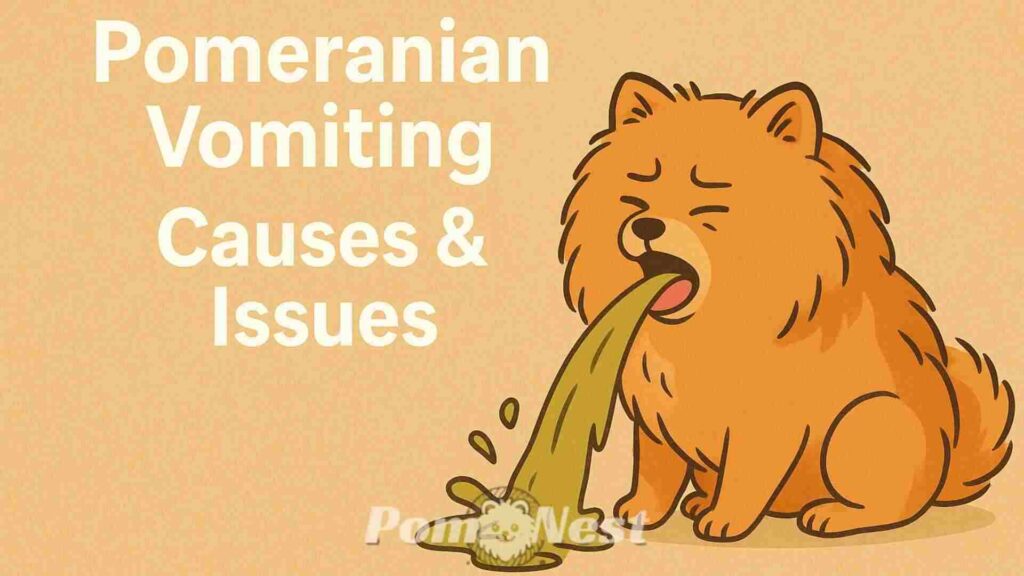
What is Vomiting?
Vomiting is the forceful, active ejection of contents from the stomach and upper small intestine through the mouth. It’s often preceded by signs like drooling, retching, and intense nausea.
Table of Contents
ToggleThe vomit typically contains partially digested food mixed with acidic fluid and bile. Your Pom is actively using its abdominal muscles to expel this material. This distinguishes it from other types of gastric distress.
How Do I Know My Pomeranian Is Vomiting?
True vomiting is generally an active process you can easily observe. Your Pom will often appear restless, drool excessively, and repeatedly lick its lips beforehand.
They will then strain and heave, constricting their abdomen with visible effort. The expelled contents are usually chunky and semi-digested because they’ve been in the stomach for a while.
Regurgitation in Pomeranian Dogs
It’s crucial to know the difference between vomiting and regurgitation. They look similar, but they originate from different parts of the digestive system and have different causes.
Regurgitation is a passive, effortless backflow of undigested food and fluids from the esophagus. The esophagus is the tube connecting the mouth to the stomach. Unlike vomiting, there is no retching or abdominal contraction involved.
Signs of Regurgitation in Pomeranian Dogs
When a Pom regurgitates, the material comes out quickly, usually right after eating or drinking. The contents are undigested, often appearing tubular or cylindrical because they have been shaped by the esophagus. Regurgitation is usually less serious than vomiting and is frequently caused by simply eating too fast, but persistent regurgitation can indicate issues like an enlarged esophagus.
How Do I Know If My Pom's Vomiting Is Serious?

A single, isolated instance of throwing up is usually nothing to worry about. Maybe they ate something weird or too fast. However, Pomeranian vomiting becomes a serious concern and requires immediate veterinarian / medical assistance if you observe any of the following signs:
- Continuous or large-volume vomiting episodes.
- Your Pom has a high fever, is extremely lethargic, or seems depressed.
- The vomit or stool contains visible blood (Hematemesis).
- Your dog refuses to eat (Anorexia) or drink for 12–24 hours.
- Symptoms of pain, such as restlessness or reluctance to be touched.
Why is Observation Necessary During Pomeranian Vomiting?
Detailed observation is one of the most helpful things you can do for your pet and your vet. The clues you gather can significantly speed up diagnosis and treatment of the underlying cause.
Observe Stool and Vomit
While it’s unpleasant, closely inspecting the vomit and stool is vital. What color is the vomit? Does it contain foreign material? What is the consistency? Passing this exact information, including frequency and timing, to your vet is an essential first step toward effective diagnosis.
Examine Your Pomeranian’s Gums
Vomiting can quickly lead to dehydration, especially in small breeds like Poms. Press your finger gently against their gums. If the color is pale, white, or if the pink color doesn’t return immediately, it suggests poor circulation or dehydration. This requires prompt medical attention.

Do Pomeranian Puppies Vomit a Lot?
Yes, Pomeranian puppies can vomit frequently due to their immature systems. They may throw up because of fast food intake, stress, or eating non-food items. However, vomiting in young dogs is always a major concern because they are highly susceptible to Hypoglycemia (Low blood sugar) and Dehydration. Furthermore, puppies under four months are vulnerable to severe diseases like Parvo (Viral infection). Never delay contacting your vet if a puppy is repeatedly vomiting.
What Are The Causes of Pomeranian Vomiting?
The causes of vomiting are broad and can range from acute issues to chronic diseases. They can be generally categorized as:
- Dietary Issues: Sudden Diet Change / Fast Food Intake, eating garbage, or consuming rich or fatty human food.
- Toxic or Foreign Material: Ingestion of Toxins / Poisoning (like certain plants or cleaners) or a non-food item causing an Intestinal Blockage / Foreign Object.
- Infections and Inflammation: Gastritis / Stomach Ulcers, Parvo (Viral infection), or intestinal worms.
- Systemic Diseases: Underlying issues like kidney failure, liver disease, or Pancreatitis can cause secondary Pomeranian vomiting.
Why Does Color Matter in Pomeranian Vomiting?
The color of the vomit is one of the most important diagnostic clues you can provide to your veterinarian. Different colors point to different internal origins, helping the vet trace the source of the irritation or bleeding.
Why Is My Pomeranian Vomiting White Foam?
Pomeranians often vomit Bile / White Foam when their stomach is empty and nothing is left but gastric juices and saliva. This foaming occurs when the gastric acid irritates the stomach and esophagus lining, and the dog throws up mucus mixed with air.
Causes of Gastrointestinal Upset That Lead to Throwing Up White Foam
Vomiting white foam usually indicates a generalized Stomach Upset / Gastric Upset or irritation of the stomach lining. Common triggers include:
- Acid Build-up: This is often the simplest cause, especially if the dog has an empty stomach for too long.
- Heatstroke: Extreme heat can cause generalized illness and vomiting.
Eating Grass: Dogs instinctively eat grass when they have an upset stomach, which can lead to white foamy vomit.
Why is My Pomeranian Vomiting Yellow?
Yellow vomit is caused by bile, a greenish-yellow digestive fluid produced by the liver. When your Pom vomits yellow liquid, it means the stomach is empty, and the bile has flowed from the small intestine back into the stomach.
This condition is specifically known as Bilious Vomiting Syndrome (BVS), or sometimes reflex gastritis. It most commonly occurs first thing in the morning when the stomach has been empty for hours.
Causes of Yellow Vomit in Pomeranians
Yellow vomit is a sign of digestive tract irritation due to lack of food. The common causes include:
- Empty Stomach: The most frequent cause, as acidic bile irritates the mucosal lining.
- Enteritis or Colitis: Inflammation of the small or large intestine.
Severe Illnesses: Occasionally, yellow vomit can be associated with liver disease or pancreatitis.
Why is My Dog’s Vomit Brown?
Brown vomit can signal two very different things. If the vomit smells strongly of feces, your Pom may have been consuming poop (Coprophagia) or, more seriously, it could indicate an Intestinal Blockage / Foreign Object deep in the small intestine. In an obstruction, the vomit is usually expelled hours after eating and is a major emergency.
Why is My Pom Vomit Black?
Black vomit is alarming. If your Pom has been playing in the dirt or eating mulch, the color might just be dirt. However, true black vomit, often resembling coffee grounds, is a sign of old, digested blood (Hematemesis).
Causes of Black Vomiting in Pomeranians
The black color comes from blood that has been partially digested by stomach acids, changing the hemoglobin from red to black. This means bleeding is occurring higher up in the gastrointestinal tract.
- Severe Ulcers: Erosion of the stomach or intestinal lining.
- Tumors: Growths in the stomach.
- Toxins / Poisoning: Certain poisons, like rat poison, can cause internal bleeding.
- Drug Side Effects: Prolonged use of specific medications (like NSAIDs).
Symptoms of Hematemesis in Pomeranians
If your Pom is vomiting black or coffee-ground material, it is an emergency. You may also notice:
- Black, Tarry Stool (Melena)
- Severe weakness and Anemia
- Lethargy and lack of appetite
Why is My Pomeranian Throwing Up a Green Vomit?
Green vomit is usually the result of your Pomeranian eating a large amount of grass. It can also be caused by bile if the fluid is expelled from the duodenum (the first part of the small intestine). If the green episode is brief and your Pom is otherwise fine, it’s probably just grass. If it is persistent, seek medical advice.
What Can I Give My Pomeranian For An Upset Stomach?

If your Pom has only vomited once, is acting normally, and has no other alarming symptoms, you can try supportive home care before seeking veterinarian / medical assistance.
1. Fast Your Pomeranian
Withhold all food for 12 hours (6 hours for a small puppy). Fasting gives your Pom’s stomach a chance to rest and recover from the Gastric Upset. Always keep clean water available during the fast.
2. Keep Your Pom’s Sugar Level in Balance
Because Poms are small, they are prone to life-threatening Hypoglycemia (Low blood sugar) when they stop eating. Rub a small amount of honey or sugar water on their gums every few hours during the fast to keep their blood sugar stable.
3. Monitor Pomeranian Hydration
After a few hours of resting the stomach, offer small amounts of water or an electrolyte solution like unflavored Pedialyte every 30 minutes. Don’t let them gulp down a large volume, as this can trigger more Pomeranian vomiting.
4. Offer a Bland Diet (Blend Food)
If your dog hasn’t vomited for 12 hours, start the re-feeding process. A Bland Diet (Boiled rice and meat) is essential. Feed a mixture of plain, boiled white rice (75%) and boiled, skinless, boneless chicken or lean hamburger (25%). Feed tiny portions every 3-4 hours, gradually increasing the amount over a few days.
5. Canned Pumpkin
Pure canned pumpkin (not pie filling) is an excellent source of fiber and can help soothe a Stomach Upset. It’s easy to digest and low in fat. Start with a half-teaspoon for puppies or a tablespoon for adults mixed with their bland food.
6. Probiotics
Once your Pom is stable and eating the bland diet, you can introduce Probiotics / Plain Yogurt. These introduce healthy gut bacteria, aiding digestion and boosting the immune system. Plain, unsweetened yogurt is a simple source.
7. Bone Broth
Warm bone broth is nutritious, highly palatable, and can encourage appetite in an anorexic dog. It’s also hydrating and easily digested, making it a perfect transition food after a fast.
8. OTC Medication (Use with Caution)
Never administer any over-the-counter human medication (like Pepto-Bismol) without explicit veterinary instruction. Many human medicines are toxic to dogs, and self-medication can cause more harm than good, especially when dealing with Pomeranian vomiting.
Final Thoughts
While most instances of Pomeranian vomiting resolve quickly with home care, always remember that severe or continuous vomiting is a medical emergency. Your best resource is your veterinarian. By carefully observing your dog and providing your vet with the details about the vomit’s color, timing, and frequency, you can ensure your beloved Pom gets the right treatment quickly.
⚠️ Important Veterinary Disclaimer
The content of this article is for informational purposes only and is not intended to be a substitute for professional veterinary advice, diagnosis, or treatment. Always seek the advice of your veterinarian or other qualified animal health provider with any questions you may have regarding a medical condition. Never disregard professional veterinary advice or delay in seeking it because of something you have read here.
References:
Veterinary Medicine Textbooks and Databases for anatomy and physiology.
Pet Health and Wellness Resources for general care and symptom recognition.
Peer-Reviewed Journals for data on Parvo, Pancreatitis, and Bilious Vomiting Syndrome (BVS).
Canine Nutrition Guidelines for supportive diets, including Bland Diet and Probiotics.
Toxicology Resources (Poison Control) for information on toxins causing severe vomiting.
People also ask:
Unhealthy dog vomit can look black (digested blood), bright red (fresh blood), or contain an unusual amount of liquid bile, foam, or foreign objects like plastic or rags.
More than two to three times in a 24-hour period, or vomiting that persists for over 24 hours, is generally considered too much and warrants a call to your vet.
You should never give your dog any medicine for vomiting, including human OTC drugs, without explicit guidance from your veterinarian, as many are toxic or can complicate diagnosis.
Vomit related to pancreatitis often appears yellow or green due to large amounts of bile, and the episode is typically accompanied by severe abdominal pain, lethargy, and hunched posture.
Parvo causes extreme, severe, and bloody diarrhea with intense lethargy, while worms (parasites) typically cause less severe vomiting, bloody mucus in the stool, and weight loss, but both require a vet diagnosis.
You may also like



Build the Perfect Care Routine for Your Pomeranian
Select your Pom’s age, coat type, and activity level to instantly get a custom care checklist — it’s fast, free, and made with love!
Give your Pom the daily care they truly deserve.