
How Many Times a Day Should I Feed My Pomeranian? Pomeranian Feeding Guide

Lateef Bhatti
Author
A good Pomeranian feeding guide is based on two things: scheduled meals and precise portion control. Puppies need to eat 3 to 4 times a day to prevent low blood sugar. Adult Pomeranians do well with two meals a day to stay healthy and have energy. Always choose high-quality food made for breeds with kibble sized for their tiny jaws.
Overview 🐾
Bringing a Pomeranian into your home means taking care of a dog with big nutritional needs. I learned this with my Pom, Biscuit. He had a blood sugar episode that took us to the emergency vet at 11 PM on a Tuesday. The vet told me “You’re feeding him like a dog aren’t you?” I was. That $340 emergency visit taught me more about feeding Pomeranians than any article.
Table of Contents
ToggleGetting their diet right is the thing you can do for a long energetic life. It starts with understanding that Pomeranians are not versions of big dogs. They have a metabolism.
So how times a day should I feed my Pomeranian? It depends on age, weight, health and even the season. This guide covers every variable with experience and veterinary insight.
Understanding Basic Nutritional Needs
A good Pomeranian feeding strategy starts with high-quality dog food in nutrients. Poms need high-quality animal protein to maintain their coat and lean muscle. Protein should be the ingredient listed whether you’re using Royal Canin Small Breed Adult or a premium raw option.
Healthy fats, like Omega-3 fatty acids from salmon oil or flaxseed are vital for skin health and cognitive function. These fats make up a portion of a Poms daily energy intake and directly impact coat quality.
Carbohydrate quality matters more than quantity for Poms. Avoid formulas with corn, wheat or soy fillers. Look for carbohydrates like sweet potato, brown rice or oatmeal.
Macronutrient Targets for Pomeranians
Most veterinary nutritionists recommend the following ranges for adult Pomeranians:
- Protein: 25 to 30% of calories from named animal proteins like chicken, salmon or turkey
- Fat: 15 to 20% of calories with Omega-3 and Omega-6 balance
- Carbohydrates: 30 to 40% of calories from complex sources
- Fiber: 3 to 5% to support gut motility
Why Small Breed Formulas Are Important
Regular kibble is not suitable for Pomeranians. The kibble pieces are too large for their mouths and large-breed formulas are calorie-dense causing weight gain.
Breed specific formulas, like Purina Pro Plan Small and Toy Breed Shredded Blend are engineered for a 4 to 7-pound dogs daily requirements.
Core Feeding Methods: Debate and Practice

Owners usually choose between two main feeding styles: scheduled meals or free feeding. Each method has real pros and cons, and the right choice depends on your dog’s age, personality, and health needs.
Scheduled Meals for Your Pomeranian
Scheduled meals mean you offer food at set times during the day, then remove the bowl after 20 to 30 minutes whether the dog has finished or not. This method works well for the vast majority of Pomeranians because it supports housebreaking, reinforces training routines, and enables healthy digestion.
It also allows you to monitor appetite precisely. Changes in eating behavior are often the first sign of illness in dogs. If your Pom skips a meal or eats significantly less than usual, you notice immediately with scheduled feeding. With free feeding, you might not realize there’s a problem until it’s progressed significantly.
Scheduled Feeding: Pros and Cons
Pros:
- Prevents obesity through controlled portions
- Makes housebreaking substantially easier since elimination follows a predictable pattern after meals
- Encourages better eating habits and reduces food anxiety
- Allows precise calorie tracking
- Provides early warning of appetite changes signaling health issues
Cons:
- Not suitable for dogs with severe hypoglycemia who need constant access to food
- Requires consistent daily routine from the owner
- Dogs may become anxious or pushy around mealtimes initially
Free Feeding Your Pomeranian
Free feeding means keeping a bowl of food available at all times and allowing the dog to eat when they choose. This approach works for a small subset of Poms who are natural self-regulators and never overeat. In my experience working with Pom owners online, this represents maybe 15 to 20% of dogs.
Pros:
- Good for dogs who self-regulate naturally
- Convenient for owners with unpredictable schedules
- Ideal for dogs with stable digestion and no weight issues
Cons:
- High risk of obesity in dogs who don’t self-regulate (the majority)
- Makes training harder because food cannot be used as a novel reward
- You cannot track appetite changes or spot health issues early
- Dry food left out can go stale, attract insects, or harbor bacteria in humid environments
Which Method Is Correct?
A feeding schedule is the safer, more effective method for most Pomeranians. It supports weight control, training, and health monitoring simultaneously. Free feeding works only when the dog naturally eats small amounts across the day and maintains a healthy BCS consistently. If your dog overeats even slightly, scheduled feeding is the correct choice, and there’s no debate about it.
Age-Specific Requirements and Schedules

Pomeranians need different food, portions, and feeding frequencies depending on age. This is not one-size-fits-all. Puppies require more frequent meals, adult dogs need stable portions, and seniors may need softer kibble or reduced calories.
The age-based differences are significant enough that using the wrong schedule for your dog’s life stage causes real harm, either through nutritional deficiency in growing puppies or obesity in adults being fed like puppies. Get this right from the beginning.
Age-Specific Feeding Requirements
Puppies need high-calorie meals engineered for rapid growth. Their bodies are building bone, muscle, organ tissue, and their immune system simultaneously. Adults need balanced nutrition to maintain weight and energy without excess. Seniors may need support for joints, digestion, and overall health, and their metabolism genuinely slows in ways that require a caloric reduction of around 20%.
Age directly affects metabolism, which directly affects how much food your dog needs. A 5-pound adult Pomeranian and a 5-pound puppy Pomeranian have completely different caloric requirements despite identical body weights.
Pomeranian Puppy Feeding Schedule
How many times a day should I feed my Pomeranian puppy? Pomeranian puppies should be fed 3 to 4 times a day. Their small stomachs cannot hold large amounts of food at once, and frequent meals prevent the dangerous blood sugar drops that cause hypoglycemia. A stable feeding schedule supports healthy growth and establishes good eating habits that carry forward into adulthood.
I recommend four meals daily for puppies under 4 months and transitioning to three meals between 4 and 8 months. At 8 to 12 months, begin transitioning to twice daily as they approach adult size. This graduated reduction prevents the metabolic disruption that comes from abrupt schedule changes.
Suggested puppy meal times: 7 AM, 12 PM, 5 PM, and 9 PM for four-meal schedules. For three meals: 7 AM, 1 PM, and 6 PM.
How Much Should You Feed a Pomeranian Puppy?
You should feed a Pomeranian puppy small meals throughout the day based on their weight and age. Most puppies need between ¼ to ½ cup of high-quality small-breed puppy kibble daily, divided into the appropriate number of meals. Adjust portions upward or downward based on whether they appear too thin (ribs visible) or too chubby (difficulty feeling ribs).
Always follow the specific feeding guidelines on your chosen puppy food bag as a starting point, then adjust based on your individual puppy’s growth and body condition. Weigh your puppy weekly for the first three months.
What Should You Feed Pomeranian Puppies?
Feed Pomeranian puppies small-breed specific puppy kibble with high protein (at least 28%) and appropriate fat content (around 17 to 20%). Look for formulas that support brain development, healthy bone growth, and coat development. Royal Canin X-Small Puppy and Hill’s Science Diet Small Paws Puppy are reliable, widely available options with strong track records. Avoid large-kibble formulas, grain-free diets (which carry cardiac risk warnings from the FDA for small breeds), and any formula with artificial colors as primary ingredients.
Adult Pomeranian Feeding Schedule
Adult Pomeranians thrive on two meals a day. This schedule keeps their energy stable and prevents the overeating that occurs when dogs go many hours between meals and then eat ravenously. Feeding early in the morning and early evening works best because it matches their natural activity levels and allows complete digestion before sleep.
My standard recommendation, refined from observing dozens of Poms in online communities and working with breeders, is 7 AM to 8 AM for the first meal and 5 PM to 6 PM for the second. This provides an 11-hour gap between last meal and sleep, allowing thorough digestion before the overnight fast.
How Much Should You Feed an Adult Pomeranian?
Most adult Pomeranians need between ¼ and ¾ cup of food daily depending on activity level, size, age, and individual metabolism. Highly active dogs may need slightly more. Indoor dogs with limited exercise often need toward the lower end of this range. Neutered and spayed dogs often need 20 to 25% fewer calories than intact dogs of the same weight.
| Weight of Pomeranian | Daily Food Amount | Meals per Day | Best Feeding Times |
|---|---|---|---|
|
2–3 lbs |
¼ cup |
2 |
8 AM, 6 PM |
|
3–5 lbs |
⅓–½ cup |
2 |
8 AM, 6 PM |
|
5–7 lbs |
½–¾ cup |
2 |
7 AM, 5 PM |
|
Puppy (0–6 months) |
¼–½ cup |
3–4 |
7 AM, 12 PM, 5 PM |
|
Senior |
¼–½ cup |
2 |
9 AM, 5 PM |
These are starting points, not rigid rules. Adjust based on your individual dog’s body condition score monthly.
How Often Should I Feed My Pomeranian?
Feed puppies 3 to 4 times a day and adults twice a day. This schedule keeps energy levels even and supports digestion throughout all life stages. Seniors may follow the same twice-daily routine but with lighter, more digestible portions and potentially a senior-specific formula.
The question of how many times a day should I feed my Pomeranian ultimately reduces to this framework: age drives frequency, weight drives quantity, and quality drives everything.
How Many Treats Should I Feed My Pomeranian?
Treats should account for no more than 10% of your dog’s total daily calories. For a 5-pound Pomeranian consuming approximately 200 calories daily, this means no more than 20 calories from treats. Zuke’s Mini Naturals Chicken Recipe treats contain 3.5 calories each, meaning your Pom can have 5 to 6 daily during training without disrupting their diet. Avoid high-calorie human food treats entirely. Even a single small piece of cheddar cheese can represent 15 to 20% of a small Pom’s daily calorie budget.
Food Selection and Types
Choosing the right food is essential because Pomeranians need nutrient-dense meals at every life stage. Small-breed formulas are ideal because they match both calorie needs and kibble size to jaw dimensions. You can choose dry food, wet food, raw, or fresh recipes depending on what suits your dog and your budget. Each has legitimate advantages.
Recommended Dog Food for Pomeranians
Choose high-quality kibble that includes a named real protein as the first ingredient, balanced omega fats, and limited artificial fillers. Small-breed formulas from brands with AAFCO nutritional adequacy statements are your safety baseline. Foods with added DHA and EPA omega-3s support a healthy coat and brain function, which is particularly important for senior dogs.
Here are the brands I’ve found most consistently reliable for Pomeranians, with honest assessments:
Royal Canin Pomeranian Adult: Breed-specific formula designed for Poms. Excellent protein quality and appropriate kibble size. Price point is higher at approximately $55 to $70 for 10 pounds, but the breed-specific engineering is genuine. Best for owners who want a set-and-forget solution.
Hill’s Science Diet Small Paws: Widely recommended by veterinarians. Strong quality control and digestibility. Around $45 to $55 for an 8-pound bag. Good for sensitive stomachs. Not the most exciting ingredient list but consistently effective.
Purina Pro Plan Small and Toy Breed Shredded Blend: High protein content (30%), excellent palatability. One of the more affordable premium options at around $38 for 6 pounds. Poms who are picky eaters often accept this readily due to the shredded texture mixed into the kibble.
Blue Buffalo Life Protection Small Breed: LifeSource Bits formula includes antioxidant-rich kibble pieces. Strong ingredient list. Watch for recalls in this brand’s history, as they’ve had more than others. Around $48 for an 11-pound bag.
Wellness CORE Small Breed: Grain-inclusive (preferable to grain-free for this breed), high protein at 34%, excellent for active Poms. Around $52 for a 10-pound bag.
Best Food to Feed a Pomeranian
The best food is the one that fits your dog’s specific age, activity level, and digestive system while meeting AAFCO minimum nutritional standards. Many Pomeranians do well with primarily dry kibble, but adding a tablespoon of wet food for moisture and palatability is a legitimate strategy, particularly for picky eaters or seniors. Avoid low-quality brands that list corn, wheat, or soy as the first ingredient, and avoid those that rely on artificial colors or preservatives like BHA and BHT.
Wet Food
Wet food offers moisture and enhanced flavor, which particularly helps picky eaters and seniors with reduced smell or appetite. It’s softer, so it works well for dogs with dental issues or missing teeth. However, it spoils quickly once opened and should be refrigerated and used within 48 hours. It can also be more expensive per calorie than dry kibble and does not provide the same dental scraping benefit. Use as a supplement or topper rather than a primary food source in most cases.
Dry Food (Kibble)
Dry food keeps teeth cleaner through mechanical abrasion, is easy to store and measure, and provides consistent nutrition per serving. Small-breed kibble formulas fit Pomeranian jaws and are engineered for their caloric needs. For most adult Poms, a high-quality kibble is the simplest, most cost-effective, and nutritionally reliable primary food source.
Raw Diet
A raw diet can work for Pomeranians when it is properly balanced and safely handled. Raw meals typically include muscle meat, organ meat, raw meaty bones, and sometimes vegetables. The challenge is that poorly balanced raw diets cause serious nutritional deficiencies over time. If you want to explore raw feeding, I strongly recommend working with a board-certified veterinary nutritionist to formulate a complete and balanced recipe. Pre-made commercially frozen raw options like Primal Pet Foods or Stella and Chewy’s Freeze-Dried Raw are safer alternatives to home-formulating from scratch.
Pomeranian Food Recipes (Homemade Options)
Homemade recipes are an option if you balance nutrients carefully. Simple meals made from chicken, rice, vegetables, and healthy oils can work as a short-term supplement or occasional treat. However, homemade diets as a primary food source require veterinary nutritionist oversight to avoid long-term deficiencies in calcium, phosphorus, zinc, and fat-soluble vitamins. The University of California Davis veterinary school offers consultation services for developing balanced homemade dog food recipes, and this is the route I recommend for committed home-feeders.
Common Issues and Mistakes
Some owners overfeed treats or choose poor-quality food with impressive packaging but mediocre ingredient panels. Others free-feed without realizing this slowly causes obesity over 12 to 18 months. A common mistake I see repeatedly is switching food too quickly during the transition, causing stomach upset that owners then blame on the new food rather than the transition speed. Another frequent issue is skipping meals for stressed dogs during events like moves or new family members, which can trigger hypoglycemia in dogs already prone to it.
Here are the mistakes I see most often in Pomeranian feeding, along with specific prevention strategies:
Mistake 1: Using measuring cups rather than a scale. Cups are inconsistent by design. A heaped cup versus a leveled cup can differ by 20 to 30% in actual weight. Use a digital scale for accuracy every time.
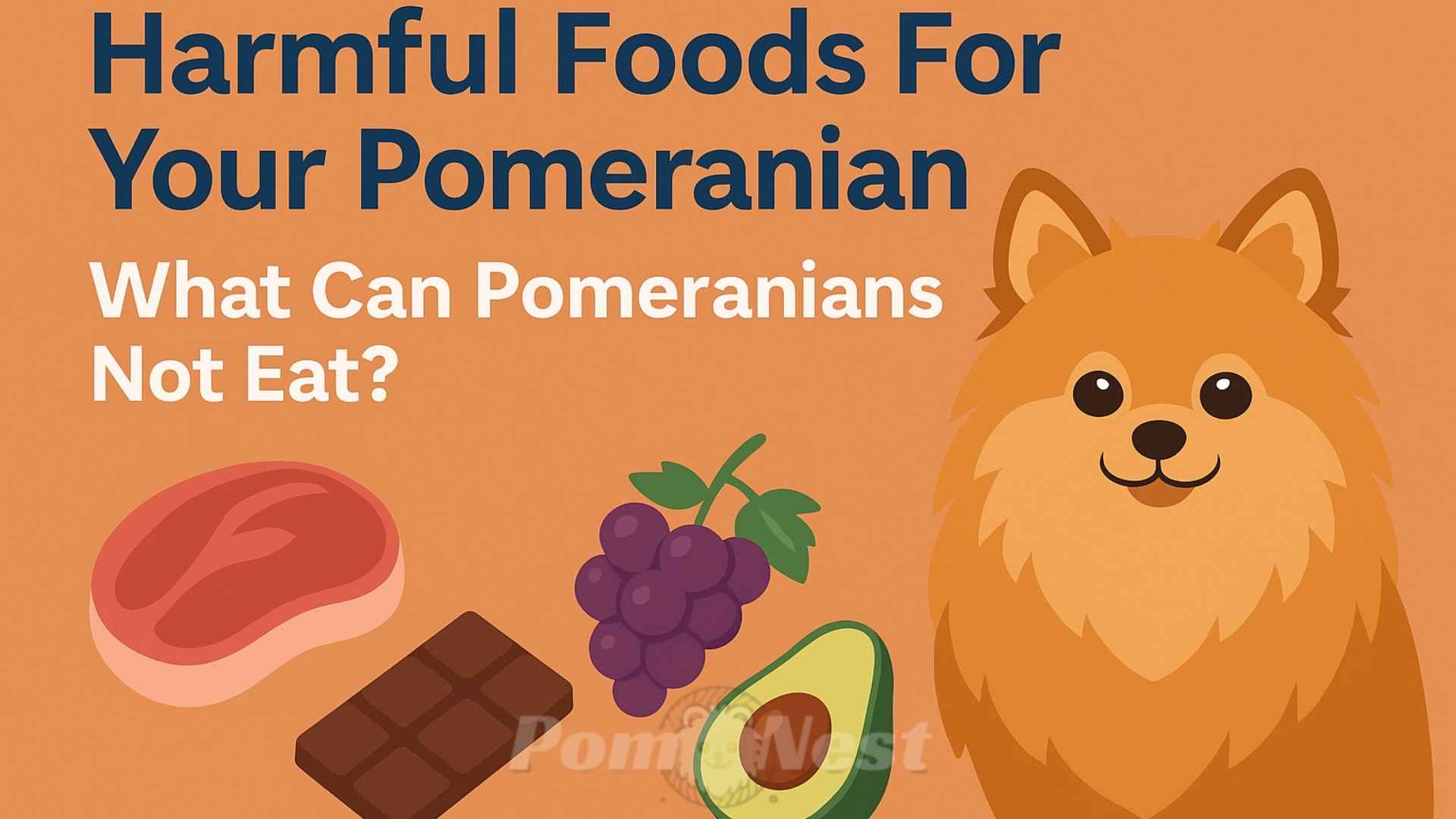
Mistake 2: Feeding table scraps regularly. Onions, garlic, grapes, raisins, macadamia nuts, xylitol, and chocolate are toxic to dogs. Many other human foods are simply too calorie-dense. One grape can cause kidney failure in some dogs. The risk is not worth the momentary bonding experience.
Mistake 3: Upgrading food quality without transitioning. Premium food is excellent. Switching abruptly from a low-quality diet to a high-protein premium diet causes digestive upset in virtually every dog. Always transition over 7 to 10 days.
Mistake 4: Ignoring body weight trends. Weigh your Pom monthly. Small dogs can gain significant percentages of their body weight before it becomes visually obvious through a fluffy coat. Monthly weigh-ins on a kitchen scale take 30 seconds and catch problems early.
Mistake 5: Giving puppy food to adult dogs. Puppy formulas are calorie-dense for growth. Feeding an adult Pomeranian puppy food for more than a few weeks causes obesity and potential developmental imbalances.
People also ask:
Transition gradually over 7 to 10 days by mixing increasing amounts of the new food with decreasing amounts of the old food to prevent stomach upset and maintain gut health.
Yes, Pomeranians should always eat small-breed kibble; the smaller size prevents choking hazards and is specifically shaped to help reduce dental plaque buildup.
Most Poms should transition from a puppy formula to an adult maintenance diet around 10 to 12 months of age, once they’ve reached their full adult height and weight.
Common signs include excessive itching, scratching, paw licking, chronic ear infections, or recurring gastrointestinal issues like vomiting or diarrhea after eating.
Yes, the senior Pomeranian Feeding Guide suggests switching to a senior formula that is lower in calories to prevent age-related weight gain and often includes added joint support.
You may also like

Build the Perfect Care Routine for Your Pomeranian

Select your Pom’s age, coat type, and activity level to instantly get a custom care checklist — it’s fast, free, and made with love!
Give your Pom the daily care they truly deserve.