
Toxic & Safe Pomeranian Foods

Lateef Bhatti
Author
🕐 12 min read | Updated: May 28, 2026
Your Pomeranian just stared up at you with those enormous dark eyes while you were eating dinner. You caved. You tossed a small piece of something from your plate. And now you’re frantically Googling whether that was a terrible mistake.
Table of Contents
ToggleWe’ve all been there. I have too, and I learned the hard way that what’s completely harmless for humans can be genuinely life-threatening for a small dog like a Pom. Understanding which toxic & safe Pomeranian foods exist isn’t optional knowledge. It’s the difference between a healthy dog and an emergency vet visit at midnight.
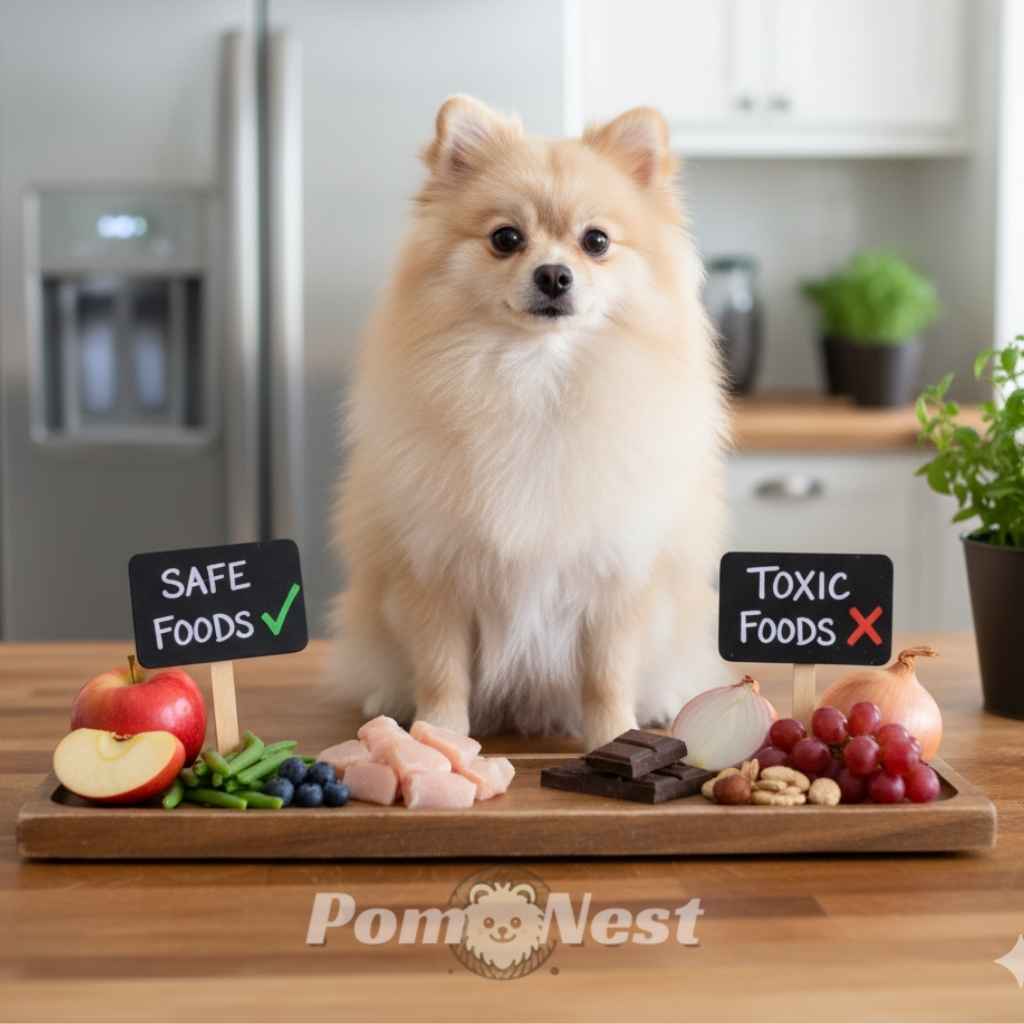
Pomeranians are small. We’re talking 3 to 7 pounds on average. That means even a tiny amount of the wrong food can hit their system with devastating force. A grape that would cause nothing more than a mildly upset stomach in a Labrador can send a Pomeranian into acute kidney failure. The stakes are genuinely high here.
This guide covers every food you need to know about, from the ones that can kill your Pom in small doses to the genuinely healthy human foods you can share with confidence. I’ve also included what to do if your Pom eats something toxic, because that knowledge could save their life.
What Are Toxic & Safe Pomeranian Foods, and Why Does It Matter So Much for Small Breeds?
Pomeranians have a digestive system that works differently from larger dogs, and very differently from ours. Their small body mass means toxins concentrate faster. Their kidneys and liver have less capacity to process harmful compounds. What your Labrador could survive, your Pom might not.
Here’s something that surprises almost every new Pom owner I’ve spoken with: the toxicity of a food isn’t always about the food being “bad.” Sometimes it’s about a compound dogs simply can’t metabolize. Theobromine in chocolate is a perfect example. Humans break it down quickly. Dogs, especially tiny ones, cannot. It builds up and becomes lethal.
The other surprise? Several foods that look healthy and natural are among the most dangerous. Grapes. Raisins. Garlic. Onions. These aren’t junk foods. They’re things you might genuinely think you’re doing your Pom a favor by sharing.
Understanding toxic & safe Pomeranian foods isn’t about being overprotective. It’s about being informed. And the information here is based on veterinary science, not guesswork.
Harmful Pomeranian Foods You Must Never Feed Your Dog

The most common feeding mistake people make with Pomeranians isn’t deliberate. It’s casual. A bite of this, a little piece of that. The problem is that “a little” means something very different when your dog weighs five pounds.
Let me walk you through every dangerous food category in detail.
What Can Pomeranians Not Eat? The Master List of Dangerous Foods
Pomeranians should never eat food containing compounds proven toxic to dogs, or any item that poses a physical choking or obstruction hazard. The list is longer than most people realize, and it includes foods that look completely innocent.
Rawhide Treats
Rawhide chews are marketed as a treat. They’re actually one of the riskiest things you can give a small dog. First, they’re frequently contaminated with bacteria that causes serious digestive irritation. Second, as your Pom chews, pieces break off and become soft enough to swallow whole. Those pieces can lodge in the esophagus or form a blockage in the intestinal tract. For a five-pound dog, that blockage can become life-threatening within hours. There are far safer chew options available, and I’ll cover those later.
Dental Chews
Most commercial dental chews aren’t designed with small breeds in mind. The hard material can cause bowel obstruction in a Pomeranian-sized dog, and some formulations contain ingredients that small digestive systems simply cannot handle. Several Pom owners in online communities have shared stories of their dogs becoming severely ill after routine dental chew sessions. Always verify with your vet before introducing any dental product. What works for a Labrador is not automatically safe for a Pom.
Fatty Meat and Fat Trimmings
That piece of fat you trimmed from your steak? Don’t give it to your Pom, no matter how much they beg. High-fat foods trigger pancreatitis, an inflammation of the pancreas that causes intense abdominal pain, vomiting, and dehydration. In severe cases, pancreatitis requires emergency hospitalization. Pomeranians are actually more vulnerable to pancreatitis than many other breeds because of their small size and metabolic sensitivity. Lean, cooked proteins are safe. Fat trimmings are not.
Can Dogs Eat Candy? Why Xylitol Is One of the Deadliest Toxic & Safe Pomeranian Foods Dangers
No. Not even a little. And the reason goes well beyond sugar content.
Most candies, baked goods, chewing gum, and even some peanut butters contain xylitol, an artificial sweetener that is harmless to humans but causes a rapid and dangerous insulin release in dogs. Blood sugar plummets within 30 minutes of ingestion. This can cause seizures, liver failure, and death, and the amounts required to trigger this response are shockingly small for a Pomeranian-sized dog.
Always check peanut butter labels before sharing. Brands like Jif and Skippy are typically xylitol-free, but some “natural” peanut butters use it as a sweetener. Never assume. Always read the label.
Can Pomeranians Eat Chocolate? Understanding Theobromine Toxicity
No. Full stop. There is no safe amount of chocolate for a Pomeranian.
Chocolate contains theobromine, a compound in the methylxanthine family that dogs metabolize far more slowly than humans. While you’d process it within hours, theobromine lingers in your Pom’s system and builds to toxic levels. Dark chocolate and baking chocolate contain the highest concentrations, but even milk chocolate in small amounts can cause vomiting, diarrhea, muscle tremors, seizures, and cardiac arrhythmia in a small dog.
I’ve spoken with veterinary staff who describe chocolate toxicity as one of the most preventable emergencies they see. It’s entirely avoidable. Just never let it happen.
Can Dogs Have Caffeine? A Hidden Danger in Your Morning Routine
No dog should consume caffeine, and for a Pomeranian the danger is acute. Caffeine acts as a stimulant that elevates heart rate and blood pressure to dangerous levels, and there is no antidote. The toxin is found in coffee, tea, sodas, energy drinks, and some cold medications. Even spent coffee grounds left in a bin your Pom can access are a risk.
If you work from home and your Pom roams freely, keep your coffee out of reach. It sounds obvious. It’s not as obvious when you’re distracted and your Pom is faster than you expect.
Can Dogs Eat Salt? What You Need to Know About Sodium Toxicity
Dogs need a small amount of sodium in their diet, and quality commercial dog foods provide it. What they don’t need is additional salt from human food. Too much sodium causes excessive thirst, dehydration, and in serious cases, tremors, seizures, and kidney damage.
Pretzels, chips, crackers, and most processed human snacks are heavily salted. Keep them away from your Pom entirely. It’s not just the salt either. Many of these foods contain other additives, flavorings, and preservatives that are equally problematic.
Can Dogs Have Alcohol? Why Even a Tiny Amount Is Dangerous
A dog’s liver processes alcohol far less efficiently than a human liver. Even a few sips of beer or wine can cause vomiting, disorientation, dangerously low blood sugar, and in larger amounts, respiratory depression and death. I’ve seen social media posts joking about giving dogs “a little sip.” It isn’t funny. It’s genuinely dangerous, especially for a breed as small as the Pomeranian.
Can Pomeranians Eat Avocado?
No. Avocados contain a compound called persin throughout the flesh, skin, and pit. Persin causes vomiting, diarrhea, and in large amounts, more serious systemic reactions. The pit adds another layer of danger: it’s large, round, and perfectly sized to cause a life-threatening obstruction in your Pom’s digestive tract.
Can Dogs Eat Green Tomatoes?
Ripe red tomatoes are technically fine in small amounts. But green tomatoes, tomato leaves, and tomato stems contain solanine, a compound toxic to dogs that causes gastrointestinal distress, muscle weakness, loss of coordination, and cardiac issues. Because distinguishing “ripe enough” from “too green” is impractical when you’re tossing scraps, the simplest rule is to avoid tomatoes entirely.
Can Pomeranians Eat Grapes, Raisins, and Currants?
This is one of the most critical toxic & safe Pomeranian foods warnings I can give you. No, never, not even once.
Grapes, raisins, and currants are linked to sudden acute kidney failure in dogs. Scientists don’t fully understand the exact mechanism, which makes it even more alarming. What we do know is that even a single grape has triggered kidney failure in small dogs. Raisins are concentrated grapes, making them even more dangerous per piece. Currants belong to the same plant family and carry the same risk.
Check your baked goods carefully. Raisins appear in cookies, cereals, trail mix, and bread. Currants show up in bagels and pastries. These are foods you’d never think to flag as dangerous.
Can Dogs Eat Onions, Garlic, Shallots, Leeks, and Chives?
No member of the allium family is safe for Pomeranians. This entire group contains compounds that actively damage red blood cells, causing a condition called hemolytic anemia. Symptoms can take days to appear, which makes it particularly deceptive.
Garlic is roughly five times more potent than onion by weight. That means powdered garlic in seasoning, garlic bread, or garlic-flavored snacks represents a serious risk even in small amounts. Shallots, leeks, and chives carry the same danger. Check the ingredients in any cooked food you’re tempted to share. Onion and garlic powder appear in foods you’d never suspect, including some commercial broths, soups, and baby foods.
Can Dogs Eat Macadamia Nuts?
No. Macadamia nuts are highly toxic to dogs through a mechanism that isn’t fully understood, but the effects are documented and serious. Even a small number of nuts can cause vomiting, muscle tremors, hindquarter weakness, and elevated body temperature. Macadamia poisoning is rarely fatal if treated quickly, but it causes genuine suffering and can become dangerous if left unaddressed. These nuts appear in cookies, trail mixes, and granola bars, so check labels carefully.
Can Dogs Eat Pecans and Walnuts?
Both are unsafe. Pecans contain juglone, a toxin harmful to dogs, and like many nuts they’re susceptible to molds that produce mycotoxins causing neurological symptoms. Walnuts carry similar mold risks. Black walnuts are particularly toxic. When it comes to nuts generally, the safer answer is to simply avoid them all, since the risk-to-reward ratio is never worth it for a Pomeranian.
Fruit Pits: Cherries, Peaches, Plums, and Persimmons
The flesh of many fruits is fine. The pits are not. Cherry pits, peach pits, plum pits, and persimmon seeds all contain cyanide compounds. Beyond the chemical danger, the pits themselves are physical hazards. A cherry pit is the perfect size to lodge in a Pom’s esophagus. If you share any of these fruits, remove the pit completely and only offer a small amount of flesh.
Can Dogs Eat Raw Dough?
Raw yeast dough is dangerous in two distinct ways. First, the live yeast continues to ferment inside your Pom’s warm stomach, producing alcohol as a byproduct and causing painful gas expansion. Second, the dough expands physically, potentially causing Gastric Dilatation Volvulus (GDV), a life-threatening bloat condition. Never leave rising dough unattended near your dog.
Can Dogs Eat Nutmeg?
No. Nutmeg contains myristicin, a compound toxic to dogs that causes hallucinations, disorientation, elevated heart rate, high blood pressure, and seizures. A small amount causes mild gastrointestinal upset. Larger amounts cause severe neurological symptoms. Keep nutmeg and baked goods that contain it well out of reach.
What Happens if Your Pomeranian Eats These Foods? 🚨
The severity of the reaction depends on what was consumed, how much, and your Pom’s individual body weight and health status. For a five-pound dog, even small amounts of the most toxic foods can cause rapid and serious reactions.
Mild symptoms include vomiting, diarrhea, lethargy, and excessive thirst. These can appear within 30 minutes or take several hours depending on the toxin. More serious reactions include tremors, seizures, difficulty breathing, pale gums, sudden collapse, or loss of coordination.
If you know or suspect your Pom has eaten anything from the toxic list above, call your veterinarian immediately. Don’t wait for symptoms to develop. With some toxins, notably xylitol and grapes, waiting for visible symptoms means the damage is already well underway.
The ASPCA Animal Poison Control Center (1-888-426-4435) operates 24 hours a day and is an invaluable resource for exactly these moments.
What Can Pomeranians Eat? ✅

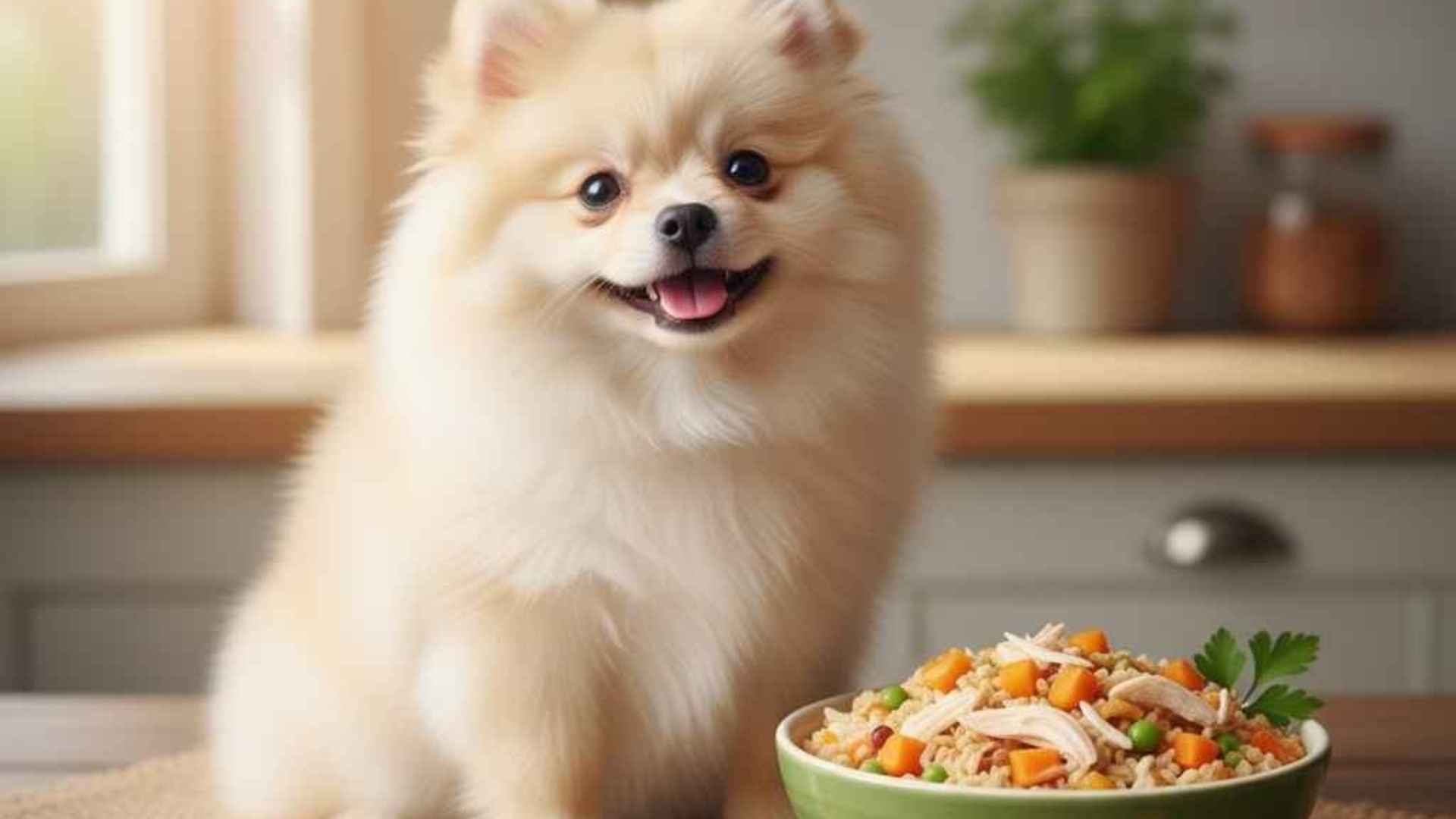
Here’s the good news. There’s a solid and varied list of foods your Pomeranian can eat safely, and many of them offer genuine nutritional benefits.
Safe Human Foods That Are Great for Pomeranians
The foundation of your Pom’s diet should always be high-quality commercial dog food formulated for small breeds. But there are plenty of human foods that make excellent occasional additions or training treats.
Cooked lean proteins are among the safest and most nutritious additions. Plain cooked chicken, turkey, and lean beef provide high-quality protein and are easy to digest. Always cook without seasoning, garlic, onion, or oil. Plain is the rule.
Blueberries are genuinely excellent for Pomeranians. They’re low in calories, high in antioxidants, and the right size for small mouths without any preparation needed. Apple slices with the core and seeds removed are another great option. Seedless watermelon, banana in small amounts, and mango with the pit removed are all fine treats.
For vegetables, carrots are a top choice. They’re crunchy, low in calories, and great for dental health. Green beans, cooked sweet potato, pumpkin (plain, not pie filling), and broccoli in small amounts are all safe and nutritious.
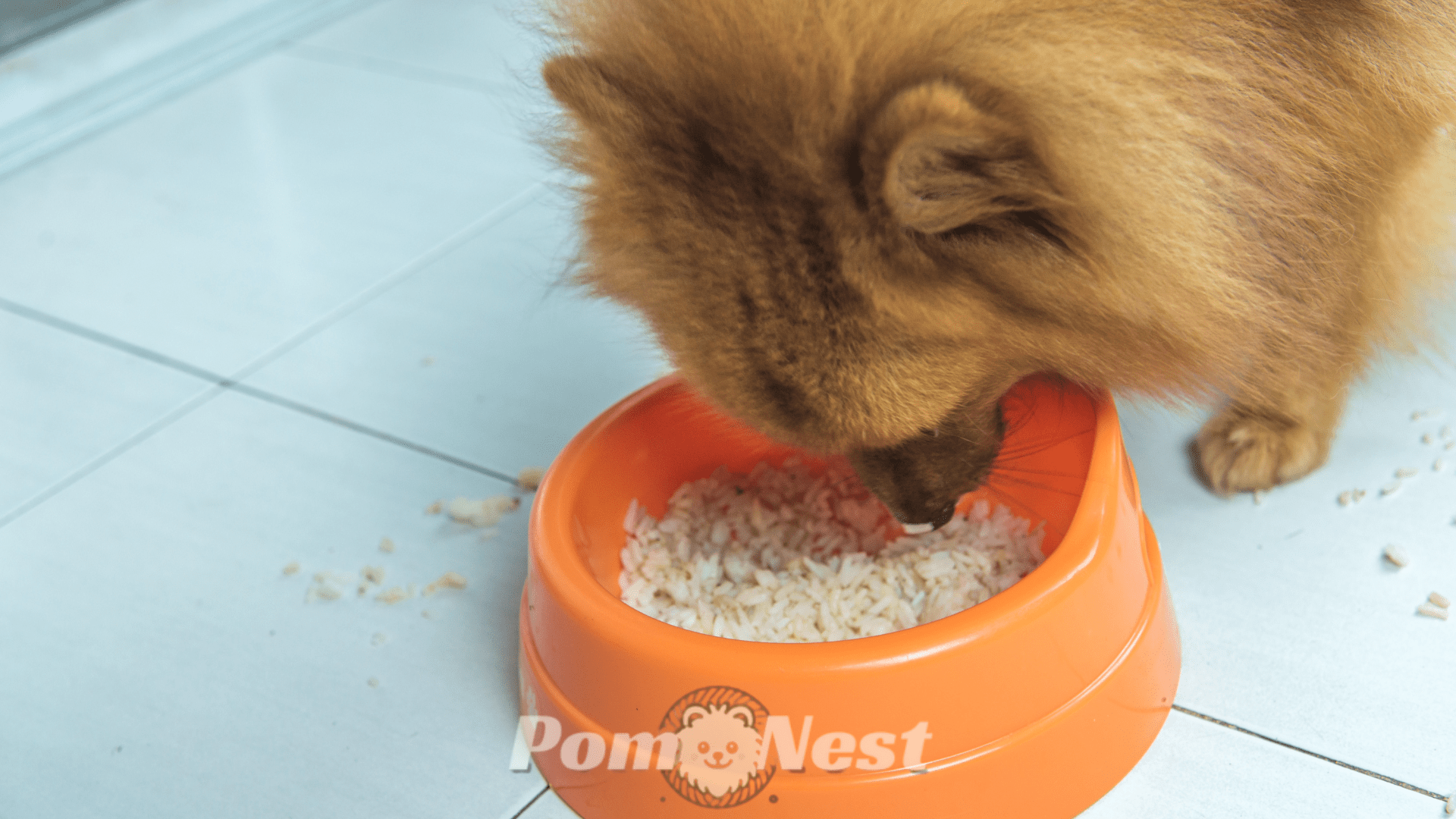
Plain cooked rice or pasta is gentle on upset stomachs and perfectly safe as an occasional food. Plain, unsweetened pumpkin puree is particularly helpful when your Pom has digestive upset.
Foods Pomeranians Can Eat on a Regular Basis
Small, plain portions of cooked lean protein can be offered regularly as a topper to commercial kibble. Green beans and cooked carrots make great daily snacks. Blueberries work as training treats without adding excess sugar or calories.
The key is proportion. Human food should never make up more than 10% of your Pom’s daily caloric intake. A Pomeranian typically needs only 200 to 300 calories per day. That 10% is smaller than you think.
Foods Pomeranians Can Eat Once in a While
Some foods are safe but should stay occasional because of fat, sugar, or lactose content.
Plain low-fat yogurt is fine for Poms who aren’t lactose intolerant, and it provides beneficial probiotics. Low-fat cheese in tiny amounts works as a high-value training reward. Eggs, cooked plain, are nutritious and safe. Peanut butter (xylitol-free, always check) in a small amount is a classic Kong filler that most Poms love.
The reason these are “occasional” rather than regular comes down to caloric density. A tablespoon of peanut butter is roughly 100 calories. For a five-pound dog, that’s a significant portion of their daily intake. Use these sparingly.
Foods Pomeranians Can Technically Eat But Probably Shouldn’t
Ripe red tomatoes in small amounts aren’t toxic. But the difficulty of consistently ensuring the tomato is fully ripe, and never accidentally offering a green piece, means the practical advice is to skip them. Same with store-bought mushrooms. They’re safe, but wild mushrooms are highly toxic, and training yourself to distinguish them every time you’re in a park isn’t realistic. Plain white bread won’t harm your Pom but offers zero nutritional value and contributes to weight gain.
The rule of thumb: if the food doesn’t offer clear nutritional benefit and carries any risk of confusion or mistake, skip it entirely.
Key Points to Remember About Offering Pomeranian Food Bits 🧠

Everything you need to know comes down to a few core principles that I’ve seen make the biggest difference for Pom owners.
Always read labels. Ingredients hide in unexpected places. Xylitol shows up in peanut butter. Onion powder appears in broths. Garlic flavoring is in crackers. A ten-second label check before sharing any human food is a non-negotiable habit.
Introduce new foods one at a time. If you add three new foods in one week and your Pom develops an upset stomach or skin irritation, you have no way of knowing which caused it. One new food, watch for three to four days, then move to the next.
Keep your vet in the loop. Your vet knows your specific Pom’s health history, weight, and any sensitivities. What’s fine for one dog may be problematic for another. A five-minute conversation during your next checkup about what you can safely share will give you more useful guidance than any general list.
Never offer table scraps as a habit. Once you establish that begging gets results, you create a dog that will attempt to eat anything you’re eating. That’s how accidents happen. Offer food intentionally, from a bowl or as a deliberate treat, rather than from your plate.
People also ask:
Yes, Pomeranians can safely eat peanut butter only if you confirm it does not contain the sweetener Xylitol, which is highly toxic to dogs; choose a natural, plain, and unsalted variety in very small quantities.
You should never feed cooked bones of any kind, as they splinter easily and pose a high risk of choking or causing internal damage; large, raw, non-weight-bearing bones may be acceptable under strict supervision, but many vets advise against them entirely for small breeds.
Yes, Pomeranians can benefit from plain, cooked eggs, which provide an excellent source of high-quality protein, vitamins, and healthy fats that support a shiny coat and strong muscles.
Yes, peeled and sliced apples are a great source of fiber and vitamins for Pomeranians, but you must remove the core and all seeds, as apple seeds contain trace amounts of cyanide.
Cooked, plain, and boneless salmon is highly beneficial for Pomeranians because it is rich in Omega-3 fatty acids, which significantly improve skin health, coat condition, and joint mobility.
You may also like
Build the Perfect Care Routine for Your Pomeranian
Select your Pom’s age, coat type, and activity level to instantly get a custom care checklist — it’s fast, free, and made with love!
Give your Pom the daily care they truly deserve.