
Best Brush for a Pomeranian: Complete Grooming Guide

Lateef Bhatti
Written by
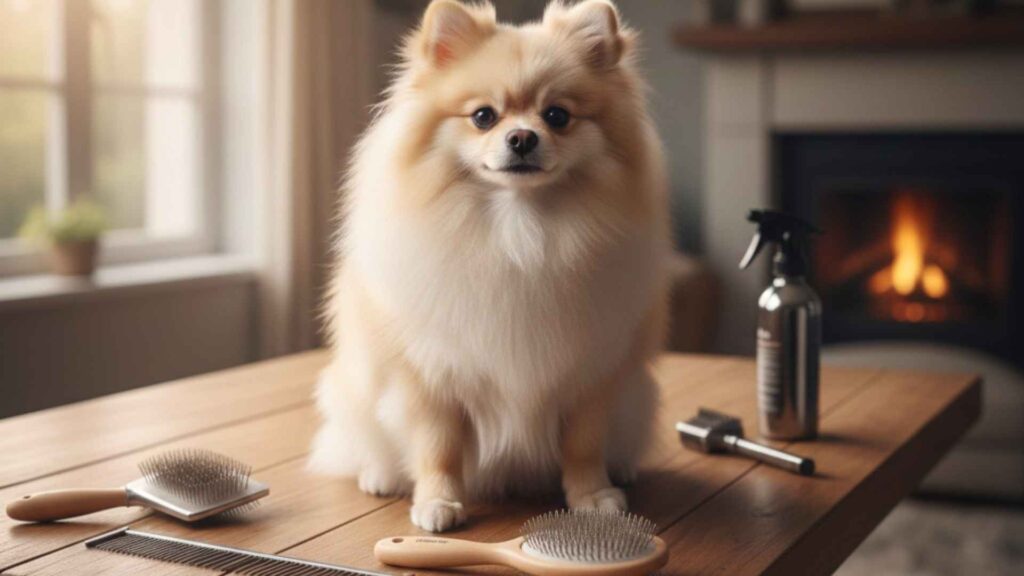
The best brush for a Pomeranian is a high-quality pin brush, like the Chris Christensen Oval Pin Brush, because it reaches through the fluffy fur without pulling. You should also use a “slicker brush” with long pins to gently remove tangles and prevent painful knots called mats. For the best results, always spray the hair with a little water or conditioner first so the brush glides smoothly and keeps your dog’s coat looking like a soft, healthy cloud.
Why Is the Double Coat So Challenging?
To properly manage a Pom’s coat, you must use a “line brushing” technique. This penetrates the dense undercoat while protecting the long, harsh guard hairs. Using a generic brush often only skims the surface. This leaves a “hidden” layer of felted fur against the skin that can cause hot spots and infections.
Table of Contents
ToggleThe Pomeranian coat consists of two distinct layers:
- The Undercoat: Soft, dense, and woolly. It traps heat in winter and insulates against heat in summer.
- The Guard Hairs: Longer, coarser hairs that provide the “stand-off” look and protect the skin from UV rays and moisture.
Remember that “shaving” a Pomeranian to keep them cool is a dangerous myth. Their double coat acts as natural insulation. Removing it can lead to permanent “Clipper Alopecia” and heat stroke because they lose their ability to regulate temperature.
The Master Kit: Top Recommendations for 2026

When we look at the market today, five brushes stand out for their ability to handle the unique physics of Pomeranian fur.
1. Chris Christensen Oval Pin Brush: The Gold Standard
This brush is widely considered the “Final Word” in Pomeranian care. The polished tips glide through the coat without snapping the delicate guard hairs. Unlike cheap brushes that use “balls” on the end of pins (which actually snag and pull out healthy fur), these pins are ground and polished for a frictionless experience.
When you use this, you’ll notice the “glide.” It doesn’t tug. Your Pom, who might usually hide at the sight of a brush, will likely settle in as it feels more like a massage than a grooming session. It is the ultimate tool for daily maintenance and that “show-dog” finish.
2. Paw Brothers Extra-Long Slicker: The “Mat-Zilla” Slayer
The Paw Brothers Extra-Long Slicker is the industry secret for reaching the “skin-level” fluff that other brushes miss. The pins are longer than standard slickers. This allows you to reach deep into the “trousers” (back of the legs) and the “ruff” (neck area) where mats love to hide.
Use this tool sparingly. It is a powerful instrument designed to lift dead undercoats during shedding season. If used with too much pressure, it can cause “slicker burn” on the Pom’s paper-thin skin. Always test the pins on your own forearm first; if it scratches you, you are pressing too hard.
3. Hertzko Self-Cleaning Slicker: The Practical Choice
Hertzko has gained a massive following because it solves the “fur-nado” problem. With a single click, the bristles retract, leaving the hair in a neat pile for the trash. While it isn’t as deep-reaching as the Paw Brothers, it is excellent for everyday upkeep.
The wires are slightly bent, which helps grab loose fur from the top layer of the undercoat. It’s the perfect “middle-of-the-road” brush for owners who want efficiency without a professional price tag.
Comparison of Top Grooming Tools

The Hidden Gems of Pomeranian Grooming
Beyond the brush, two nuanced facts often escape the average owner. These “hidden gems” distinguish a master groomer from an amateur.
The “Schmoo” Factor and pH Balance
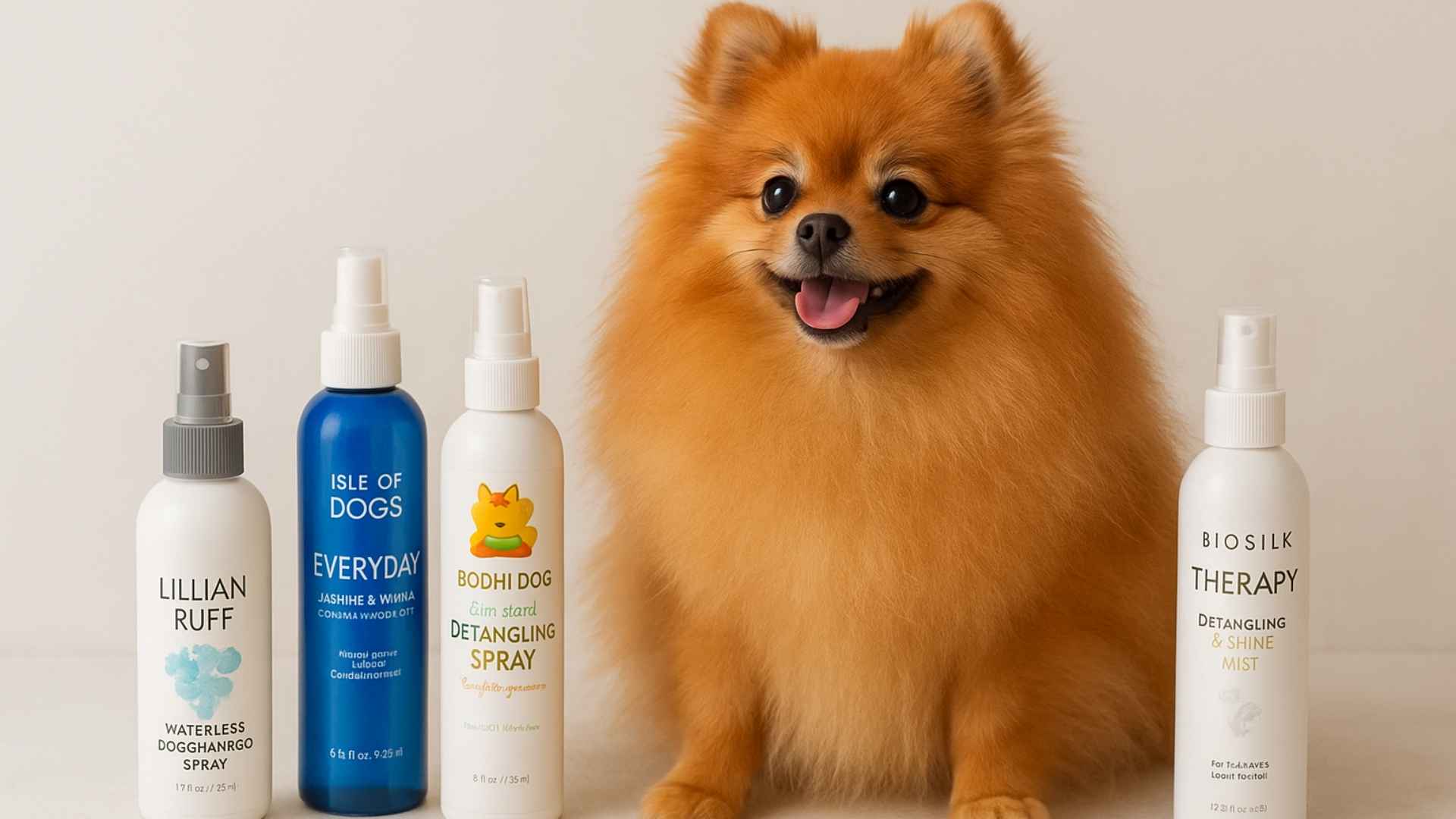
Pomeranians have a unique skin pH. Over-brushing with a dry coat causes static electricity. This static actually attracts more dirt and leads to more tangles. It creates a magnetic-like effect for dust and debris. Always use a light detangling mist. Think of it as “lube” for the hair follicles.
The Tracheal Sensitivity Warning
While brushing the chest and neck (the ruff), you must be extremely gentle. Pomeranians are genetically predisposed to Tracheal Collapse. Excessive pressure in this area during grooming can trigger coughing fits or even long-term damage to the cartilage rings in their throat. Always support the back of the head while brushing the neck.
What Brushes Should I Avoid?

Can I use a Furminator or a Shedding Blade?
No, you should never use a bladed deshedding tool on a Pomeranian. These tools are designed for single-coated breeds or short-haired dogs like Labradors. On a Pom, the blade will cut the primary guard hairs.
This destroys the coat’s texture, leaving it looking “moth-eaten.” Worse, it can damage the follicle so that the hair grows back “crimped” or not at all.
Avoid these tools at all costs:
- Shedding Blades: These are essentially saws for fur.
- Plastic Brushes: These create massive static and cause hair breakage.
- Cheap “Ball-Tipped” Brushes: The balls catch on tangles and rip the hair out by the root.
The Owner’s Perspective: Living with the "Pom-Poof"
Living with a Pomeranian means accepting that hair is now a lifestyle accessory. You will find tiny “tumblepoms” of fur in the corners of your hardwood floors. However, a Pom’s bark is often more high-maintenance than their coat.
They are “alert barkers”—they will tell you when the mailman is three blocks away. This protective nature extends to their grooming. If you make it a scary experience, they will remember it forever.
Proper grooming reduces the “flyaway” hairs that end up on your clothes. A well-brushed Pom doesn’t just look better; they feel better. When the undercoat is packed tight, it creates a “weight” on their small frame that can make them lethargic or prone to overheating.
Essential Grooming Kit Checklist
- Long-pinned Slicker Brush: For attacking mats and debris.
- High-quality Pin Brush: For daily fluffing and volume.
- Stainless Steel Greyhound Comb: The “truth teller” to find hidden mats.
- Leave-in Conditioning Spray: To prevent static and breakage.
- Blunt-nosed Scissors: For trimming “paw pads” and the “sanitary” area.
- High-Velocity Dryer: If you bathe them at home, this is non-negotiable.
Health, Genetics, and the Grooming Connection

While grooming is essential, it is only one part of the health puzzle. Pomeranians are prone to several genetic conditions that every owner should monitor.
Alopecia X (Black Skin Disease)
This is a condition where the dog loses hair and the skin turns black. It is often triggered by poor grooming practices or shaving the coat too short. By using the right brush, you keep the skin exfoliated and the follicles healthy, which can help stave off skin issues.
Patellar Luxation
Pomeranians often suffer from “slipping” kneecaps. When grooming their legs, never pull the leg out to the side. Always keep the leg in a natural, straight line to avoid putting pressure on the joint.
Specific Screenings
We recommend the following screenings for all Pomeranian owners:
- OFA for Hips and Knees: To catch luxation early.
- CERF for Eyes: To check for progressive retinal atrophy.
- Cardiac Exams: To monitor for heart murmurs, which are common in toy breeds.
Consult with a veterinarian for a personalized health plan.
Technical Grooming: The Line Brushing Technique
To truly be the “Final Word” on grooming, we must discuss Line Brushing.
- Start at the bottom of the dog (the legs or tail).
- Push the hair up with your hand to reveal a “line” of skin.
- Brush the hair downward, one small section at a time.
- Work your way up the body in rows.
This ensures that every single hair from the skin to the tip is detangled. If you just brush the top, the undercoat will “feel” against the skin, creating a solid sheet of matting that eventually requires the dog to be shaved.
Seasonal Changes: The "Blow Out"
Twice a year, your Pomeranian will “blow” their coat. This isn’t just normal shedding; it is a total replacement of the undercoat. During this time, your Paw Brothers Slicker will be your best friend.
You may need to brush them twice a day during a blowout. If the dead hair isn’t removed, it will trap moisture and dander against the skin, leading to a “doggy smell” and potential fungal infections.
Final Thoughts on Pom Care
Choosing the best brush for a Pomeranian isn’t just about aesthetics; it’s about the quality of life for your pet. A matted coat is like wearing a tight wool sweater that never comes off—it’s hot, itchy, and painful. By using the right tools and techniques, you ensure your Pom stays happy, healthy, and incredibly fluffy.
People also ask:
A combination of a high-quality pin brush for daily use and a long-pinned slicker brush for deep matting is the best approach. The Chris Christensen Oval Pin Brush is the top recommendation for coat health.
Use the “Line Brushing” method. Part the hair to the skin and brush out small sections at a time, moving from the bottom of the dog to the top. Never brush a dry coat; always use a grooming spray.
Yes. Daily brushing is the only way to prevent mats from forming. A 5-10 minute session each day is much easier on the dog than a 2-hour session once a week.
Ideally, no blades should be used on the body. If you must trim, use a #10 blade only for the paw pads and sanitary areas. All other shaping should be done with professional shears to protect the double coat.
Never brush a bone-dry coat. This causes static and breakage. Always use a light mist of water or a specialized grooming spray to provide “slip” for the brush.
They likely associate brushing with pain from pulling on mats. Use a high-quality pin brush (no ball tips) and plenty of treats to turn grooming into a positive bonding experience.
You may also like
Build the Perfect Care Routine for Your Pomeranian
Select your Pom’s age, coat type, and activity level to instantly get a custom care checklist — it’s fast, free, and made with love!
Give your Pom the daily care they truly deserve.