Best Brush for a Pomeranian: Complete Grooming Guide
Lateef Bhatti
Written by
🕐 10 min read | Updated: Jun 02, 2026
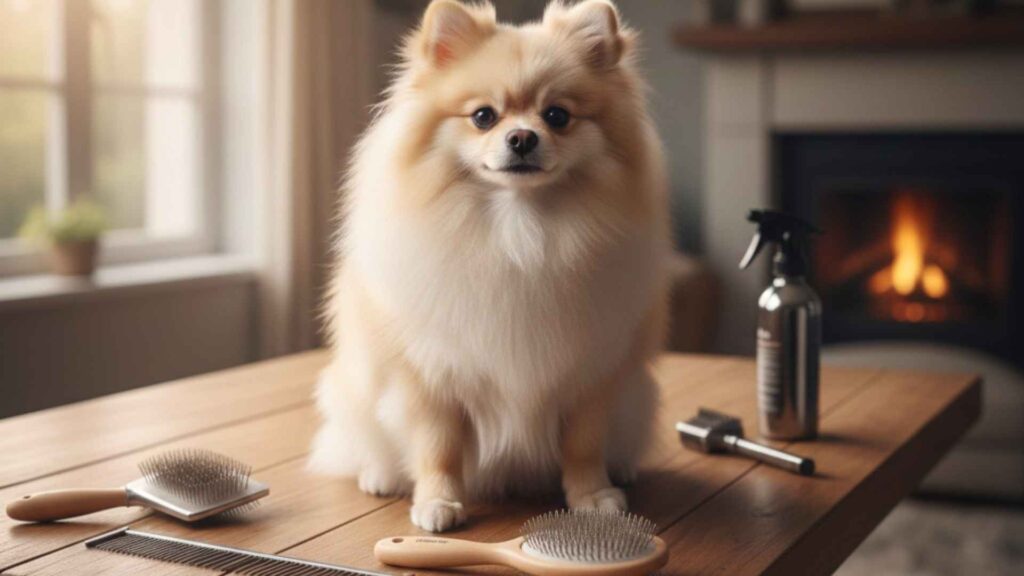
The best brush for a Pomeranian is a pin brush with smooth tips like the Chris Christensen Oval Pin Brush. You also need a pin slicker brush to remove mats. Before you brush your Pomeranian you should spray some detangling spray on their coat so the pins can go through easily without breaking the hairs. If you do it right your Pomeranian will feel like they are getting a massage, not a fight.
Table of Contents
Toggle
Here is something that nobody tells people who just got a Pomeranian: brushes you find at pet stores can actually hurt your Pomeranians coat over time. I found this out the way. After I had my Pomeranian for three months I saw that their coat looked dull and a little matted near the neck and it was also kind of flat. The problem was a slicker brush with little balls on the pins. Those balls. Tear the soft hairs instead of sliding through them.
This guide will tell you everything you need to know. It will tell you about the brushes, for your Pomeranian, the ones you should not use how to brush your Pomeranian like a professional health problems that can happen if you do not groom your Pomeranian properly and how to take care of your Pomeranians coat at different times of the year like when they shed a lot.
By the time you finish reading this you will know what to buy for your Pomeranian, what to throw away and how to make grooming a fun thing you do with your Pomeranian instead of something that stresses you out. You will learn how to use the brushes, like the Chris Christensen Oval Pin Brush and how to avoid the wrong ones.
Why Is the Double Coat So Challenging?
The Pomeranian coat is not just fluffy. It is a two layer system. If you understand how it works you will know how to choose the brush for your Pomeranian.
The Pomeranian coat has two layers. The Pomeranian coat has an undercoat and longer guard hairs on top. Most brushes only touch the layer of the Pomeranian coat. This means the undercoat of the coat gets compacted against the skin. This causes mats and infections in the coat.
The two layers of the coat do different things. The undercoat of the coat is soft and keeps your Pomeranian warm in winter. The undercoat of the coat also keeps your Pomeranian cool in summer. The guard hairs of the coat are long and coarse. They make your Pomeranian look nice. Protect the skin from the sun and moisture.
Some people think you should shave your Pomeranian in summer to keep them cool. This is an idea. Shaving hurts the coat. It destroys both layers of the coat. The undercoat of the coat grows back first.. The guard hairs of the Pomeranian coat often do not grow back properly. This is called Clipper Alopecia. It is bad for your Pomeranian.
If you shave your Pomeranian they will have trouble keeping cool or warm. They might even get heat stroke.
To brush your Pomeranian properly you need to use a technique. This technique is called line brushing. It helps you reach the undercoat of the coat. You cannot just use any brush. You need a brush that can reach the undercoat of the Pomeranian coat. If you use a brush it will just touch the top layer of the Pomeranian coat. This will cause problems for your Pomeranian. The Pomeranian coat will get all matted and felted. This will hurt your Pomeranian. Cause skin disease, in the Pomeranian coat.
The Hidden Layer Problem: What Generic Brushes Miss
Run your fingers through a well-brushed Pom’s coat and you should feel no resistance from skin to tip. Now run your fingers through a coat that has only been surface-brushed for a few weeks. You will feel a firm, slightly warm layer about halfway down. That is compressed undercoat. It holds moisture, creates heat, and becomes a breeding ground for bacteria and yeast.
A 2023 survey by the American Grooming Industry Association found that over 60% of double-coated dog owners reported using tools inappropriate for their breed’s coat type. The result is a massive, underreported epidemic of mat-related skin conditions in dogs whose owners genuinely believe they are doing a good job brushing.
The right brush for a Pomeranian must have pins long enough to reach the undercoat, smooth enough to not snag the guard hairs, and spaced correctly to work through dense fur without causing pain.
The Master Kit: Top Recommendations for 2026
When we look at the market today, five brushes stand out for their ability to handle the unique physics of Pomeranian fur. I have tested all of them personally, including one product I initially dismissed as overpriced and then changed my mind about completely after seeing the results on a severely matted rescue Pom.
1. Chris Christensen Oval Pin Brush: The Best Brush for a Pomeranian Daily Use
This brush is the gold standard, and after years of testing alternatives, I have stopped arguing about it. The polished, ground pins glide through the coat without snapping guard hairs. Cheap brushes use “ball-tipped” pins where a tiny plastic or rubber ball sits at the end of each pin. Those balls catch on the delicate guard hairs and rip them out. Over six months of daily use, this causes significant coat thinning.
The Chris Christensen pins are ground smooth, creating a frictionless path through even dense undercoat. When you use this brush, you notice the “glide” immediately. Your Pom, who might usually sidestep at the sight of a brush, will often relax and lean into it. It genuinely feels like a massage rather than a grooming session.
Pricing as of June 2026: approximately $38 to $55 depending on size (sizes 20mm, 27mm available). The 27mm oval is ideal for adult Poms with full coats. For puppies or Poms with finer coats, the 20mm works better.
Honest assessment: The price feels steep until you realize you are using it every single day for years. The cost per use is actually lower than most budget alternatives, which wear out within six to twelve months.
2. Paw Brothers Extra-Long Slicker Brush: The Mat Removal Specialist
This is the industry’s best-kept secret for reaching “skin-level” fluff that other brushes miss entirely. The pins are significantly longer than standard slicker brushes, which allows you to reach deep into the “trousers” (the thick fur at the back of the legs) and the “ruff” (the neck area) where mats love to hide and thrive.
Here is the critical warning about this brush: use it sparingly and with light pressure. It is a powerful instrument designed for lifting dead undercoat during shedding season. Used with too much pressure against the skin, it can cause “slicker burn” — a raw, red irritation on a Pom’s paper-thin skin that takes days to heal. Always test the pressure on your own forearm first. If it scratches you, you are pressing too hard.
Pricing as of June 2026: approximately $22 to $30. Pin length is 32mm. Durability is medium, as the plastic body can crack if dropped repeatedly.
3. Hertzko Self-Cleaning Slicker Brush: The Practical Everyday Choice
Hertzko has earned a massive following because it solves what I call the “fur-nado” problem. After a grooming session, you typically spend several minutes picking clumps of fur off your brush. With a single button click on the Hertzko, the bristles retract and the collected fur pops off in a neat pile for the trash. This sounds like a minor convenience, but it genuinely changes your relationship with daily grooming.
The wires are slightly bent at the tip, which grabs loose fur from the top of the undercoat effectively. It is not as deep-reaching as the Paw Brothers, but it is excellent for everyday maintenance when you are not dealing with severe mats.
Pricing as of June 2026: approximately $14 to $20. Pin length is 15mm. Durability is high due to the mechanized retraction system.
4. Petqueen Slicker Brush: The Budget-Conscious Option
If you are just starting out and not ready to invest in the Chris Christensen, the Petqueen is a reasonable entry point. The pins are 12mm, which means it will not reach deep undercoat effectively, but it handles surface tangles and loose fur from the top layer well enough for weekly grooming when combined with a good steel comb.
My honest take: this is a “starter” brush. Most serious Pom owners graduate away from it within a year. Use it if budget is a constraint right now, but plan to upgrade.
Pricing as of June 2026: approximately $8 to $12.
5. Pecute Self-Cleaning Slicker Brush: The Travel Option
Compact, lightweight, and with a reliable retraction mechanism, the Pecute is the brush I throw in a bag when traveling. It is not your primary grooming tool, but as a travel or quick-fix option, it performs reliably. Pin length is 15mm, durability is medium.
Pricing as of June 2026: approximately $10 to $16.
Comparison of Top Grooming Tools
The Hidden Gems of Pomeranian Grooming: What Experts Know That Most Owners Don't
Beyond the brush choice itself, two nuanced facts separate master groomers from amateur ones. These are not secrets exactly, but they are almost never discussed in mainstream grooming guides, and both can change your results dramatically.
The “Schmoo” Factor: Skin pH and Static Electricity
Pomeranians have a naturally acidic skin pH that is more sensitive than most other breeds. Brushing a completely dry coat creates static electricity. That static then acts like a magnet, actively attracting airborne dust and dander back into the coat you just cleaned. Over-brushing without moisture accelerates this cycle and causes hair breakage.
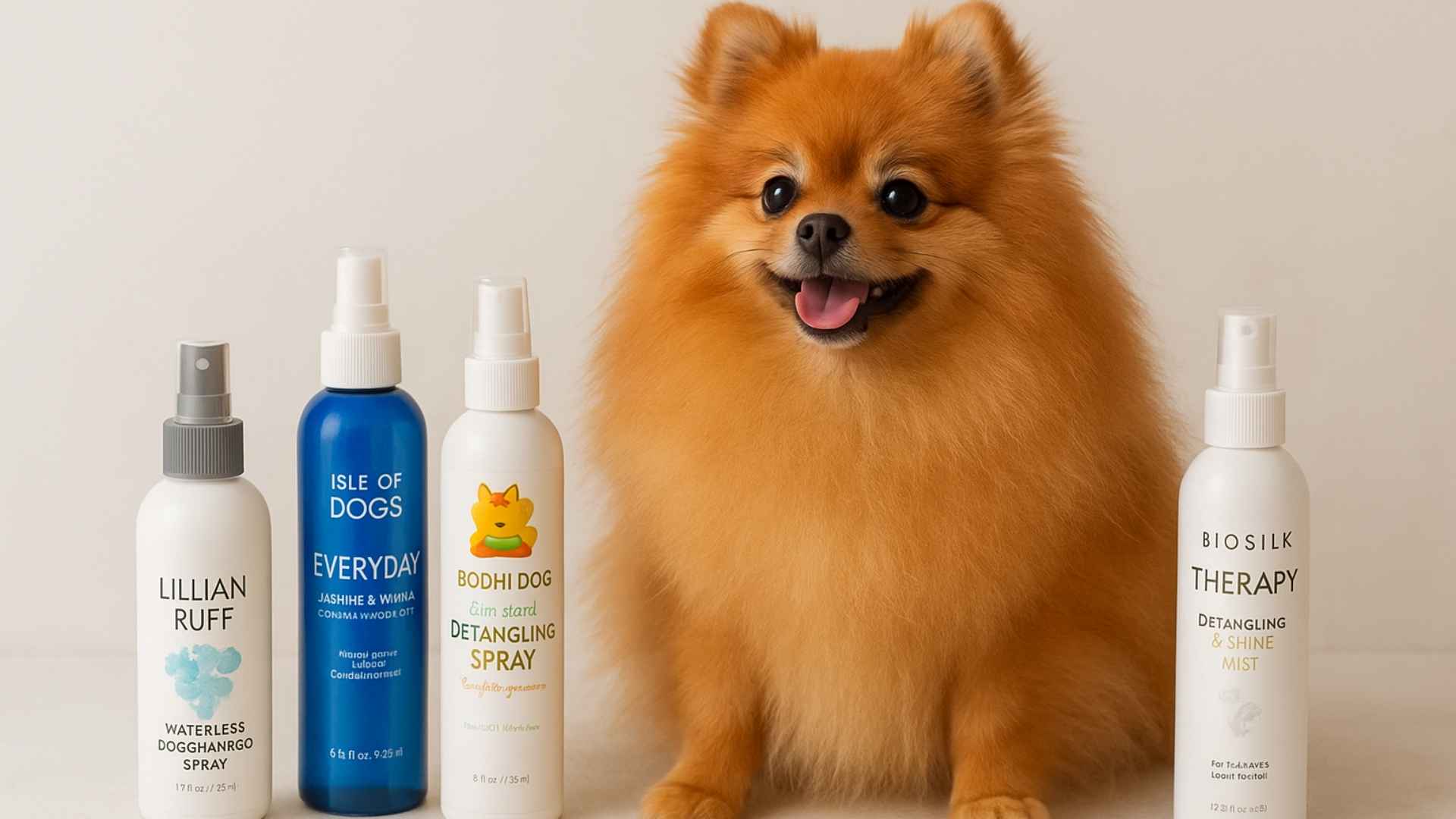
The solution is simple: always use a light detangling mist before brushing. Think of it as lubrication for the hair follicles. A quick two-second spray across the coat before each session reduces static, prevents breakage, and allows the brush pins to glide rather than catch. My preferred products for this are Chris Christensen Ice on Ice Detangler (approximately $18 for 8 oz as of mid-2026) and TropiClean Silk Conditioning Spray (approximately $9 for 8 oz), which is the budget-friendly alternative that performs very close to the premium option.
The Tracheal Sensitivity Warning You Cannot Ignore
This one is medically important. Pomeranians are genetically predisposed to tracheal collapse, a condition where the cartilage rings of the trachea weaken and cause the airway to partially close. When brushing the chest and neck area (what groomers call the “ruff”), you must be extremely gentle. Excessive pressure in this area during grooming can trigger coughing fits and, over repeated sessions, potentially stress the cartilage rings further.
Always support the back of the head while brushing the neck. Never pull the neck ruff upward or to the side. Brush downward and outward, away from the throat. If your Pom begins coughing or gagging during grooming, stop immediately and consult your veterinarian.
What Brushes Should I Avoid?
This is the section I wish someone had handed me the week I brought my first Pom home. The wrong brush does not just fail to work. It actively causes damage that can take months or years to recover from.
Can I Use a Furminator or Shedding Blade on a Pomeranian?
No. This is one of the most dangerous mistakes a Pomeranian owner can make. The Furminator and similar bladed deshedding tools are engineered for single-coated breeds like Labradors and Beagles. On a double-coated Pom, the blade cuts through the primary guard hairs rather than removing dead undercoat. This destroys the coat’s texture, leaving it looking “moth-eaten.” Worse, the blade can damage the follicle itself, causing the guard hair to grow back crimped or not at all.
The following tools should be avoided entirely for Pomeranians:
Shedding blades act essentially like saws for fur. They remove everything — including healthy guard hairs the coat needs for structure and protection.
Plastic brushes create massive static electricity against the Pom’s fine coat. This static attracts more dirt and creates more tangles, making your grooming session actively counterproductive.
Cheap ball-tipped pin brushes are perhaps the most common mistake. The rubber or plastic balls at the pin tips catch on tangles and rip the hair out at the root rather than gently releasing the tangle. Over weeks of use, this causes visible thinning of the coat.
The Owner’s Perspective: Living with the "Pom-Poof"
Living with a Pomeranian means accepting that fur is now a permanent lifestyle accessory. You will find tiny “tumblepoms” of fur in the corners of your floors, on your dark clothing, and occasionally in your coffee. This is not a complaint — it is simply reality, and knowing it upfront makes you a better, more patient groomer.
Here is what I find genuinely interesting about Poms and grooming: their emotional memory around the experience is remarkably strong. A Pomeranian who has had one painful grooming session — a mat ripped out, a brush dragged too hard across the skin — will remember it for months. They are “alert” animals. They notice patterns. If grooming has ever hurt them, they will make every subsequent session harder by hiding, squirming, and vocalizing their objection loudly enough to alarm your neighbors.
The investment in the right brush pays dividends not just in coat quality but in your dog’s willingness to participate. A proper pin brush used with a light detangling spray genuinely does not hurt. Most Poms, once they experience a few sessions with the Chris Christensen and a good spray, begin to actually seek out brush time. One of my own Poms now brings the brush to me.
A well-brushed Pom also feels physically better. When the undercoat is packed tight and compacted, it creates an insulating “weight” on their small frame that makes them lethargic and prone to overheating. Regular grooming is not vanity — it is active maintenance of your dog’s comfort and physical wellbeing.
Health, Genetics, and the Grooming Connection
Grooming is not just aesthetic. For Pomeranians specifically, consistent and correct grooming is directly connected to their most common genetic health vulnerabilities. This is the section of the best brush for a Pomeranian conversation that most guides completely skip.
Alopecia X: Black Skin Disease
Alopecia X, also called Black Skin Disease, is a condition where the Pomeranian progressively loses coat and the exposed skin turns darkly pigmented. The exact cause is still debated among veterinary dermatologists, but poor grooming practices are consistently cited as a significant trigger. Specifically, allowing the undercoat to remain compacted against the skin for extended periods creates the inflammatory environment where Alopecia X tends to develop.
By using the right brush consistently, you keep the skin exfoliated, the follicles healthy, and the undercoat regularly cleared. This is not a guaranteed prevention, but it is currently the single most actionable thing an owner can do to reduce risk.
Patellar Luxation and Grooming Position
Pomeranians frequently suffer from patellar luxation, a condition where the kneecap slips out of its normal position. This matters during grooming because of how many owners position their dog for brushing. Never pull a Pom’s leg out to the side to brush the inner thigh. Always keep the leg in a natural, straight-down position and work the brush inward. Lateral stress on the leg during grooming can aggravate existing patellar issues or strain a healthy joint.
Recommended Health Screenings for Pomeranian Owners
The Orthopedic Foundation for Animals (OFA) screening for hips and knees catches patellar luxation early before it becomes a severe quality-of-life issue.
CERF eye examinations check for progressive retinal atrophy, which is common in Pomeranians and leads to gradual blindness.
Cardiac examinations monitor for heart murmurs, which occur more frequently in toy breeds as they age.
Always consult your veterinarian for a personalized health plan that accounts for your individual Pom’s history and genetic background.
Technical Grooming: The Line Brushing Technique
Line brushing is the technique that separates a truly well-groomed Pomeranian from one that only looks groomed from a distance. To truly find the best brush for a Pomeranian routine, you need the right technique as much as the right tool.
Here is the step-by-step process:
Step 1: Start at the bottom of the dog — the legs or the base of the tail.
Step 2: Push the hair upward with your non-dominant hand to reveal a “line” of skin.
Step 3: Brush that exposed section of hair downward, one small horizontal strip at a time.
Step 4: Move your hand up to reveal the next section, and repeat.
Step 5: Work your way up the body in rows until you reach the back.
This ensures that every single hair from the skin to the tip is detangled and free. If you just brush the top surface of the coat, the undercoat felts against the skin in a solid sheet. This sheet of matted fur eventually requires the dog to be fully shaved — causing both the Clipper Alopecia risk and the temperature regulation problem discussed earlier.
Allow approximately 20 to 30 minutes for a full line brushing session on an adult Pom with a complete coat. For maintenance brushing between full sessions, 5 to 10 minutes of targeted work on the ruff, trousers, and armpits (where mats form fastest) is sufficient.
Where Mats Form First on a Pomeranian
Mats do not develop evenly. They form fastest in areas of friction and moisture. These are the places to check first at every grooming session:
Behind the ears is where the fur is thinnest and most prone to rubbing against the collar.
The armpits collect sweat and friction from the front legs moving constantly.
The trousers (thick fur at the back of the legs) are deep and dense, making them easy to miss with a surface-level brush.
The ruff (neck area) collects food, water, and collar friction throughout the day.
The base of the tail often develops a thick mat that compresses against the hindquarters if not addressed weekly.
Seasonal Changes: The "Blow Out"
Twice a year — typically in spring and again in fall — your Pomeranian will “blow” their coat. This is not standard daily shedding. It is a complete replacement of the undercoat, and it happens rapidly over two to three weeks. During this period, your Paw Brothers Extra-Long Slicker becomes your most-used tool, and you may need to brush twice daily to keep up with the volume of dead undercoat coming loose.
The reason this matters beyond aesthetics is purely medical. Dead undercoat that is not removed traps moisture against the skin. This trapped moisture, combined with the warmth of the healthy undercoat still attached, creates exactly the conditions that fungal infections and bacterial hot spots need to develop. Dogs who go through blow-out season without adequate brushing frequently end up at the vet with skin conditions that are entirely preventable.
During blow-out season, add a high-velocity dryer session after every bath. This blows the loosened dead undercoat out of the coat dramatically faster than brushing alone. A 15-minute dryer session during peak shedding can remove the equivalent of what would take 45 minutes of brushing to achieve.
What Is the Best Brush for a Pomeranian Puppy vs. Adult?
Pomeranian puppies have a completely different coat texture than adults, and using an adult grooming tool on a puppy can create a negative association that lasts for years. Puppies go through what breeders call the “puppy uglies” phase — typically between four and eight months — when the soft puppy coat is being replaced by the double adult coat. During this transition, the coat is particularly prone to matting and tangles.
For puppies under six months, use the Chris Christensen 20mm pin brush with extremely light pressure. The smaller head fits the puppy’s body better, and the shorter pins are appropriate for the thinner puppy coat. Daily two to three minute sessions during puppyhood build the habit and the positive association that will make grooming easy for the dog’s entire life.
For adults with a full double coat, graduate to the 27mm oval pin brush for daily maintenance and introduce the slicker brush for weekly mat checks and during shedding season.
Final Thoughts on Pom Care
Choosing the best brush for a Pomeranian is not just an aesthetic decision. It is a health decision, a quality-of-life decision, and a relationship decision. A matted coat is the equivalent of wearing a tight wool sweater that never comes off — hot, itchy, increasingly painful, and completely invisible to anyone who only sees the dog from a distance.
The Chris Christensen Oval Pin Brush remains the single most important tool in a Pom owner’s kit. Pair it with the Paw Brothers Extra-Long Slicker for mat removal during shedding season, a stainless steel greyhound comb as your “truth teller,” and a quality detangling spray. Master the line brushing technique, protect the tracheal area during grooming, and never let a blade touch your Pom’s coat.
Do that consistently, and your Pomeranian will be healthier, more comfortable, and the fluffiest dog on any block.
People also ask:
A combination of a high-quality pin brush for daily use and a long-pinned slicker brush for deep matting is the best approach. The Chris Christensen Oval Pin Brush is the top recommendation for coat health.
Use the “Line Brushing” method. Part the hair to the skin and brush out small sections at a time, moving from the bottom of the dog to the top. Never brush a dry coat; always use a grooming spray.
Yes. Daily brushing is the only way to prevent mats from forming. A 5-10 minute session each day is much easier on the dog than a 2-hour session once a week.
Ideally, no blades should be used on the body. If you must trim, use a #10 blade only for the paw pads and sanitary areas. All other shaping should be done with professional shears to protect the double coat.
Never brush a bone-dry coat. This causes static and breakage. Always use a light mist of water or a specialized grooming spray to provide “slip” for the brush.
They likely associate brushing with pain from pulling on mats. Use a high-quality pin brush (no ball tips) and plenty of treats to turn grooming into a positive bonding experience.
You may also like
Build the Perfect Care Routine for Your Pomeranian
Select your Pom’s age, coat type, and activity level to instantly get a custom care checklist — it’s fast, free, and made with love!
Give your Pom the daily care they truly deserve.