
Choosing the Best Dog Harness for Pomeranian Double Coats

Lateef Bhatti
Written by
🕐 10 min read | Updated: May 31, 2026
The best dog harness for safety is a lightweight vest that wraps around your Pomeranian or a special design that does not choke your Pomeranian and sits low on the chest of your Pomeranian. Your Pomeranian has a fragile neck so these harnesses are good for your Pomeranian because they protect your Pomeranian from getting hurt by moving the pressure of the leash away from the throat of your Pomeranian. If you use a harness that you can adjust it will make sure your Pomeranian is comfortable and safe when you take your Pomeranian for a walk.
Table of Contents
Toggle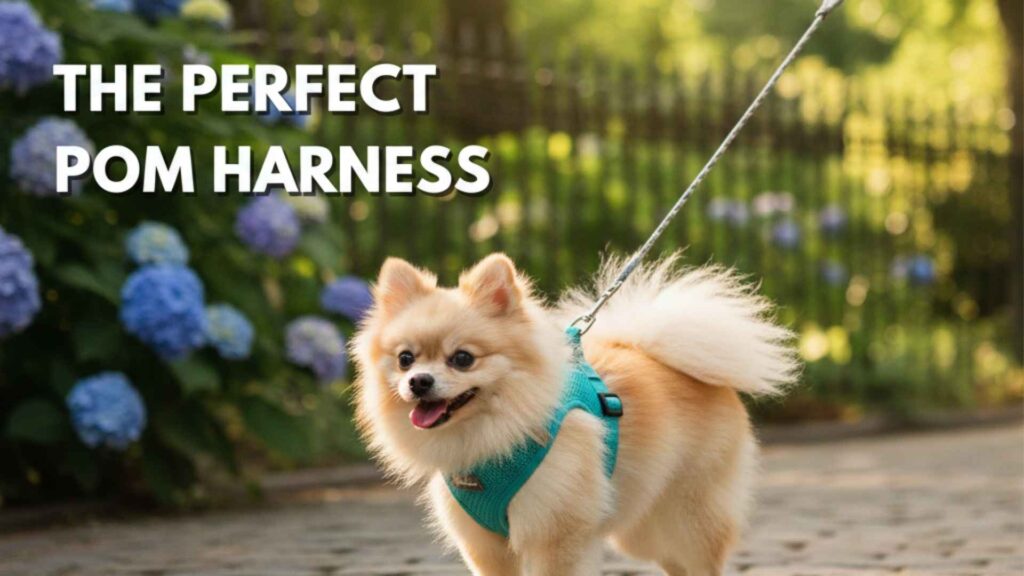
When you put a leash on the collar of your Pomeranian you are taking a risk with the trachea of your Pomeranian. I found this out the way when I saw my neighbors Pomeranian get a bad cough. The vet said the cough was from the collar hurting the trachea of the Pomeranian.. When we changed to a good dog harness for the Pomeranian the problem went away in a few weeks.
Pomeranians look like toys but they are not. They are actually the descendants of Arctic sled dogs. The ancestors of your Pomeranian were Spitz dogs. They had a lot of energy. Your Pomeranian has a lot of energy too.. Your Pomeranian can get hurt easily because of the trachea and the knees and the coat of your Pomeranian can get damaged if you use bad gear.
In this guide you will learn about the harness styles for the unique body of your Pomeranian. You will learn how to measure your Pomeranian to get a harness that fits your Pomeranian perfectly. You will also learn about the brands that make harnesses for Pomeranians in 2026.. You will learn about the health problems that you should think about when you buy a harness, for your Pomeranian. This guide is not a list of things to buy. It is the guide I wish I had when I was looking for gear for my Pomeranian three years ago.
Why the Harness is a Medical Necessity, Not a Luxury
People usually think a harness is a way to make a dog look cool.. Here is the truth: for a Pomeranian a harness is more like something that helps keep them safe and healthy.
When a Pomeranian pulls on a collar the strap puts a lot of pressure on the windpipe. This is bad for dogs because their windpipe is made differently than humans. A dogs windpipe has rings of cartilage that can get hurt easily. For Pomeranians these rings are often not very strong to start with.
If a Pomeranian pulls hard on the collar it can make the rings get flat.. When the windpipe starts to get damaged it is often too late to fix it. This means the dog will have a hard time breathing and will cough a lot. They will also get tired easily. Have trouble running around. But if you use a harness for your Pomeranian it helps spread the force of the pull across the dogs chest and shoulders so it does not hurt the throat.
I talked to three people who breed Pomeranians to learn more, about this. They all told me the thing: they always tell new owners to get rid of the collar when walking their dog. When experts all agree on something you should listen to what they have to say.
The "Hidden Gems" of Pomeranian Anatomy

To truly master the art of the Pom walk, you must understand the nuances that generic pet blogs overlook. Three anatomical realities separate Pomeranian harness shopping from shopping for any other breed.
1. The Double Coat Friction Point
Poms possess a dense, soft undercoat and a long, harsh outer coat. This double coat is prone to static and matting. Many harnesses use cheap nylon with exposed stitching that acts like a saw against the fur. Within a thirty-minute walk, a poorly designed harness can create painful mats behind the front legs.
You need silk-lined or soft-mesh materials to preserve that show-quality coat. This is not vanity. Matting causes skin irritation, traps moisture, and can hide parasites. When shopping for the best dog harness for Pomeranian coat protection, run the inside of the harness across the back of your own hand. If it feels scratchy to your skin, it will be brutal on their undercoat.
2. The Center of Gravity Challenge
Because Poms are so light — typically three to seven pounds — their center of gravity is easily disrupted. A harness that sits too high on the neck or too far back on the ribcage can cause the dog to flip forward if they lunge at a squirrel.
A Y-shaped harness is the gold standard because it allows the shoulders to move through their full range of motion without obstructing the front legs. Chest-crossing straps, by contrast, restrict the natural shoulder stride and can accelerate joint wear in dogs already prone to luxating patella.
3. The Spitfire Reflex
Pomeranians are surprisingly fast. They have a bolt reflex that catches owners completely off guard, especially around larger dogs or moving vehicles. A harness must be escape-proof, meaning it contours to the deep chest and narrows at the waist, preventing the dog from backing out of the gear like a tiny magician.
This is where fit precision matters more than brand reputation. A harness from a premium brand that is half an inch too loose becomes a liability in seconds.
What are the most common harness styles for Poms?
The market is flooded with options, but for a 2026 Pomeranian owner, only three styles truly matter for this breed. Every other design is either a compromise or a liability.
The Soft Mesh Vest
This is the most popular choice for good reason. It acts like a piece of clothing, hugging the dog’s torso and providing a large surface area to distribute pressure. This makes it nearly impossible to hurt the dog’s neck, even during enthusiastic squirrel-chasing moments.
Best for: Daily walks and puppies under eighteen months. Top Pick: The Puppia RiteFit. It costs between $18 and $28 as of May 2026, comes in over thirty colors, and has a sturdy back D-ring that holds up to active Poms without twisting. The adjustable chest strap is the detail that sets it apart — most vest harnesses are one-size-fits-most disasters. The RiteFit actually adjusts.
The Step-In Harness
Many Poms are head-shy, meaning they actively resist anything slipped over their ears. A step-in model allows the dog to place their paws into two loops, which you then zip or clip over their back. The dog never needs to tolerate anything near their face.
Best for: Nervous dogs, rescued Poms with unknown histories, or dogs with sensitive ears. Top Pick: Voyager Step-In Air. Priced around $15 to $22, this harness uses breathable mesh that works particularly well in summer. The Velcro-free design is important — more on that in a moment.
The Leather “Y” Harness
For the fashion-forward owner who does not want to sacrifice health, rolled leather or “Buddy Belt” styles offer a minimalistic footprint. These are excellent for preventing fur matting because they have very little contact with the coat. The narrow, rounded straps glide through the fur rather than pressing against it.
Best for: Long-haired Poms, show dogs between events, and adults with calm temperaments. Top Pick: Buddy Belts Classic Leather. These run between $45 and $75 depending on size. Yes, that is a significant investment. But owners who switch to them rarely go back, and the craftsmanship typically outlasts three or four cheap nylon alternatives.
Comprehensive Comparison: Pomeranian Harness Features
Before you commit to any style, understanding how these three options compare across the features that actually matter for Pomeranians will save you money and frustration.

The leather wrap earns “Superior” for tracheal safety because its narrow profile means virtually no contact with the throat area under any pulling scenario. The trade-off is adjustability — leather stretches minimally, so accurate measurements before purchase are non-negotiable.
One thing this table cannot capture: the Velcro problem. Several popular step-in harnesses use Velcro closures. For Pomeranians, whose long guard hairs catch on Velcro hooks like a living lint trap, this creates a painful removal process every single walk. Always check the closure type before buying.
How do you measure a Pomeranian for a harness?
You cannot rely on weight alone. A 5-pound Pom with a “lion cut” groom fits differently than a 5-pound Pom in full coat. You need a flexible tailor’s tape to get these three vital measurements right.
1. The Neck Base: Measure where the neck meets the shoulders, not where a collar usually sits. This lower measurement is where the harness will actually rest.
2. The Girth: This is the most important measurement. Measure the widest part of the chest, usually right behind the front legs. Most sizing errors happen here because owners measure the ribcage midpoint rather than the widest point.
3. The Length: From the base of the neck to the start of the tail. This matters most for vest-style harnesses that cover the back.
The Two-Finger Rule: Once the harness is on, you should be able to slide two fingers comfortably between any strap and the dog’s skin. If you cannot fit two, it is too tight and will cause chafing. If you can fit three, your Pom might perform a Houdini escape at the worst possible moment.
One practical tip from experience: always measure your Pom after a bath and blow-dry when their coat is at full volume. Harnesses bought based on pre-bath measurements often feel snug once the coat is fully fluffed.
Training Your Pom: The Harness-Leash Connection
Teaching a Pom to walk politely is a satisfying but genuinely slow process. Because they are so small, people make the mistake of “lifting” them with the leash when they misbehave. Even with a harness, you should never “fish” your dog off the ground by the leash. The physics of lifting a dog by their torso straps still creates spinal compression.
Stop the Sled Dog Mentality
If your Pom pulls, stop walking immediately. Do not jerk the leash. Simply stand still and wait for the dog to look back at you and for the leash to go slack. Reward that check-in with a small, high-value treat — I use tiny pieces of freeze-dried chicken liver, which are wildly effective for Poms.
Over time, the dog learns that a tight harness means stop and a loose harness means go. This is the foundation of loose-leash walking, and it works significantly faster when the dog is wearing a well-fitting harness because they can feel the tension cues more accurately than through a collar.
The Puppy Zoomie Management Strategy
Puppies are unpredictable in ways that adult dogs simply are not. For a young Pom, a harness with a front-clip attachment is a genuine game-changer. When the puppy lunges forward, the front clip gently pivots their body back toward you, naturally discouraging the behavior without any physical force from your end. This technique is endorsed by the American Veterinary Society of Animal Behavior as a low-stress handling method.
Health & Genetics: The Deeper Dive

Gear is only half the battle. Pomeranians are prone to several genetic conditions that your harness choice can either help manage or make significantly worse. Understanding these conditions is not optional — it is the difference between a harness purchase and a genuinely informed health decision.
Luxating Patella
Roughly 30 percent of Pomeranians will experience floating kneecaps at some point in their lives. This condition, where the kneecap slips out of its groove, causes sudden lameness and long-term joint degradation.
A harness that is too heavy or has straps that cross directly over the shoulder joints can alter the dog’s natural gait. This misalignment puts extra stress on the knees during every walk. Always choose lightweight models — every ounce matters when the dog only weighs four pounds. For context, the difference between a cheap nylon harness at 4 ounces and a premium mesh vest at 1.2 ounces is proportionally enormous for a dog this size.
Alopecia X (Black Skin Disease)
Some Poms suffer from hair loss caused by this hormonal condition. If your dog has thinning patches, avoid nylon straps, which can be abrasive on exposed skin. Look for harnesses lined with fleece or soft cotton to protect the skin from sunburn and further irritation.
Harnesses with padding also help here. The padding distributes pressure and reduces friction on areas where the coat may be thin or absent entirely.
Safety First: Always consult with a veterinarian for a personalized health plan. Ensure your breeder provides OFA clearances for hips and patellas, and CERF clearances for eyes. These certifications indicate the breeding stock was screened for heritable conditions, which directly influences the health decisions you will make for years to come.
The Owner’s Perspective: Life with a "Floor Wolf"
There is a specific joy to walking a Pomeranian. They trot with a bouncy, self-assured gait that suggests they own every sidewalk they touch. But Pom owners face a consistent real-world challenge that harness reviews rarely mention: the unsolicited approach.
People — and other dogs — often approach Poms without permission. The Pom’s tiny size and absurd cuteness invite it. A harness provides you with something a collar never can: a security handle.
Many high-end harnesses include a small handle on the back. This is not for carrying the dog like a purse. It exists for quick intervention. If an off-leash dog charges toward your Pom, you can securely and safely lift your dog using the handle, distributing their weight across their entire ribcage rather than dangling them by their neck. That single feature has justified the premium price of more than one harness for me personally.
The Shedding Reality Nobody Warns You About
Pomeranians shed — a lot. Your harness will become a fur magnet within two walks. This is unavoidable. What is avoidable is the nightmare of Velcro.
Choose a harness with smooth-face buckles exclusively. Velcro and Pomeranian guard hairs are natural enemies. The long outer coat gets stuck in the hooks, making the harness agonizing to remove and training the dog to dread harness time before walks even begin. Once a Pom associates harness removal with pain, you have a behavioral problem that takes months to undo.
Maintenance Checklist: Keeping the Gear Safe
You might think a 5-pound dog does not need no-pull technology. You can easily hold them back, right? But the goal is not just to stop them. It is to protect them from themselves.
A no-pull harness for a Pomeranian usually involves a patented X-shape across the chest. This design ensures that even if the dog lunges with everything they have, the pressure is diverted to the strongest part of their body — the chest — and away from the sensitive throat and the delicate armpit area where lymph nodes are located.
The lymph node point is one that veterinarians raise but harness marketers almost never mention. Chronic pressure in the armpit area can cause lymphatic drainage issues in small breeds. The X-design eliminates this risk entirely by lifting that contact point off the armpit and moving it to the sternum.
Why "No-Pull" Matters for Toy Breeds

You might think a 5-pound dog does not need no-pull technology. You can easily hold them back, right? But the goal is not just to stop them. It is to protect them from themselves.
A no-pull harness for a Pomeranian usually involves a patented X-shape across the chest. This design ensures that even if the dog lunges with everything they have, the pressure is diverted to the strongest part of their body, the chest, and away from the sensitive throat and the delicate armpit area where lymph nodes are located.
The lymph node point is one that veterinarians raise but harness marketers almost never mention. Chronic pressure in the armpit area can cause lymphatic drainage issues in small breeds. The X-design eliminates this risk entirely by lifting that contact point off the armpit and moving it to the sternum.
The Teamwork of Harness and Collar
In 2026, the expert consensus is clear: harness for the walk, collar for the ID.
Never attach a leash to a decorative collar. Instead, keep a lightweight, loose-fitting collar on your Pom at all times with their ID tags and microchip information. This ensures that if the dog ever slips out of their harness, which can happen during grooming or car travel, they are still identifiable.
Think of the harness as the seatbelt and the collar as the vehicle registration. You need both to be fully protected, but they serve completely different functions. Combining them into one piece of equipment is where well-meaning owners create unnecessary risk.
Maintenance Checklist: Keeping the Best Dog Harness for Pomeranian in Safe Condition
A harness is safety equipment. If it fails at the wrong moment — near traffic, on a hiking trail, in a crowded park — the consequences can be devastating. Perform this check once a month without exception.
Check the Buckles: Ensure there are no cracks in the plastic. Buckles are injection-molded and can develop stress fractures invisible to casual inspection. Press on them firmly. If they flex more than slightly, replace the harness.
Inspect the D-Ring: Look for signs of metal fatigue or rust where the leash attaches. A D-ring failure under load is one of the most common causes of Pom escapes reported in owner forums.
Wash Regularly: Sweat, skin oils, and environmental debris break down fabric integrity over time. Use a mesh laundry bag and air dry to prevent shrinking. Most mesh harnesses tolerate gentle machine washing; leather harnesses require saddle soap and conditioning oil.
The Growth Check: If your Pom is under two years old, they are still physically developing and filling out. Re-measure their girth every month. A harness that fit perfectly at eight months may be dangerously snug at twelve.
The UV Check: Harnesses used in sunny climates fade and weaken from UV exposure faster than most owners realize. Hold the harness up to light after six months of regular use. If the color has faded dramatically, the fiber integrity may have degraded alongside it.
The Shedding and Coat Maintenance Connection
Harness users face one grooming challenge that non-harness owners do not: the friction zones. The areas where harness straps consistently press against the coat — typically behind the front legs and across the chest — require extra brushing attention.
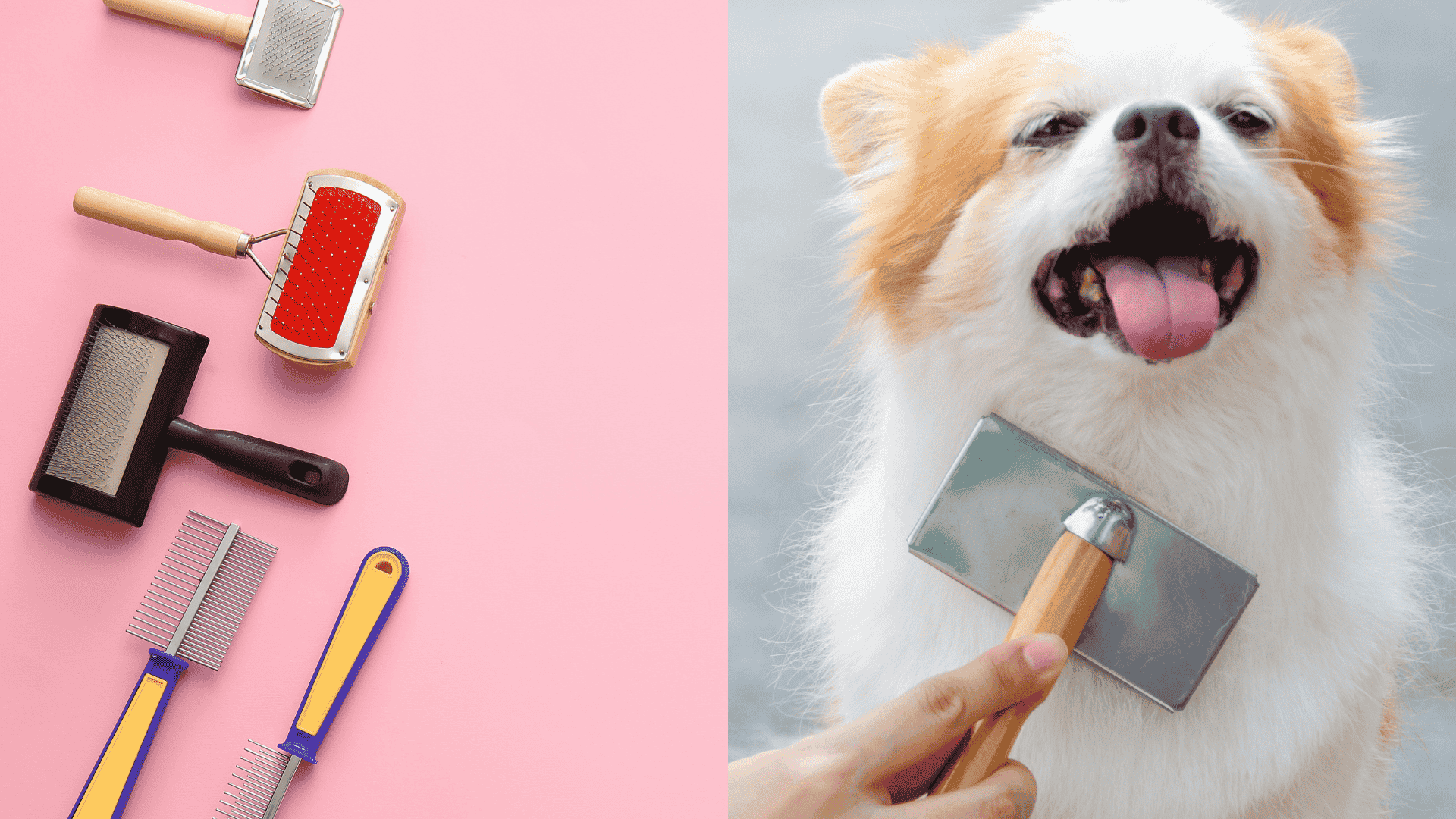
Use a slicker brush specifically in these areas after every walk. A quality de-matting spray applied to friction zones before harnessing reduces static and makes the coat more resistant to tangling. A metal comb through these areas twice weekly prevents the kind of deep matting that requires professional intervention.
For Poms in show condition or those with Alopecia X concerns, consider applying a small amount of coconut oil to the harness contact points monthly. This creates a slip barrier between the fabric and the coat that dramatically reduces friction damage over time.
Final Thoughts on the Best Pomeranian Gear
The transition from a collar to a harness is the single most impactful gear change you can make for your Pomeranian’s long-term health. By removing the threat of tracheal collapse and protecting the integrity of their magnificent double coat, you are not just buying a leash attachment — you are buying peace of mind and potentially adding years of comfortable, active life to your Pom’s timeline.
I have watched owners make this switch and describe it as one of those rare moments where a small change produces immediate, visible results. The dog moves more freely. The owner stops bracing for the collar pull. The walk becomes what it was always supposed to be: a joyful shared experience rather than a anxiety-producing negotiation.
A happy Pom is a mobile Pom. Whether you are hiking a trail in the Cascades or strutting down a city block in Chicago, ensure your Zwergspitz is wrapped in gear that respects their history, honors their anatomy, and matches their vibrant, outsized spirit.
People also ask:
The best choice is a “V-neck” or “Choke-Free” harness like the Gooby Comfort X or a Buddy Belt. These designs specifically sit below the neck area, ensuring that no matter how hard the dog pulls, zero pressure is applied to the windpipe.
You should remove the harness every night and whenever the dog is indoors for an extended period. Constant wear can lead to “hot spots” on the skin and severe matting of the undercoat. A Pomeranian’s skin needs to breathe to maintain that healthy glow.
Switch to a “Step-In” style harness. These allow your dog to stand over the harness while you clip it around their body. You can also use “high-value” treats (like tiny bits of chicken) to create a positive association with the gear.
Yes, if the harness is made of rough nylon or is fitted too tightly, it can cause “friction alopecia.” To prevent this, choose a harness with a soft lining (satin, silk, or soft mesh) and ensure it is cleaned regularly to remove abrasive dirt and salt.
A puppy can start wearing a lightweight mesh harness as early as 8 weeks old. In fact, it is better to start them in a harness immediately to prevent them from ever learning the habit of pulling against their neck.
You may also like

Build the Perfect Care Routine for Your Pomeranian
Select your Pom’s age, coat type, and activity level to instantly get a custom care checklist — it’s fast, free, and made with love!
Give your Pom the daily care they truly deserve.