
5 Best Toys for Pomeranian Puppies: Keep Them Happy & Calm

Lateef Bhatti
Author
The best toys for Pomeranian puppies are small, lightweight items like tiny rubber rings for teething, soft squeaky plushies for comfort, and mini puzzle toys to challenge their smart brains. Because these puppies are so tiny, they need toys that are easy to carry and gentle on their delicate teeth. Using the right toys helps your puppy stay happy, keeps them from chewing on furniture, and stops them from feeling lonely.
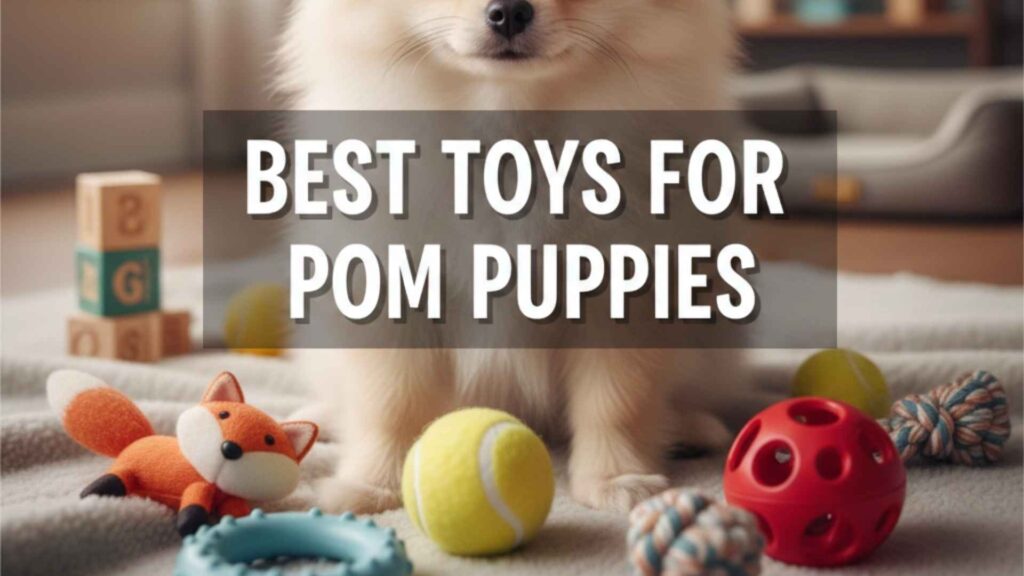
Why Is Toy Selection Critical for Pom Puppies?
Pomeranian puppies possess an architecture that is both fragile and fierce. Their jaws are delicate, meaning a standard-sized dog toy can actually cause dental displacement or TMJ issues. Conversely, their brains are wired for Arctic survival, meaning they get bored faster than almost any other toy breed.
Table of Contents
ToggleIf you don’t provide a “job” via the best toys for Pomeranian puppies, they will find their own work. Usually, this involves redecorating your baseboards or “hunting” your expensive leather loafers. Proper toy selection redirects this ancestral drive into productive, safe outlets.
5 Essential Types of Toys Every Pom Needs

To raise a well-adjusted Pom, you need a “balanced toy box.” Think of it like a food pyramid—they need a little bit of everything to stay healthy.
1. The Teething Relief Kit
Pomeranian puppies go through an intense teething phase. Between 12 and 24 weeks, their deciduous teeth fall out to make room for 42 adult teeth. This causes a burning sensation in the gums.
- Top Pick: Extra-small rubber rings or textured nylon bones.
- Pro Tip: Look for toys with “nubs.” These massage the gum line and help break the surface for emerging teeth.
2. The Cognitive Enrichment Puzzle
Poms are remarkably smart. If they aren’t solving a problem, they are likely looking for trouble. Interactive puzzles that require them to slide, flip, or nuzzle a lever to find a piece of kibble are essential.
- The Benefit: 15 minutes of puzzle work is equivalent to a 45-minute walk in terms of mental exhaustion.
3. The “Self-Soothing” Companion
Because this breed is prone to separation anxiety, they need a “security blanket” toy. These are typically soft, plush, and small enough for them to carry from room to room.
- The Secret: Look for “unstuffed” plushies. If your Pom decides to “gut” the toy, you won’t wake up to a living room covered in white poly-fill.
4. High-Velocity Fetch Toys
Physical exercise is vital for heart health. However, a standard tennis ball is a choking hazard and too heavy for their necks. You need miniature, lightweight balls (approx. 1.5 inches in diameter).
5. Bonding & Tug Toys
Tugging is a natural behavior, but with a Pom, it must be “Low-Impact.” Use soft cotton ropes that allow for a gentle game of tug-of-war without putting excessive strain on their cervical spine.
The "Pomnest" Comparison: Toy Utility vs. Life Stage

What Type of Toys Do Pomeranians Like Best?
In my experience as a breed expert, Poms have a “Type.” They gravitate toward toys that make high-pitched noises. Why? Because it mimics the sound of small prey. While it might be annoying to you, that “squeak-squeak” sound releases dopamine in your puppy’s brain.
They also love “scented” toys. Their sense of smell is thousands of times more acute than ours. Toys infused with vanilla or beef scents can keep a Pom engaged for double the time of an odorless plastic toy.
Do Pomeranians Play with Toys Individually?
Yes, they are surprisingly independent if the toy is “reactive.” A toy that wobbles back and forth or dispenses a treat every few minutes will keep a Pom occupied while you are working. However, they are social creatures at heart. They will almost always prefer a toy that involves you at the other end.
The Owner’s Perspective: Living with a "Toy-Obsessed" Pom

Living with a Pom is like living with a tiny, furry hoard manager. My Pom, for example, has a specific “toy graveyard” under the sofa. Every evening, he performs a “toy census,” dragging each item out to inspect it.
You’ll notice a specific behavior called the “Death Shake.” Your 4-pound puppy will grab a plush toy and whip its head back and forth with surprising violence. This is a harmless instinctual carryover from their ancestors. It’s also how they test the weight and “give” of a new toy. If they can’t shake it, they usually won’t play with it.
The “Velcro” Factor
Poms are known as “Velcro dogs” because they stick to your side. This means their favorite toy is often whichever one you just touched. You can use this to your advantage during training. Using a favorite toy as a “high-value reward” is often more effective than food for a Pomeranian.
How to Calm a Pomeranian with "Interactive" Play?
A common question is: “How do I stop the barking?” Often, barking is a symptom of “Scanning.” The dog is looking for stimuli because their brain is idling.
The most effective way to calm a Pom is to use a Slow-Feeder Toy. Instead of putting their dinner in a bowl, put it in a treat-dispensing ball. The act of licking and “working” for food lowers their cortisol levels and triggers a relaxation response. By the time the toy is empty, they are usually ready for a nap.
Health & Genetics: The Safety First Approach

We cannot discuss the best toys for Pomeranian puppies without discussing the “Fragility Factor.” Poms have specific genetic predispositions that make certain toys dangerous.
1. Tracheal Collapse Warning
Poms are prone to weakened cartilage in their windpipes. Never use “tug” toys that require them to wear a collar. If you play tug, ensure they are in a Y-shaped harness to distribute the pressure across the chest, not the throat.
2. Patellar Luxation (Slipping Kneecaps)
If your Pom puppy jumps vertically to catch a frisbee or ball, they put immense stress on their rear leg joints.
- The Rule: Keep fetch toys low to the ground. Roll the ball across the floor rather than throwing it in the air.
3. The “Needle Tooth” Fracture
Pom puppy teeth are thin. Hard plastic toys designed for Labradors can actually crack a puppy’s tooth, leading to an expensive (and painful) extraction. If you can’t indent the toy with your thumbnail, it’s likely too hard for a puppy.
Expert Disclaimer: Always consult with your veterinarian for a personalized health plan. These suggestions are based on breed standards but individual health needs may vary.
Information Gain: The "Hidden Gems" of Pom Play
Most generic blogs tell you to buy a ball. Here is what they miss:
- The “Nesting” Instinct: Many Poms like to “mother” their toys. If you see your puppy carrying a toy gently and whining, they aren’t necessarily in pain—they are treating the toy like a littermate. This is a sign of a high-empathy dog.
- Color Vision: Dogs see best in blues and yellows. Most dog toys are red (which appears brownish-gray to them). If your Pom seems to “lose” their ball in the grass, switch to a bright blue ball. You’ll see an immediate increase in their success rate.
- The “Cooling” Effect: Poms overheat easily due to their double coat. In the summer, “chilly” toys (toys you can fill with water and freeze) serve a dual purpose: they soothe teething and act as a localized heat-sink to keep the puppy cool.
Can Pomeranians Play Fetch Like Big Dogs?
Absolutely. In fact, many Poms excel at mini-agility courses. The key is the “Weight-to-Jaw Ratio.” A toy should never weigh more than 5% of your dog’s body weight. For a 3-pound puppy, that means your toy should weigh less than 2.4 ounces.
When playing fetch, look for toys made of “closed-cell foam.” These are incredibly light, they float, and they don’t hold bacteria as easily as a tennis ball.
The 2026 Pomeranian Toy Rotation Strategy
To keep a Pom interested, you must master the art of the Toy Rotation.
- The Set-Up: Divide your toys into three bins.
- The Schedule: Only leave Bin A out. On Monday, hide Bin A and bring out Bin B.
- The Result: To a Pomeranian’s brain, these are “new” toys every week. This prevents the “novelty fade” that leads to them chewing on your TV remote.
Recommended Pomeranian Puppy Toys
If you don’t have ideas, here is a list of toys for Pomeranian puppies you can consider.
1. Slicker chew bones – Mini chew bones designed to relieve the discomfort of teething while promoting the strengthening of jaw muscles.
2. Interactive Puzzle Toys – Small puzzles having hidden rewards which enhance concentration, mental stimulation, and focus.
3. Soft plush toys with squeakers – These are perfect for soothing puppies that have separation anxiety as they provide comfort and companionship.
4. Puppy rope toys – These are ideal for gentle tug of war as they are designed to be gentle on the teeth of the growing puppy.
5. Treat-dispensing toys – These problem-solving toys keep your Pom active and busy while offering nice and tasty rewards for the effort.
6. Kong toys, extra small – These are chew-proof and serves the purpose of playing as well as calming down with stuffed treats.
7. Mini Fetch Balls or Frisbees – Light and safe fetch toys designed specifically for small breeds.
Essential "New Puppy" Toy Checklist

If you are bringing home a Pom this week, ensure you have at least one of each:
- The “Classic” Kong (XS): For stuffing with peanut butter.
- A Snuggle Puppy: A plush with a “heartbeat” for the first few nights alone.
- A Soft Latex Squeaker: For high-energy indoor fetch.
- A Mini Cotton Rope: For gentle bonding and teeth cleaning.
- A Snuffle Mat: A fabric mat where you hide dry kibble to encourage foraging.
What Are Pomeranians' Weaknesses in Play?
The biggest weakness is their over-confidence. A Pom does not know they are 5 pounds. They will often try to “steal” a toy from a much larger dog at the park. This can lead to “predatory drift” where the larger dog sees the Pom as a toy/prey.
- The Expert Advice: Keep toy-based play in “small dog only” zones or the safety of your own home.
Additionally, their small size makes them prone to Hypoglycemia (low blood sugar) if they play too hard for too long without a break. Limit intense play sessions to 10-15 minute bursts followed by a rest period.
Final Thoughts on the Best Toys for Pomeranian Dogs
The bond you build with your Pomeranian through play is the foundation of their lifelong behavior. When you choose the best toys for Pomeranian puppies, you aren’t just buying “stuff.” You are providing the tools for a happy, healthy, and intellectually stimulated life.
From the cooling relief of a frozen teething ring to the complex challenge of a Level 3 puzzle, every toy serves a purpose. Watch your puppy closely—they will tell you which ones they love. Just be prepared to find a few of them hidden under your pillow!
People also ask:
The most effective way to calm a Pomeranian is through mental stimulation rather than just physical exercise. Use a snuffle mat or a treat-dispensing toy to engage their nose and brain. This repetitive “foraging” behavior naturally lowers their heart rate and redirects anxious energy.
Beyond their owners, Poms love “predictable novelty.” They enjoy toys that react to them (squeakers), high-vantage points (like the back of a sofa), and “denning” in soft, plush beds. They are also highly food-motivated, making treat-puzzles a top favorite.
Yes, Poms are among the most playful of the toy breeds. They retain a puppy-like playfulness well into their senior years. While they enjoy solo play with “reactive” toys, they are happiest when play involves human interaction, such as fetch or gentle tug.
Pomeranians generally prefer toys that are small, lightweight, and sensory-rich. This includes high-pitched squeaky plushies, soft rubber teething toys, and “crinkle” toys that make a paper-like sound. Avoid heavy or oversized toys that can strain their neck.
Physically, their weaknesses are their fragile tracheas, kneecaps (patellas), and thin-enameled teeth. Behaviorally, their weakness is a tendency toward “demand barking” and separation anxiety. The right toys can mitigate these behavioral issues by providing a focused outlet for their energy.
You may also like
Build the Perfect Care Routine for Your Pomeranian
Select your Pom’s age, coat type, and activity level to instantly get a custom care checklist — it’s fast, free, and made with love!
Give your Pom the daily care they truly deserve.