
The Best Food and Water Bowls for a Pomeranian: Science-Backed Picks for 2026

Lateef Bhatti
Author
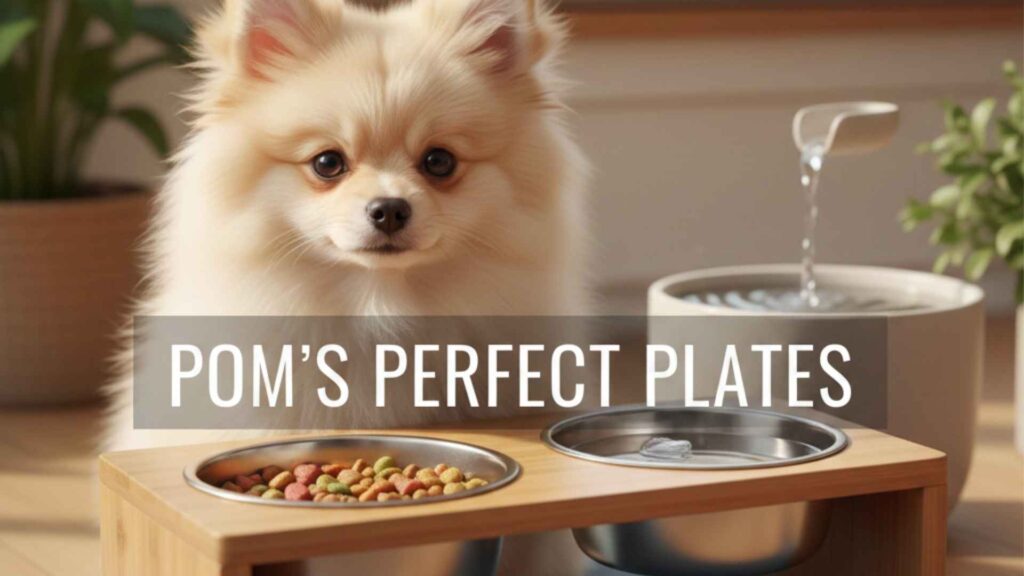
The best food and water bowls for a Pomeranian are shallow, stainless steel dishes that are easy for their small faces to reach. Using a slightly raised stand helps protect their delicate necks, while stainless steel prevents germs that cause skin bumps. Always pick a bowl with a rubber bottom so it doesn’t slide around while your pup eats!
Why Bowl Material Matters: The Plastic Trap
Many owners don’t realize that plastic bowls are porous. Even with regular washing, micro-scratches harbor Staphylococcus and other bacteria that lead to chin pyoderma—small red bumps or “acne” on your dog’s face.
Table of Contents
ToggleFor a Pomeranian, who spends a significant amount of time grooming their facial fur, a clean surface is paramount. We recommend 304-grade stainless steel. It’s non-porous, dishwasher-safe, and virtually indestructible.
If you prefer aesthetics, heavy-duty ceramic is a solid runner-up, provided the glaze is lead-free and third-party tested. Avoid cheap, dollar-store ceramics which can leach toxins over time.
The Problem with Deep Bowls
Pomeranians have relatively flat faces compared to hounds. If you place their kibble in a deep, narrow “bucket” style bowl, they have to submerge their entire face to reach the last bits.
This causes “whisker fatigue,” a sensory overload where their sensitive whiskers constantly rub against the sides of the dish. A shallow, saucer-style bowl allows them to scan their environment while eating, which makes them feel safer.
3 "Hidden Gems" of Pomeranian Dining

Beyond the basics, seasoned Pom owners and veterinary experts look for these three nuanced factors that generic articles often miss:
1. The Photic Reflex (Mirror Scaring)
Some Poms are startled by their own reflection in high-shine chrome bowls. If your Pom barks at their food or refuses to approach the dish, they might be seeing a “stranger” in the bottom of the bowl. A matte-finish stainless steel or ceramic bowl solves this instantly.
2. The Hydro-Dynamics of the Mane
Pomeranians are famous for their “frill” or mane. Deep water bowls often result in a soaking wet chest. Because their undercoat is so dense, a wet mane can take hours to dry, leading to “hot spots” or fungal skin infections. A small-opening water fountain or a “licker” bottle can keep the coat bone-dry.
3. Micro-Movement and Joint Health
Poms are prone to Luxating Patella (kneecap dislocation). If a bowl is kept on a slippery tile floor without a silicone mat, the Pom’s back legs will “drift” outward as they lean in to eat. Over thousands of meals, this repetitive strain can worsen joint issues. Always ensure their feeding station is on a high-traction surface.
If your Pomeranian has eating habits that pertain to health issues, any of these bowl options would work; however, the best choice from the options is the one that aligns with the health concerns of the Pomeranian. Always prioritize comfort, hygiene, and durability to keep feeding both safe and enjoyable.
The Ergonomics of Elevation: Do Poms Need Raised Bowls?
A common question in the pomnest.com community is whether a tiny dog needs a raised feeder. While large breeds use them to prevent bloat, Poms use them for structural alignment.
When a Pomeranian eats off the floor, they must arch their neck in a steep “U” shape. For a dog that may already have a weakened trachea, this position can compress the airway. Raising the bowl just 2 to 3 inches allows the esophagus to remain straight, facilitating a smoother “transit” of food from the mouth to the stomach.
Comparison: Floor Level vs. Raised Feeding

The Behavioral Science of the "Pom-Trot"
Living with a Pomeranian means navigating their high-energy mealtime dance. Unlike a Golden Retriever that might sit stoically, a Pom will often “spin” or let out high-pitched, rhythmic barks when they hear the kibble bag.
Because they are so animated, a non-slip rubber base is non-negotiable. Without it, your Pom will literally “chase” their bowl across the kitchen floor. This isn’t just a mess issue—it’s a stress issue. Dogs prefer their “prey” (the food) to stay still. A sliding bowl can trigger resource guarding or frantic eating.
Training Through Feeding
You can use the bowl as a training tool. Instead of just dropping the dish, ask for a “sit” or a “wait.” Because Poms are highly intelligent and food-motivated, this 30-second window of discipline helps curb the “alpha” tendencies that sometimes develop in toy breeds.
Strategic Hydration: Fountains vs. Dishes

Proper hydration is the secret to a long-lived Pomeranian. Small breeds are susceptible to kidney stones and bladder crystals.
Why Fountains Win
Pomeranians are naturally curious. The sound of trickling water often encourages them to drink more than they would from a stagnant pond in a ceramic dish.
Furthermore, fountains filter out the “dust bunnies” and hair that inevitably fall into a Pom’s bowl. If you use a standard dish, you must change it at least three times a day to meet the standards of these tiny “water snobs.”
The “Dry Beard” Technique
If you are tired of your Pom dripping water all over your rugs, look for a “floating disk” bowl. These only allow a small amount of water through a center hole, preventing the dog from dipping their chin and mane into the liquid.
The Slow-Feeder Revolution
Does your Pomeranian eat like they haven’t seen food in a week? This is common in Poms that come from large litters where they had to compete for milk.
“Gulping” food leads to aerophagia (swallowing air), which causes gas and discomfort. A slow-feeder bowl with a “maze” design forces them to use their tongue and brain to extract the kibble. This turns a 30-second “inhale” into a 5-minute mental stimulation session.
Seasonal Adjustments for Your Feeding Station
As we move through 2026, climate changes mean more volatile indoor temperatures. Your choice of bowl should adapt to the season.
- Summer: Use a double-walled insulated stainless steel bowl. You can chill it in the freezer beforehand to keep their water icy cold during July heatwaves.
- Winter: If you live in a cold climate and your kitchen floor is chilly, ensure the bowl is on a raised wooden or bamboo stand. Metal bowls on cold floors can pull heat away from the food, making it less palatable for a finicky Pom.
Health, Genetics, and Safety

Pomeranians are genetically predisposed to Collapsed Trachea and Luxating Patella. When selecting food and water bowls for a Pomeranian, your primary goal is to minimize physical strain.
Veterinary Screenings
Always ensure your Pom has had their OFA (Orthopedic Foundation for Animals) screenings for knees and their CERF (Canine Eye Registration Foundation) exams. If your dog is diagnosed with a grade 1 or 2 patella luxation, a raised feeder becomes a medical necessity rather than a luxury.
Consult with a veterinarian for a personalized health plan. While the right bowl helps, it is not a cure for underlying genetic conditions.
The Ultimate Mealtime Checklist
Before you finalize your setup, run through this checklist to ensure your Pom’s dining room is up to professional standards:
- Material Check: Is the bowl 304 Stainless Steel or Lead-Free Ceramic?
- Stability Check: Does it have a silicone or rubber non-slip base?
- Height Check: Is the rim of the bowl roughly at the height of the dog’s lower chest?
- Sanitation Check: Can this bowl go in the dishwasher (sanitization cycle)?
- Location Check: Is it in a quiet corner away from the “hubbub” of the house?
- Aesthetics: Does it make you happy? (A happy owner makes for a happy dog!)
Cleaning and Maintenance Protocols
You wouldn’t eat off the same plate for a week without washing it; your dog shouldn’t either. Biofilm—that slimy film you feel on the bottom of a water bowl—is a complex city of bacteria.
- Daily: Rinse and scrub with hot, soapy water.
- Weekly: Run through a high-heat dishwasher cycle.
- Monthly: If using a fountain, replace the charcoal filters and deep-clean the pump. Hard water buildup can be removed with a 50/50 vinegar and water soak.
Final Thoughts: The Final Word on Pom Bowls
Selecting the perfect food and water bowls for a Pomeranian is a small act of love that pays dividends in their health. From preventing chin acne to protecting their delicate necks, the right hardware is essential.
By prioritizing shallow designs, high-quality materials like stainless steel, and considering a slight elevation, you provide your Pom with a dining experience that matches their royal lineage.
Keep their routine consistent, their water fresh, and their bowls clean. Your reward will be a happy, spinning, healthy Pomeranian for years to come.
People also ask:
The best food bowl for a Pomeranian is a shallow, wide-rimmed stainless steel bowl. This material is non-porous and prevents bacteria buildup, while the shallow shape prevents “whisker fatigue” and allows the dog to eat without straining their neck.
A healthy Pomeranian should drink approximately 1 ounce of water per pound of body weight daily. For an average 5-pound Pom, this is about 150ml or two-thirds of a cup. This may increase based on activity level and weather.
Adding warm water or bone broth to your Pomeranian’s food can be beneficial. It helps with hydration, makes the food more aromatic for picky eaters, and softens kibble for seniors with dental issues.
A circulating water fountain or a heavy ceramic bowl is ideal. Fountains encourage drinking through movement and filtration, while heavy ceramic stays cool and is difficult for an energetic Pom to tip over.
Many small dogs, especially Pomeranians with respiratory issues or “honking” coughs, benefit from bowls raised 2-3 inches. This promotes a neutral spine and a more open airway during swallowing.
You should wash food bowls after every meal and water bowls at least once a day. Bacteria and biofilm can develop rapidly in toy breed dishes, potentially leading to digestive upset or skin infections.
It is not recommended. Even with daily washing, plastic develops microscopic scratches that house bacteria. Many Pomeranians develop “plastic allergies” or chin acne from these bowls. Stainless steel or ceramic are much safer alternatives.
You may also like





Build the Perfect Care Routine for Your Pomeranian
Select your Pom’s age, coat type, and activity level to instantly get a custom care checklist — it’s fast, free, and made with love!
Give your Pom the daily care they truly deserve.