
Choosing the Best Car Seat for Pomeranian – Safe, Comfy & Travel-Ready!

Lateef Bhatti
Author
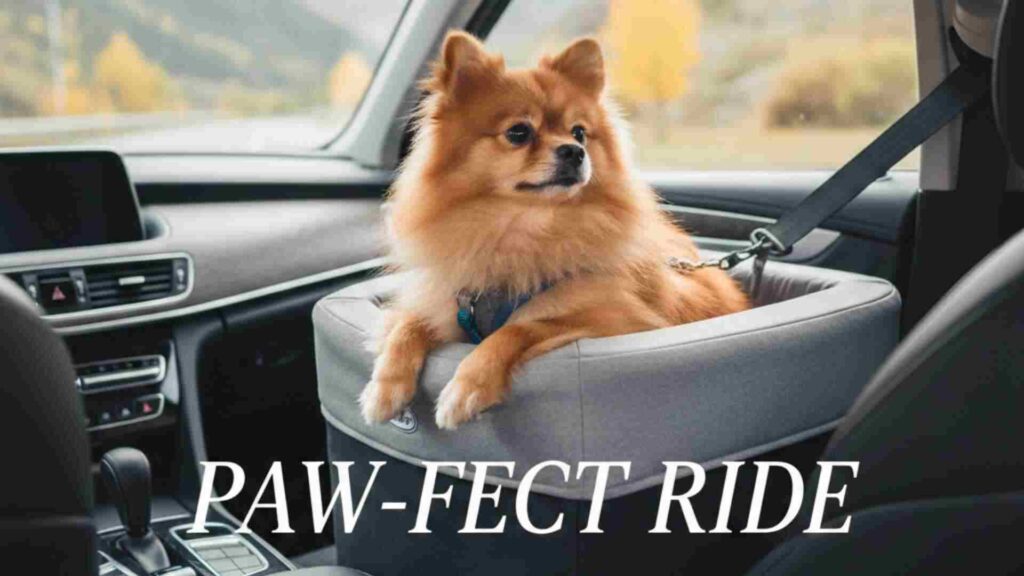
The best car seat for Pomeranian safety is a raised booster seat that lets your tiny dog see out the window. This special seat uses a secure harness to protect their fragile necks and keeps them from sliding around during quick stops. By using a padded booster, you help your Pom stay calm, prevent car sickness, and keep them safely tucked away from airbags.
Why is a Booster the Best Car Seat for Pomeranian Dogs?
A booster seat is the gold standard for Pomeranians because it elevates their line of sight to the window, which significantly reduces motion sickness and cortisol-driven anxiety. By securing them in a confined, padded space, you prevent them from roaming the cabin and distracting the driver.
Table of Contents
ToggleDo Pomeranians get car sick easily?
Pomeranians are highly susceptible to motion sickness due to their sensitive equilibrium. When they can’t see the horizon, their inner ear signals movement that their eyes can’t confirm, leading to nausea. A raised booster seat helps align their visual and vestibular systems, making “car barf” a thing of the past.
The “Hidden Gem” of Pom Physics: Tracheal Sensitivity
One nuance most generic pet blogs miss is the Pomeranian’s predisposition to Tracheal Collapse. Because of this, you must never attach a car seat tether to a collar. Even a minor short-stop can cause permanent damage to their delicate windpipe. Always use a high-quality Y-shaped harness that sits low on the chest.
Essential Features Checklist: What to Look For

Before you hit “buy,” ensure your chosen seat hits these veterinary-grade benchmarks. Not all car seats are created equal, and for a toy breed, the details matter.
- Rigid vs. Soft-Sided: Look for a high-density foam base that won’t compress over time.
- Washable Liners: Poms are “double-coated” marvels; they shed, and they trap dander. You need a removable, machine-washable cover.
- Integrated Safety Tether: This must be adjustable to allow the dog to sit or lie down, but short enough to prevent them from jumping out.
- Height Elevation: Ensure the base provides at least 5–7 inches of lift.
- Security Straps: The seat itself should be anchored by the car’s seatbelt system, not just hanging from a headrest.
How do I know if the seat is the right size?
Measure your Pom from the base of the tail to the chest. The best car seat for Pomeranian safety should allow them to curl into a natural ball without hitting the walls, but it shouldn’t be so large that they slide during turns. A “snug” fit provides a sense of burrowing security that lowers heart rates.
The Owner’s Perspective: Life at 60 MPH with a Pom
Living with a Pomeranian means living with a dog that thinks it’s a Lion. In the car, this translates to “The Alert Bark.” If your Pom sees a cow, a cyclist, or a suspicious-looking leaf, they will let you know.
I’ve found that placing a familiar-smelling blanket inside the best car seat for Pomeranian comfort helps dampen this reactive behavior. They feel “anchored” in their den. You’ll notice their ears relax and the frantic “pacing” stops once they realize their booster seat is a safe zone, not a cage.
Can my Pomeranian sit in the front seat?
While it’s tempting to have your co-pilot right next to you, the back seat is significantly safer. If an airbag deploys, the force can be fatal to a toy breed. If you must use the front seat, disable the passenger airbag and slide the seat as far back as possible.
Health & Genetics: Why Safety Gear Matters

Pomeranians are sturdy for their size but genetically prone to Patellar Luxation (dislocating kneecaps). A sudden jolt in a car can cause a dog to slip and twist their rear legs. By using a secure car seat, you are protecting their joints from the micro-impacts of daily driving.
Safety Note: Always look for products that reference OFA (Orthopedic Foundation for Animals) safety standards for harnesses. Consult with a veterinarian for a personalized health plan regarding your dog’s travel needs.
What are the genetic risks during travel?
Beyond the trachea and knees, Poms can suffer from Alopecia X (Black Skin Disease). While not directly related to car seats, the stress of travel can exacerbate skin conditions and hair loss. A comfortable, temperature-regulated seat reduces the physical stress that triggers these flare-ups.
Top 3 Expert Recommendations for 2026

Advanced Training: Teaching Your Pom to Love the Seat
You can’t just throw a Pomeranian into a new seat and expect them to be happy. These are intelligent, opinionated dogs. Start by placing the car seat in your living room. Let them sleep in it while you watch TV.
Once they associate the seat with “nap time,” move it to the car for short, stationary sessions. Give them a high-value treat—like a tiny piece of boiled chicken—every time they hop in. Slowly progress to 5-minute drives around the block.
Why do some Poms cry in the car seat?
If your Pom is whining, it’s usually one of three things: they are too hot, they can’t see out the window, or they need a potty break. Pomeranians have notoriously high metabolisms and small bladders. Ensure the seat isn’t directly in a sunbeam, as their double coat acts like a fur parka.
Technical Specs: Understanding Impact Physics

When we discuss the best car seat for Pomeranian use, we are looking at force distribution. In a sudden stop, a tether attached to a harness distributes weight across the ribcage.
Because Poms have a very high “surface area to weight” ratio, they are easily buffeted by the wind if you drive with windows down. A deep-bucket style seat protects them from these drafts, which can actually cause ear infections in some toy breeds.
Maintenance and Longevity
A high-quality car seat should last the lifetime of your Pomeranian (12–16 years). To ensure this, you must maintain the integrity of the foam and the straps.
- Vacuum Weekly: Fur and dander can clog the zippers and velcro.
- Inspect the Tether: Look for “micro-frays.” If your Pom is a chewer, consider a steel-core tether.
- Sanitize: Use pet-safe cleaners to avoid respiratory irritation.
Travel Prep: A High-Value Safety Checklist
Use this checklist before every trip to ensure your Pom is ready for the road.
- The “Pre-Flight” Potty: Poms have tiny bladders. A 20-minute walk before a trip is non-negotiable.
- Harness Check: Ensure the harness is snug (two-finger rule) before clipping the tether.
- Hydration Station: Keep a spill-proof water bowl accessible during rest stops.
- Temperature Control: Keep the cabin between 68°F and 72°F.
- Emergency Kit: Always carry a copy of their vaccination records and a “lost dog” flyer just in case.
Common Mistakes to Avoid

Many owners make the mistake of using a “crate” on the floorboard. While crates are great for home, a floorboard crate offers zero visibility, which spikes nausea. Others use “hammock” style seat covers, which are too large for a 5-pound dog and offer no impact protection.
Another mistake is leaving the leash attached while the dog is in the seat. Long leashes can get tangled around the dog’s neck or legs during a turn. Always swap the leash for the short, integrated car seat tether.
The Role of "Pomnest" Insights in Safety
As highlighted on pomnest.com, the Pomeranian’s unique “double coat” means they regulate heat differently than short-haired breeds. When choosing the best car seat for Pomeranian long-hauls, look for mesh side panels. These allow air to circulate through the fur, preventing the “hot-house” effect common in deep plush seats.
Investing in the best car seat for Pomeranian safety is an investment in your peace of mind. When your dog is secure, you can focus on the road, knowing that your “Spitz-descended” lion is tucked into a safe, elevated, and comfortable throne.
People also ask:
For anxious Pomeranians, a “bucket” style booster seat is best. It provides high walls that create a “den” effect, making the dog feel enclosed and safe while still allowing them to see out the window to reduce motion sickness.
In a car, a Pomeranian must always wear a harness. Their tracheas are incredibly fragile, and a collar can cause life-threatening injuries during sudden braking. A padded, wide-chest harness is the only safe option for travel.
Pomeranians are actually descended from large, white Spitz-type sled dogs from the Arctic and Pomerania (now part of Poland and Germany). This is why they have such thick coats and a “big dog” attitude, despite their tiny size.
Pomeranians rank #28 in Stanley Coren’s The Intelligence of Dogs, placing them in the “Excellent Working Dogs” category. They are highly trainable and can quickly learn to associate their car seat with fun adventures.
Their primary physical weaknesses include fragile bones, a predisposition to luxating patellas (knee issues), and collapsed tracheas. These vulnerabilities are exactly why a high-quality car seat is a necessity rather than an accessory.
You should stop every 20 to 30 minutes for a quick “stretch and sniff.” Pomeranians are active and can get “pins and needles” in their legs if confined for too long. Frequent stops also prevent the buildup of travel-related stress.
Yes, a booster seat often reduces barking. Many Poms bark out of frustration because they can hear things outside but can’t see them. By elevating their view, they feel more in control of their environment, which often leads to a quieter ride.
You may also like

Build the Perfect Care Routine for Your Pomeranian
Select your Pom’s age, coat type, and activity level to instantly get a custom care checklist — it’s fast, free, and made with love!
Give your Pom the daily care they truly deserve.