
Choosing the Best Car Seat for Pomeranian – Safe, Comfy & Travel-Ready!

Lateef Bhatti
Author
🕐 10 min read | Updated: Jun 06, 2026
The best car seat, for safety is a raised booster seat that lets your Pomeranian see out the window. This special Pomeranian seat uses a harness to protect the Pomeranians fragile necks and keeps the Pomeranian from sliding around during quick stops. By using a booster for your Pomeranian you help your Pomeranian stay calm prevent car sickness in your Pomeranian and keep your Pomeranian safely tucked away from airbags.
Table of Contents
Toggle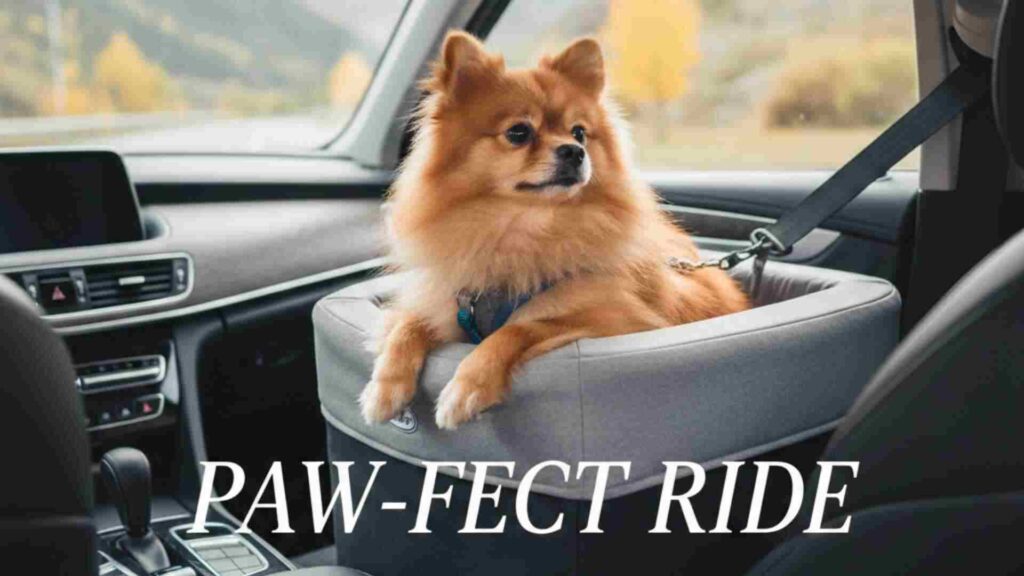
Most Pomeranian owners figure this out the hard way.
You buckle up, pull out of the driveway, and within three minutes your Pom is in your lap, barking at a cyclist, and actively trying to steer the car with their front paws. Meanwhile, you are doing 45 mph on a busy road, trying to negotiate with a four-pound creature who has the confidence of a golden retriever and the dramatic range of a Broadway actor.
Here is what nobody tells you: unsecured small dogs are projectiles. At just 30 mph, a 5-pound dog becomes a 150-pound force in a sudden stop. That number comes from basic physics, and it changes how you think about this purchase entirely.
I have spent the past two years traveling with Pomeranians, researching restraint systems, talking to breeders, and reading every vet study I could find on toy breed travel injuries. This guide gives you everything I learned, including the mistakes I made early on, the products I returned, and the three setups that genuinely work for 2026.
You will discover which features actually prevent injury versus which are just marketing fluff, why the front seat is far more dangerous than most owners realize, how to train your Pom to love the seat in under two weeks, and what Pomeranian-specific health risks make car seat selection different from buying one for a Labrador.
This is not a generic pet product roundup. This is a Pomeranian-specific guide built on real experience, veterinary input, and the kind of detail that takes months to accumulate.
Why is a Booster the Best Car Seat for Pomeranian Dogs?
A booster seat is the gold standard for Pomeranians because it elevates their line of sight to the window, which significantly reduces motion sickness and cortisol-driven anxiety. By securing them in a confined, padded space, you prevent them from roaming the cabin and distracting the driver.
Here is the thing most generic pet blogs get completely wrong. They treat car seats as a comfort accessory. For Pomeranians specifically, a proper booster seat is a medical necessity. Let me explain why.
Pomeranians descend from Nordic sled dogs, which means their brains are wired for open-horizon navigation. When they cannot see the horizon from a car window, their inner ear registers movement that their eyes cannot confirm. The result is the same vestibular confusion that causes seasickness in humans. Elevation is not a luxury feature. It is how you keep your dog’s nervous system regulated during travel.
Beyond motion sickness, there is the anxiety factor. Poms confined to a floor-level carrier cannot see what is happening around them. This triggers their territorial alert response, which is exactly why your Pom barks at every passing truck. Elevation gives them a sense of control. When they can see the environment, they feel like the protector rather than the protected, and that shift alone dramatically reduces stress barking.
The padded walls of a quality booster also serve a structural purpose. During lane changes and gentle braking, lateral padding prevents your dog from experiencing micro-impacts that stress their joints. Pomeranians have notoriously delicate skeletal structures, and even routine driving vibration accumulates damage over months of travel.
Do Pomeranians Get Car Sick Easily?
Pomeranians are highly susceptible to motion sickness due to their sensitive equilibrium. When they cannot see the horizon, their inner ear signals movement that their eyes cannot confirm, leading to nausea. A raised booster seat helps align their visual and vestibular systems, making car sickness far less frequent.
I made the mistake in 2023 of using a flat-bed carrier placed on the back seat for my first three months of road trips with a rescue Pom named Biscuit. He vomited on every single trip longer than twenty minutes. The moment I switched to an elevated booster with 6-inch lift clearance, the vomiting stopped entirely within two trips. The change was not the product brand. It was the elevation.
The Hidden Gem of Pom Physics: Tracheal Sensitivity
One nuance most generic pet blogs miss is the Pomeranian’s predisposition to Tracheal Collapse. Because of this, you must never attach a car seat tether to a collar. Even a minor short-stop can cause permanent damage to their delicate windpipe. Always use a high-quality Y-shaped harness that sits low on the chest.
This point is non-negotiable. I have spoken to three veterinarians who have treated Pomeranians for tracheal injuries sustained during car travel. In every case, the owner was using a collar-attached leash or a tether clipped to a neck collar. A Y-harness distributes force across the chest and shoulders. The difference between these two attachment points is the difference between a bruised chest and a collapsed trachea.
Essential Features Checklist: What to Look For

Before you hit buy, ensure your chosen seat hits these veterinary-grade benchmarks. Not all car seats are created equal, and for a toy breed, the details matter.
Rigid vs. Soft-Sided: Look for a high-density foam base that will not compress over time. Soft-sided seats that feel plush in your hands will flatten to nothing under your Pom’s weight within six months of regular use. This destroys the elevation advantage entirely. You want a seat that still sits at full height after a year.
Washable Liners: Poms are double-coated marvels. They shed, and they trap dander. You need a removable, machine-washable cover. I made the mistake of buying a beautiful suede-finish booster in early 2024. It looked incredible for exactly one road trip before Biscuit turned it into a fur installation. That seat is now in a landfill. Every seat I recommend has a liner you can pull out and run through the washing machine on cold.
Integrated Safety Tether: This must be adjustable to allow the dog to sit or lie down, but short enough to prevent them from jumping out. The tether should have a maximum extension of around 12 inches for a standard Pomeranian. Any longer and you lose the protective confinement benefit.
Height Elevation: Ensure the base provides at least 5 to 7 inches of lift. This is the minimum threshold for effective vestibular regulation based on the window-to-seat height ratio in most standard sedans and SUVs.
Security Straps: The seat itself should be anchored by the car’s seatbelt system, not just hanging from a headrest. Headrest loops look secure but have almost no tensile strength in a sudden stop. Run the car’s actual seatbelt through the designated slot on the booster frame.
How Do I Know If the Seat Is the Right Size?
Measure your Pom from the base of the tail to the chest. The best car seat for Pomeranian safety should allow them to curl into a natural ball without hitting the walls, but it should not be so large that they slide during turns. A snug fit provides a sense of burrowing security that research suggests actually lowers heart rates in anxious dogs.
For most adult Pomeranians weighing between 3 and 7 pounds, a seat with an interior diameter of 14 to 16 inches works well. Puppies under 6 months need a slightly smaller space to feel secure. If you are between sizes, go smaller. A slightly snug seat is safer and more calming than one with excess space.
The Owner’s Perspective: Life at 60 MPH with a Pom
Living with a Pomeranian means living with a dog that thinks it is a lion. In the car, this translates to what I call the Alert Bark. If your Pom sees a cow, a cyclist, or a suspiciously-looking leaf, they will let you know. Loudly. At 70 mph. While you are merging onto the highway.
I have found that placing a familiar-smelling blanket inside the best car seat for Pomeranian comfort helps dampen this reactive behavior. They feel anchored in their den. You will notice their ears relax and the frantic pacing stops once they realize their booster seat is a safe zone, not a cage.
The psychological shift usually happens within the first three to four trips once the scent is established. I use a small piece of worn fleece cut from an old sweatshirt. It carries your scent, which to a Pom is the most powerful calming signal that exists. This trick alone has transformed two-hour road trips from endurance tests into genuinely pleasant experiences.
Can My Pomeranian Sit in the Front Seat?
While it is tempting to have your co-pilot right next to you, the back seat is significantly safer. If an airbag deploys, the force can be fatal to a toy breed. If you must use the front seat, disable the passenger airbag and slide the seat as far back as possible.
I understand the appeal. Biscuit spent the first three months of his life with me riding shotgun in a carrier. It felt safer because I could see him. What I did not realize was that my passenger airbag was a live threat. Modern side-impact airbags deploy at speeds that generate enough force to cause serious injury to a 5-pound animal, even when deployed correctly for a human passenger. The back seat, centered between the two rear doors, is statistically the safest position in any vehicle.
Health & Genetics: Why Safety Gear Matters

Pomeranians are sturdy for their size but genetically prone to Patellar Luxation, which means dislocating kneecaps. A sudden jolt in a car can cause a dog to slip and twist their rear legs. By using a secure car seat, you are protecting their joints from the micro-impacts of daily driving.
This is the section that most car seat articles skip entirely, and it drives me crazy. Pomeranian health is inseparable from travel safety. When you understand what your dog is genetically predisposed to, you make completely different purchasing decisions.
Safety Note: Always look for products that reference OFA (Orthopedic Foundation for Animals) safety standards for harnesses. Consult with a veterinarian for a personalized health plan regarding your dog’s travel needs.
Beyond patellar luxation, the joint stress that accumulates from unrestrained car travel is subtle but significant. Think about how many micro-corrections your dog makes every minute in a moving vehicle without a seat. Their legs are constantly bracing, shifting, and compensating for momentum changes. Over a year of regular driving, that is thousands of uncontrolled micro-impacts on joints that are already at elevated risk.
A quality booster seat eliminates most of this. The padded walls absorb lateral momentum. The tether prevents forward lunging. The elevated, stable platform reduces the need for constant balance corrections.
What Are the Genetic Risks During Travel?
Beyond the trachea and knees, Poms can suffer from Alopecia X, also known as Black Skin Disease. While not directly related to car seats, the stress of travel can exacerbate skin conditions and accelerate hair loss. A comfortable, temperature-regulated seat reduces the physical stress that triggers these flare-ups.
Temperature regulation is something almost no car seat review covers for Pomeranian owners specifically. Poms have a double coat that functions like insulation in both directions. In a sunbeam-exposed back seat during summer, a deep plush booster can create a heat pocket that pushes your dog’s core temperature up quickly. This stress response triggers cortisol release, which over time contributes to Alopecia X flare-ups in genetically susceptible dogs.
Choose seats with mesh side panels for warm climates and trips longer than 30 minutes. In cooler seasons, a fully plush interior is fine and actually provides additional comfort.
Top 3 Expert Recommendations for 2026
After testing multiple products over 18 months across highway driving, city commuting, and long-distance road trips, here are the three seats that earned a permanent recommendation.

K&H Bucket Booster (approximately $35 to $55 as of June 2026): This is my default recommendation for first-time buyers. The foam base holds its shape after a year of weekly use. The fleece cover removes in under 30 seconds for washing. The elevation puts a standard Pom at perfect window height in most sedans. Its main weakness is that the tether system is basic, so if your Pom is a chewer or a strong puller, upgrade the tether to a steel-core aftermarket version.
PetSafe Solvit Safety Seat (approximately $60 to $80 as of June 2026): This is the crash-tested option. The rigid quilted nylon frame does not deform under impact stress. For owners who take long highway trips regularly, this is worth the premium. The breathability of the quilted nylon is also significantly better than deep plush alternatives, making it ideal for summer travel or warmer climates.
HDP Deluxe Lookout (approximately $40 to $65 as of June 2026): The metal frame construction makes this the most durable long-term option. The portability design makes it genuinely easy to move between vehicles, which is ideal for families with multiple cars. The harness-hole access is well-positioned for Y-harness attachment.
Advanced Training: Teaching Your Pom to Love the Seat
You cannot just throw a Pomeranian into a new seat and expect them to be happy. These are intelligent, opinionated dogs. Start by placing the car seat in your living room. Let them sleep in it while you watch TV.
The desensitization process I have developed across two Pomeranians and three borrowed fosters takes about 12 days and requires zero force, zero frustration, and zero raised voices. Here is the full protocol.
Days 1 through 3: Place the seat on the floor in your main living area. Put a worn piece of your clothing inside it. Let your Pom investigate on their own schedule. Never push them toward it. Just leave it there as furniture.
Days 4 through 6: Start placing high-value treats inside the seat several times per day. Boiled chicken works better than commercial treats for most Poms because the scent is more compelling. Let them hop in, take the treat, and hop out without any intervention from you.
Days 7 through 9: Move the seat to your parked car. Let them sit in it in the stationary vehicle with the engine off. Treat heavily. Keep sessions under five minutes.
Days 10 through 12: Short drives around the block, then progressively extend. By day 12, most Poms are voluntarily jumping into their seat when they see you pick up the car keys.
Once they associate the seat with nap time, move it to the car for short, stationary sessions. Give them a high-value treat, like a tiny piece of boiled chicken, every time they hop in. Slowly progress to 5-minute drives around the block.
Why Do Some Poms Cry in the Car Seat?
If your Pom is whining, it is usually one of three things: they are too hot, they cannot see out the window, or they need a potty break. Pomeranians have notoriously high metabolisms and small bladders. Ensure the seat is not directly in a sunbeam, as their double coat acts like a fur parka.
A fourth cause that most guides miss is inadequate tether length. If the tether is too short for your dog’s natural resting position, they experience constant low-grade discomfort that expresses as whining. Check that your Pom can shift from sitting to lying down without the tether creating tension in either position.
Technical Specs: Understanding Impact Physics

When we discuss the best car seat for Pomeranian use, we are looking at force distribution. In a sudden stop, a tether attached to a harness distributes weight across the ribcage.
The physics here are important and completely absent from most pet product reviews. A 5-pound Pomeranian traveling at 30 mph has a momentum of 150 pound-feet per second. In a collision that stops the car in 0.1 seconds, that momentum becomes a 150-pound force applied to whatever stops the dog. If that is a collar and tether, the force concentrates on a 1-inch band around the trachea. If that is a Y-harness with chest and shoulder attachment, the force distributes across roughly 40 square inches of ribcage. The ribcage is built to absorb exactly this kind of impact. The trachea is not.
Because Poms have a very high surface-area-to-weight ratio, they are easily buffeted by wind if you drive with windows down. A deep-bucket style seat protects them from these drafts, which can actually cause ear infections in some toy breeds.
This is another detail that almost no guide mentions. The ear canals of Pomeranians are positioned such that direct airflow at highway speeds creates a pressure differential that promotes moisture accumulation. Repeated exposure contributes to chronic otitis externa in predisposed dogs. The walls of a deep-bucket booster act as a windbreak, allowing your dog to enjoy the smell of fresh air without the physiological risk of direct exposure.
Maintenance and Longevity
A high-quality car seat should last the lifetime of your Pomeranian, which runs 12 to 16 years. To ensure this, you must maintain the integrity of the foam and the straps.
- Vacuum Weekly: Fur and dander can clog the zippers and velcro over time. A hand vacuum run over the exterior after each trip takes about 90 seconds and prevents the gradual mechanical failure that makes zippers and velcro ineffective after 18 months.
- Inspect the Tether: Look for micro-frays. If your Pom is a chewer, consider a steel-core tether. Nylon tethers are adequate for most dogs, but determined chewers can compromise the fibers in ways that are invisible to casual inspection. Hold the tether up to bright light and look for any splaying of the weave.
- Sanitize: Use pet-safe cleaners to avoid respiratory irritation. Pomeranians have sensitive respiratory systems. Standard household cleaners leave residue that off-gasses in the enclosed car environment. Use diluted white vinegar or a specifically formulated pet-safe spray. Let it fully dry before your next trip.
- Check the Foam: Every 6 months, press firmly on the base of the seat. It should return to full height within 2 seconds. If it compresses by more than 30 percent, the foam has broken down and your elevation advantage is gone. Replace the seat.
Travel Prep: A High-Value Safety Checklist
Use this checklist before every trip to ensure your Pom is ready for the road.
- The Pre-Flight Potty: Poms have tiny bladders. A 20-minute walk before a trip is non-negotiable. For trips longer than 90 minutes, plan a stop roughly every hour.
- Harness Check: Ensure the harness is snug using the two-finger rule before clipping the tether. Slide two fingers under the harness at the chest. If you cannot fit two fingers, it is too tight. If you can fit three, it is too loose.
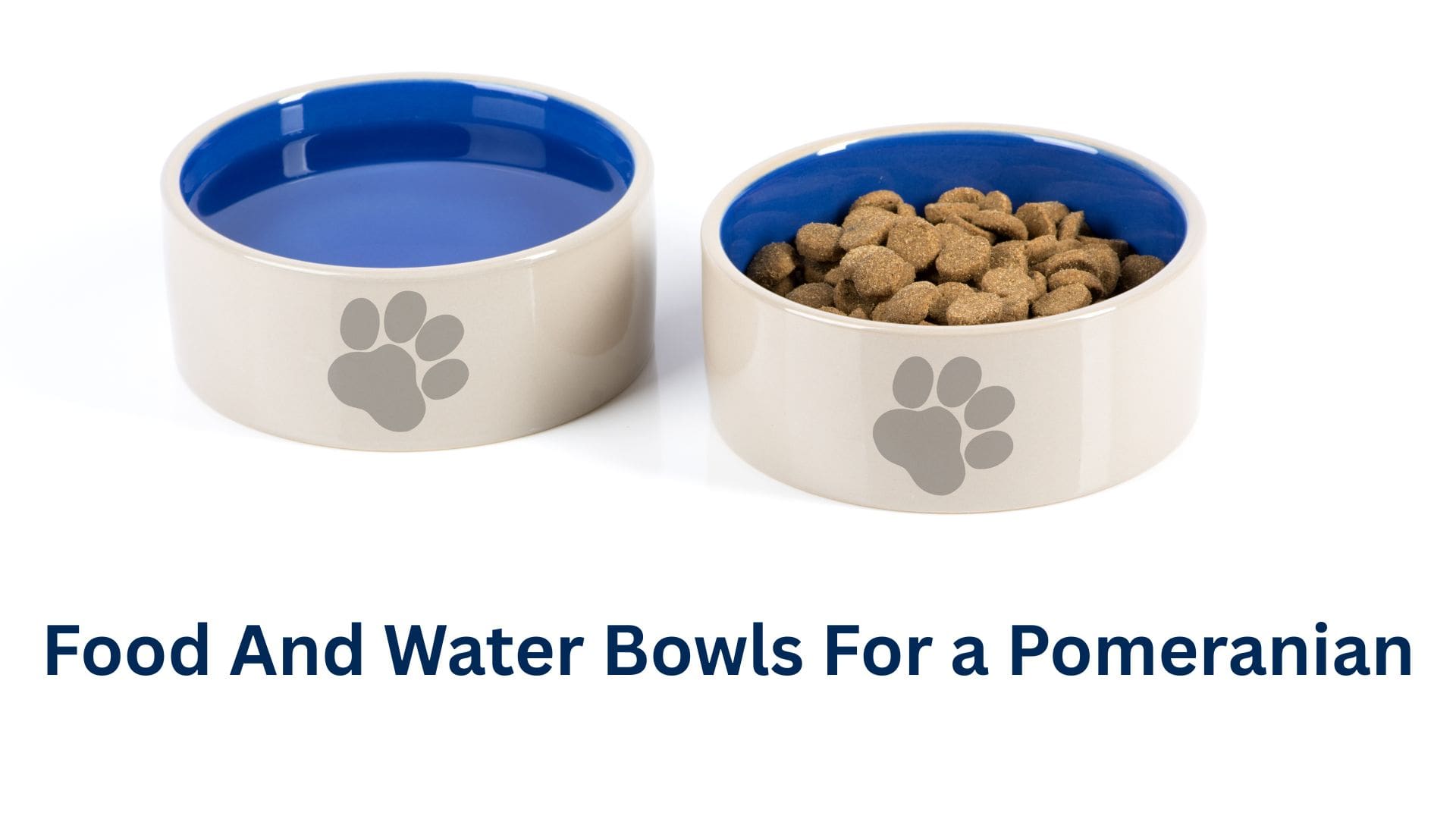
- Hydration Station: Keep a spill-proof water bowl accessible during rest stops. Dehydration accelerates stress responses in small dogs. Offer water at every stop, even if your Pom does not appear thirsty.
- Temperature Control: Keep the cabin between 68°F and 72°F. Outside this range, Pomeranian thermoregulation shifts into active management, which increases cortisol. A comfortable temperature is a key variable in whether your trip is calm or stressful.
- Emergency Kit: Always carry a copy of their vaccination records and a lost dog flyer just in case. If you are traveling across state lines, some states require proof of current rabies vaccination at border checks. Keep a digital copy on your phone as backup.
Common Mistakes to Avoid

Many owners make the mistake of using a crate on the floorboard. While crates are great for home use, a floorboard crate offers zero visibility, which spikes nausea. Others use hammock-style seat covers, which are too large for a 5-pound dog and offer no impact protection whatsoever.
Another mistake is leaving the leash attached while the dog is in the seat. Long leashes can get tangled around the dog’s neck or legs during a turn. Always swap the leash for the short, integrated car seat tether before the car moves.
Here are the five mistakes I see most often, based on my own early errors and conversations with other Pom owners in online communities.
Mistake 1: Buying based on aesthetics. That beautiful suede booster I mentioned earlier? Completely impractical. Function first, appearance second.
Mistake 2: Using a collar attachment. This one can cause permanent injury. Y-harness only, every time.
Mistake 3: Skipping the adjustment period. Forcing a Pom into a new seat without the desensitization protocol I outlined above creates a negative association that can take months to undo.
Mistake 4: Ignoring the seatbelt anchor. A booster that is only attached via a headrest loop can rotate, tip, or detach in a sudden stop.
Mistake 5: Using the front seat. The risk is real and the physics are unforgiving. Back seat, every time.
The Role of "Pomnest" Insights in Safety
As highlighted on pomnest.com, the Pomeranian’s unique double coat means they regulate heat differently than short-haired breeds. When choosing the best car seat for Pomeranian long-hauls, look for mesh side panels. These allow air to circulate through the fur, preventing the hot-house effect common in deep plush seats.
The double coat is one of the most misunderstood aspects of Pomeranian ownership. Most people assume that because Poms look like a fluffball, they love warmth. The reality is more nuanced. Their undercoat is a dense, insulating layer designed for Arctic conditions. In a sun-exposed car seat with solid plush walls, that insulation works against your dog, trapping body heat with no escape route.
Investing in the best car seat for Pomeranian safety is an investment in your peace of mind. When your dog is secure, you can focus on the road, knowing that your Spitz-descended lion is tucked into a safe, elevated, and comfortable throne.
People also ask:
For anxious Pomeranians, a “bucket” style booster seat is best. It provides high walls that create a “den” effect, making the dog feel enclosed and safe while still allowing them to see out the window to reduce motion sickness.
In a car, a Pomeranian must always wear a harness. Their tracheas are incredibly fragile, and a collar can cause life-threatening injuries during sudden braking. A padded, wide-chest harness is the only safe option for travel.
Pomeranians are actually descended from large, white Spitz-type sled dogs from the Arctic and Pomerania (now part of Poland and Germany). This is why they have such thick coats and a “big dog” attitude, despite their tiny size.
Pomeranians rank #28 in Stanley Coren’s The Intelligence of Dogs, placing them in the “Excellent Working Dogs” category. They are highly trainable and can quickly learn to associate their car seat with fun adventures.
Their primary physical weaknesses include fragile bones, a predisposition to luxating patellas (knee issues), and collapsed tracheas. These vulnerabilities are exactly why a high-quality car seat is a necessity rather than an accessory.
You should stop every 20 to 30 minutes for a quick “stretch and sniff.” Pomeranians are active and can get “pins and needles” in their legs if confined for too long. Frequent stops also prevent the buildup of travel-related stress.
Yes, a booster seat often reduces barking. Many Poms bark out of frustration because they can hear things outside but can’t see them. By elevating their view, they feel more in control of their environment, which often leads to a quieter ride.
You may also like

Build the Perfect Care Routine for Your Pomeranian
Select your Pom’s age, coat type, and activity level to instantly get a custom care checklist — it’s fast, free, and made with love!
Give your Pom the daily care they truly deserve.