
Choosing the Best Dog Harness for Pomeranian Double Coats

Lateef Bhatti
Written by
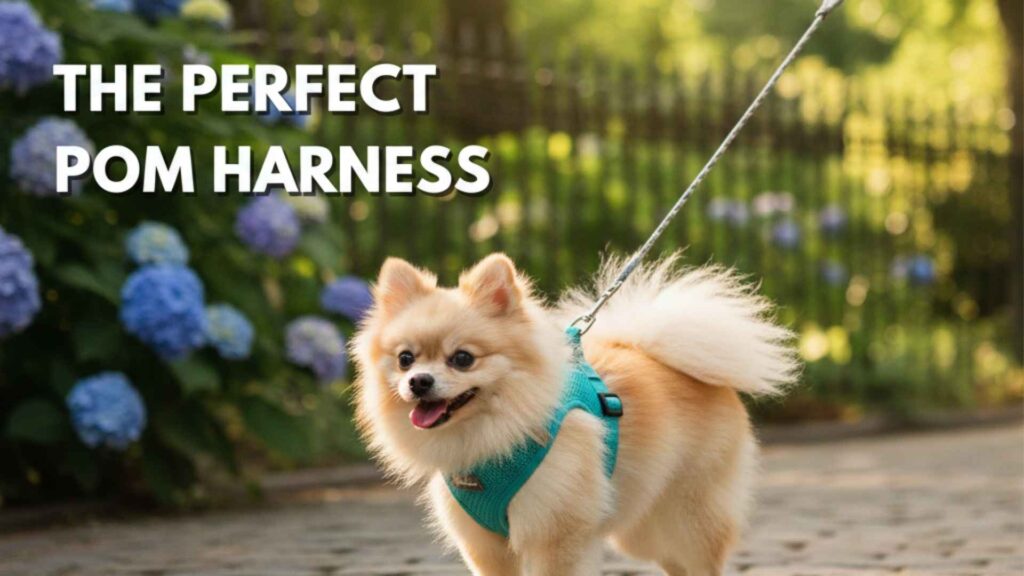
The best dog harness for Pomeranian safety is a lightweight, wrap-around vest or a “choke-free” design that sits low on the chest. Because Pomeranians have very fragile necks, these harnesses protect them from injury by moving leash pressure away from their throat. Using a soft, adjustable harness ensures your fluffy friend stays comfortable and safe during every walk.
Why the Harness is a Medical Necessity, Not a Luxury
Pomeranians belong to the “Toy” category, but their ancestry is rooted in the German Spitz—hardy sled dogs from the Arctic. This genetic “big dog” energy often leads to frantic pulling when they see a squirrel or a fellow canine.
Table of Contents
ToggleWhen a Pomeranian pulls against a traditional collar, the thin strap puts direct, concentrated pressure on the trachea (windpipe). Unlike humans, a dog’s trachea is supported by C-shaped rings of cartilage. In Poms, these rings are often genetically weak.
A single sharp tug can cause these rings to flatten. Once a trachea begins to collapse, the damage is often irreversible, leading to a lifetime of “honking” coughs, exercise intolerance, and respiratory distress. By switching to the best dog harness for Pomeranian safety, you redistribute that force across the sturdy chest bone (sternum) and shoulders, bypassing the throat entirely.
The "Hidden Gems" of Pomeranian Anatomy

To truly master the art of the Pom walk, you must understand the nuances that generic pet blogs overlook.
1. The “Double Coat” Friction Point
Poms possess a dense, soft undercoat and a long, harsh outer coat. This “double coat” is prone to static and matting. Many harnesses use cheap nylon with exposed stitching that acts like a saw against the fur. Within a thirty-minute walk, a poorly designed harness can create painful mats behind the front legs. You need “silk-lined” or soft-mesh materials to preserve that show-quality coat.
2. The Center of Gravity Challenge
Because Poms are so light, their center of gravity is easily disrupted. A harness that sits too high on the neck or too far back on the ribcage can cause the dog to “flip” if they lunge. A Y-shaped harness is the gold standard because it allows the shoulders to move through their full range of motion without obstructing the front legs.
3. The “Spitfire” Reflex
Pomeranians are surprisingly fast. They have a “bolt reflex” that can catch owners off guard. A harness must be “escape-proof,” meaning it contours to the deep chest and narrows at the waist, preventing the dog from backing out of the gear like a tiny magician.
What are the most common harness styles for Poms?
The market is flooded with options, but for a 2026 pet parent, only three styles truly matter for this breed.
The Soft Mesh Vest
This is the most popular choice for a reason. It acts like a piece of clothing, hugging the dog’s torso. It provides a large surface area to distribute pressure, making it nearly impossible to hurt the dog’s neck.
- Best for: Daily walks and puppies.
- Top Pick: The Puppia RiteFit.
The Step-In Harness
Many Poms are “head-shy,” meaning they hate things being slipped over their ears. A step-in model allows the dog to place their paws into two loops, which you then zip or clip over their back.
- Best for: Nervous dogs or those with sensitive ears.
- Top Pick: Voyager Step-In Air.
The Leather “Y” Harness
For the fashion-forward owner who doesn’t want to sacrifice health, rolled leather or “Buddy Belt” styles offer a minimalistic footprint. These are excellent for preventing fur matting because they have very little contact with the coat.
- Best for: Long-haired Poms and show dogs.
- Top Pick: Buddy Belts (Leather).
Comprehensive Comparison: Pomeranian Harness Features

How do you measure a Pomeranian for a harness?
You cannot rely on weight alone. A 5lb Pom with a “lion cut” groom fits differently than a 5lb Pom in full coat. You need a flexible tailor’s tape to get these three vital numbers:
- The Neck Base: Measure where the neck meets the shoulders, not where a collar usually sits.
- The Girth: This is the most important measurement. Measure the widest part of the chest, usually right behind the front legs.
- The Length: From the base of the neck to the start of the tail.
The Two-Finger Rule: Once the harness is on, you should be able to slide two fingers comfortably between the strap and the dog’s skin. If you can’t, it’s too tight and will cause chafing. If you can fit three, your Pom might perform a “Houdini” and escape.
Training Your Pom: The Harness-Leash Connection
Teaching a Pom to walk politely is a satisfying but slow process. Because they are so small, we often make the mistake of “lifting” them with the leash when they misbehave. Even with a harness, you should avoid “fishing” your dog off the ground.
Stop the “Sled Dog” Mentality
If your Pom pulls, stop walking immediately. Do not jerk the leash. Wait for the dog to look back at you and for the leash to go slack. Reward this “check-in” with a small, high-value treat. Over time, the dog learns that a tight harness means “stop” and a loose harness means “go.”
The “Puppy Zoomie” Management
Puppies are unpredictable. For a young Pom, a harness with a front-clip attachment is a game-changer. When the puppy lunges forward, the front clip gently pivots their body back toward you, naturally discouraging the behavior without any force.
Health & Genetics: The Deeper Dive

As a Senior SEO Content Auditor and breed expert, I must emphasize that gear is only half the battle. Pomeranians are prone to several genetic conditions that your harness choice can either help or hinder.
Luxating Patella
Roughly 30% of Pomeranians will experience “floating kneecaps” at some point. A harness that is too heavy or has straps that cross directly over the shoulder joints can alter the dog’s natural gait. This misalignment puts extra stress on the knees. Always opt for “lightweight” models—every ounce matters when the dog only weighs four pounds.
Alopecia X (Black Skin Disease)
Some Poms suffer from hair loss. If your dog has thinning patches, avoid nylon straps which can be abrasive. Look for harnesses lined with fleece or soft cotton to protect the exposed skin from sunburn and irritation.
Safety First: Always consult with a veterinarian for a personalized health plan. Ensure your breeder provides OFA (Orthopedic Foundation for Animals) clearances for hips and patellas, and CERF clearances for eyes.
The Owner’s Perspective: Life with a "Floor Wolf"
There is a specific joy in walking a Pomeranian. They trot with a “bouncy” gait that suggests they own the sidewalk. However, owners often face the “Small Dog Syndrome” from outsiders. People—and other dogs—often approach Poms without permission.
A harness provides you with a “security handle.” Many high-end harnesses include a small handle on the back. This isn’t for carrying the dog like a purse; it’s for quick intervention. If an off-leash dog approaches, you can securely and safely lift your Pom using the handle, distributing their weight across their entire ribcage rather than dangling them by their neck.
The Shedding Reality
Pomeranians shed—a lot. Your harness will eventually become a “fur magnet.”
Pro Tip: Choose a harness with “smooth-face” buckles. Velcro is a nightmare for Pomeranian owners; the long guard hairs get stuck in the hooks, making the harness difficult to remove and painful for the dog.
Maintenance Checklist: Keeping the Gear Safe
A harness is a piece of safety equipment. If it fails, your dog could run into traffic. Perform this check once a month:
- Check the Buckles: Ensure there are no cracks in the plastic.
- Inspect the “D-Ring”: Look for signs of metal fatigue or rust where the leash attaches.
- Wash Regularly: Sweat and oils from the skin can break down fabric. Use a mesh laundry bag and air dry to prevent shrinking.
- The Growth Check: If your Pom is under 2 years old, they are still “filling out.” Re-measure their girth every month.
Why "No-Pull" Matters for Toy Breeds

You might think a 5-pound dog doesn’t need “no-pull” technology. You can easily hold them back, right? But the goal isn’t just to stop them; it’s to protect them from themselves.
A “No-Pull” harness for a Pomeranian usually involves a patented “X” shape across the chest. This design ensures that even if the dog lunges with all their might, the pressure is diverted to the strongest part of their body—the chest—and away from the sensitive throat and the delicate “armpit” area where lymph nodes are located.
The Teamwork of Harness and Collar
In 2026, the expert consensus is clear: Harness for the Walk, Collar for the ID.
Never attach a leash to a decorative collar. Instead, keep a lightweight, loose-fitting collar on your Pom at all times with their ID tags and microchip info. This ensures that if the dog ever slips out of their harness (which can happen during grooming or transit), they are still identifiable.
Think of the harness as the “Seatbelt” and the collar as the “Registration.” You need both to be fully protected.
Suggested Visual Elements for Your Blog
- Comparison Table: Size vs. Parent breed (Spitz ancestry).
- Infographic: The “Two-Finger Rule” for fitting.
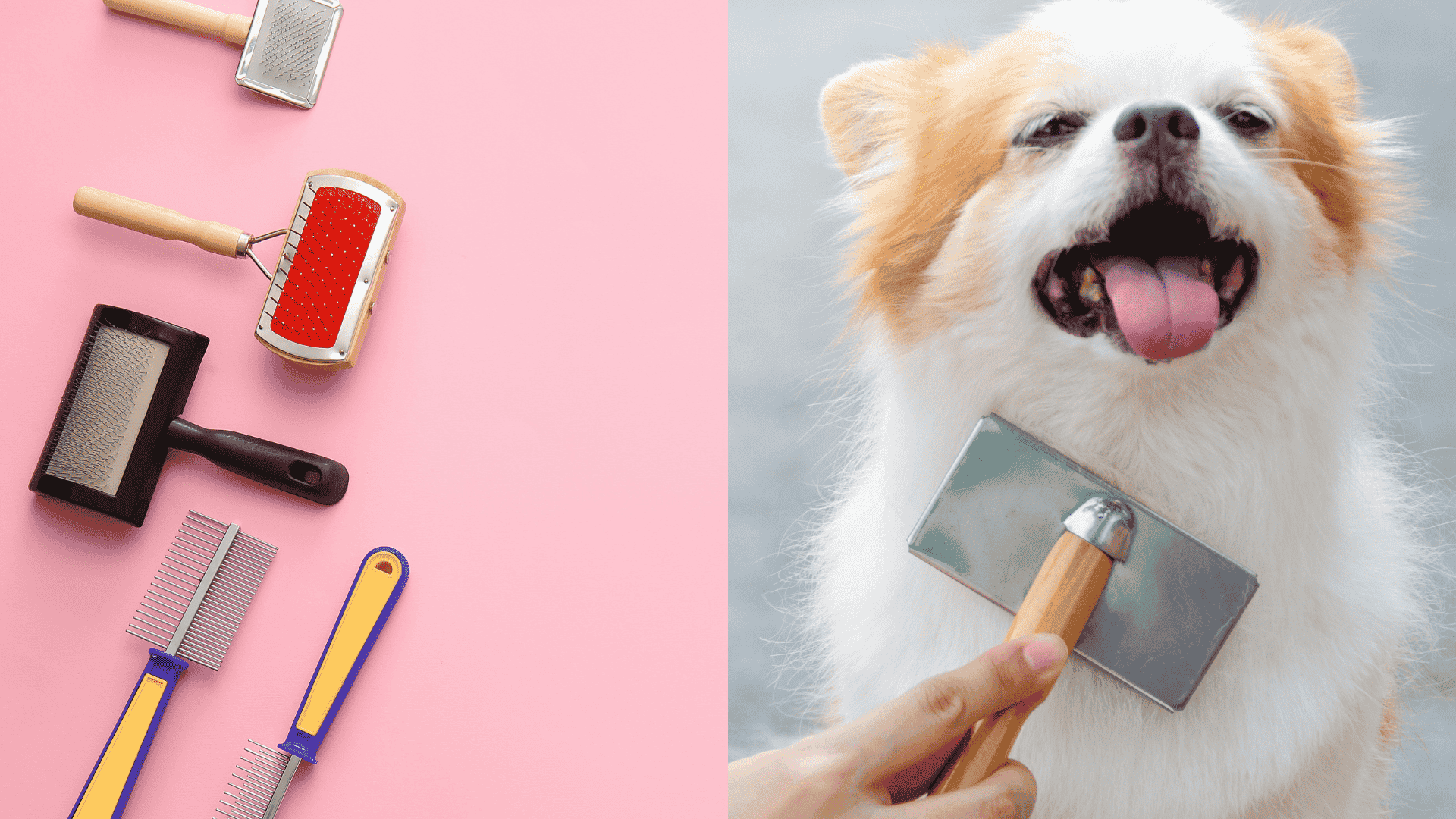
- Checklist: Grooming kit essentials for harness users (Slicker brush, de-matting spray, metal comb).
Final Thoughts on the Best Pomeranian Gear
The transition from a collar to a harness is the single most impactful change you can make for your Pomeranian’s longevity. By removing the threat of tracheal collapse and protecting the integrity of their magnificent double coat, you aren’t just buying a leash attachment—you’re buying peace of mind.
A happy Pom is a mobile Pom. Whether you’re hiking a trail or just strutting down a city block, ensure your “Zwergspitz” is wrapped in gear that respects their history, their anatomy, and their vibrant spirit.
People also ask:
The best choice is a “V-neck” or “Choke-Free” harness like the Gooby Comfort X or a Buddy Belt. These designs specifically sit below the neck area, ensuring that no matter how hard the dog pulls, zero pressure is applied to the windpipe.
You should remove the harness every night and whenever the dog is indoors for an extended period. Constant wear can lead to “hot spots” on the skin and severe matting of the undercoat. A Pomeranian’s skin needs to breathe to maintain that healthy glow.
Switch to a “Step-In” style harness. These allow your dog to stand over the harness while you clip it around their body. You can also use “high-value” treats (like tiny bits of chicken) to create a positive association with the gear.
Yes, if the harness is made of rough nylon or is fitted too tightly, it can cause “friction alopecia.” To prevent this, choose a harness with a soft lining (satin, silk, or soft mesh) and ensure it is cleaned regularly to remove abrasive dirt and salt.
A puppy can start wearing a lightweight mesh harness as early as 8 weeks old. In fact, it is better to start them in a harness immediately to prevent them from ever learning the habit of pulling against their neck.
You may also like


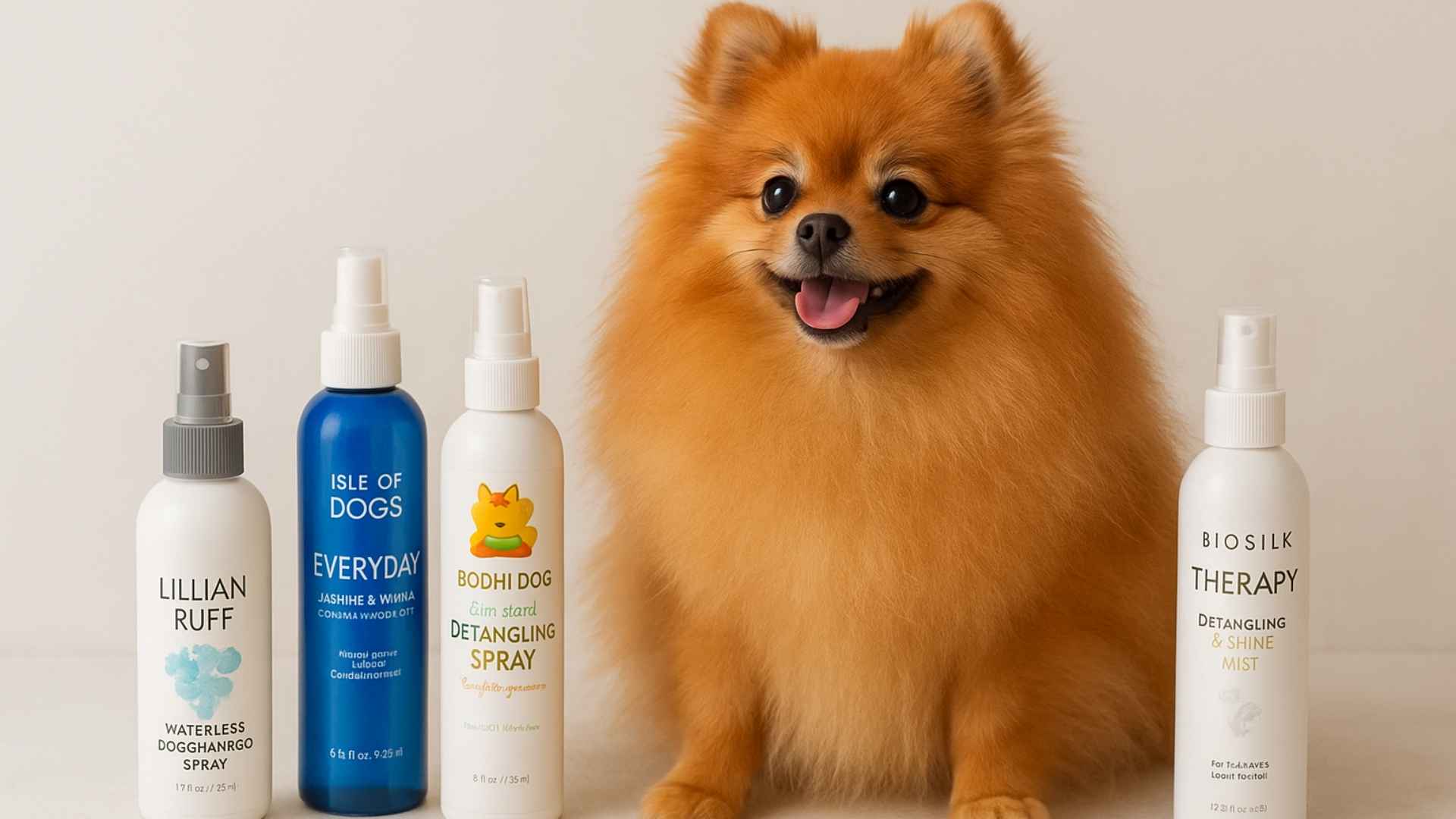
Build the Perfect Care Routine for Your Pomeranian
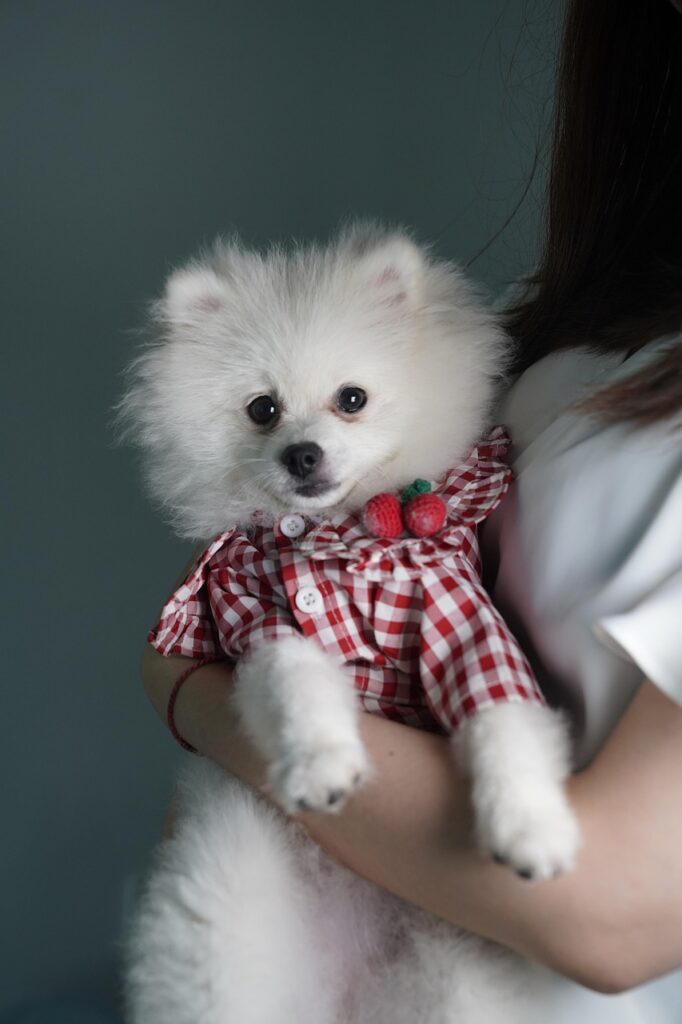
Select your Pom’s age, coat type, and activity level to instantly get a custom care checklist — it’s fast, free, and made with love!
Give your Pom the daily care they truly deserve.